2026 email marketing tips to help small businesses scale and grow

Email remains one of the most reliable growth channels for small businesses heading into 2026. This guide walks through practical, real-world email marketing tips that focus on sustainable growth, stronger customer relationships, and smarter use of automation. You will learn how to build a solid email foundation, improve engagement, drive repeat revenue, and avoid common mistakes that slow scaling. Whether you are refining an existing program or starting fresh, these insights are designed to help small teams compete and win.

How email marketing drives sustainable growth for small businesses
Growing a small business comes with many challenges, including limited time, tight budgets, and stretched resources. Email remains one of the most powerful tools available because it allows brands to connect directly with their customers, build trust, and generate steady revenue without relying heavily on paid media.
Success in email marketing means reaching the right people, at the right time, with relevant and personalised content. When executed effectively, email can guide customers from their very first purchase to long-term loyalty.
Why email still drives growth in 2026
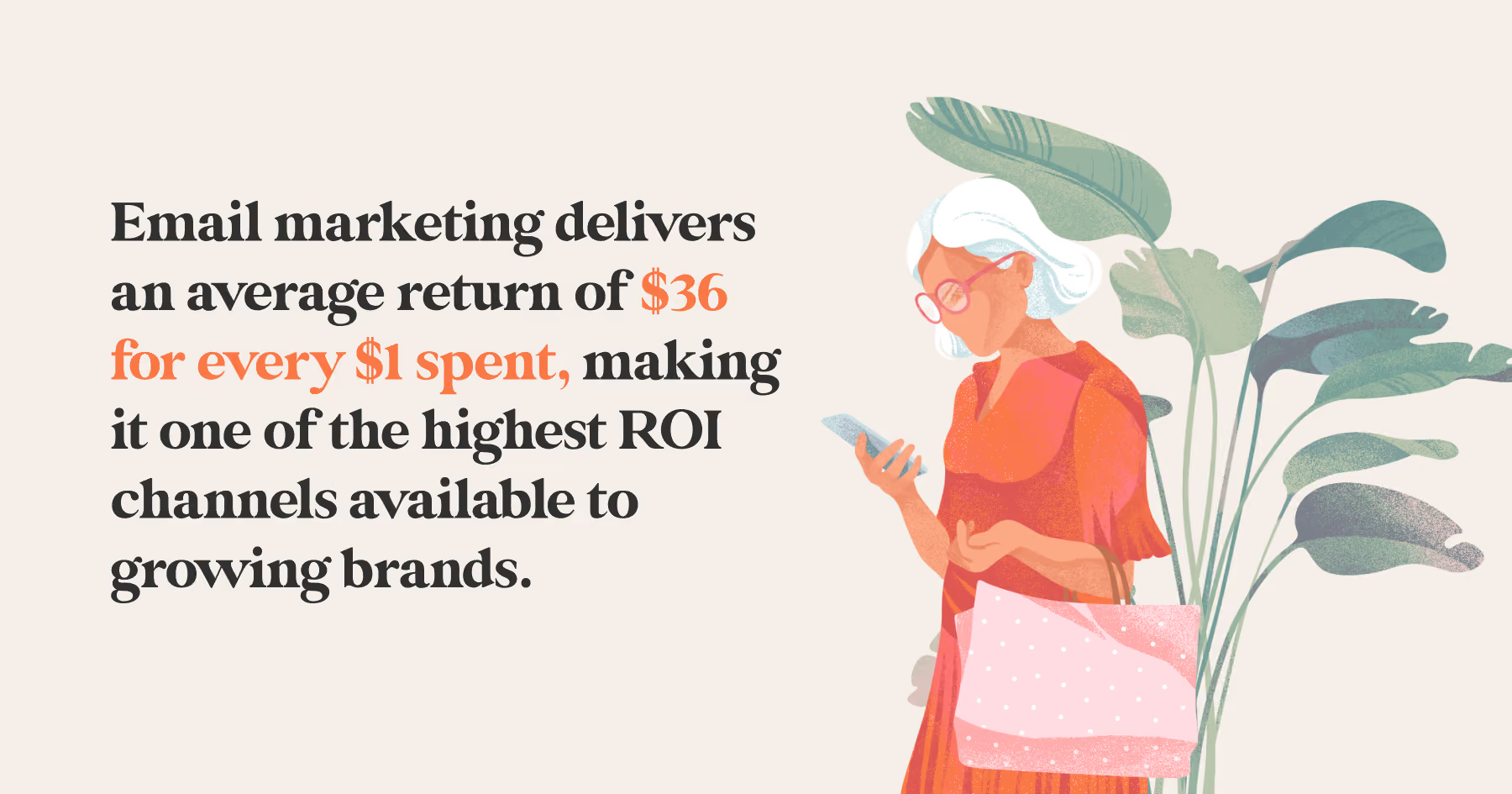
Email has matured, but its value has not faded. According to recent industry benchmarks, email marketing delivers an average return of $36 for every $1 spent, making it one of the highest ROI channels available to growing brands.
For small teams, this matters. Email allows brands to own their audience, control their messaging, and scale, without constantly increasing spend. It works across industries, purchase cycles, and customer segments.
The key is execution: Generic blasts and irregular sending schedules no longer perform well. What works in 2026 is thoughtful communication that feels timely and useful.
Build a strong foundation before scaling
Before adding advanced automation or complex campaigns, the basics need to be solid.
Focus on these fundamentals first:
- A clean, permission-based email list
- Clear sign-up incentives that align with your product
- Consistent branding and tone across emails
- Mobile-friendly design and layouts
- Reliable sending infrastructure and authentication
This foundation supports every future campaign and protects deliverability as volume increases.
Create a clear email marketing strategy
Growth happens faster when email efforts follow a clear plan. An effective email marketing strategy for small businesses’ success connects their goals with their customers’ behavior.
Start by defining what the email strategy needs to achieve. This could include increasing repeat purchases, reducing churn, or supporting product launches. From there, map email touchpoints to each stage of the customer lifecycle.
A simple strategy often includes:
- Welcome emails to set expectations
- Educational content that builds confidence
- Product discovery and cross-sell messages
- Replenishment or reorder reminders
- Loyalty and retention campaigns
This structure keeps messaging focused and prevents over-sending.
Use segmentation to send messages that feel personal
Inbox competition is intense. Segmentation helps your emails stand out by making content feel relevant and personalized.
Effective segmentation options include:
- Purchase history
- Browsing behavior
- Engagement level
- Location or region
- Customer lifetime value
Brands using segmented campaigns see significantly higher engagement, strengthening email marketing performance while reducing unsubscribes.
Automation that supports scale without extra work
Automation is the engine that allows small teams to grow without adding extra workload.
High-impact automations for small businesses to prioritize include:
- Welcome series for new subscribers
- Abandoned cart reminders
- Post-purchase follow-ups
- Win-back flows for inactive customers
- Review and feedback requests
Well-timed automation supports customers when their intent is highest. This is where email marketing for small businesses becomes a reliable revenue driver, rather than a manual task.
Write emails that sound human and earn attention
Writing style plays a critical role in email marketing performance. Customers are more likely to engage with messages that are clear, approachable, and genuinely helpful.
Strong email copy usually includes:
- A clear subject line with one idea
- Short paragraphs that are easy to scan
- A single primary call to action
- Language reflects how your business would speak to a customer (if it were a person)
Avoid overloading emails with multiple offers. One clear message with one goal performs better and builds trust over time. This approach is especially effective for email campaigns for small business owners who rely on repeat buyers.
Use data to guide decisions
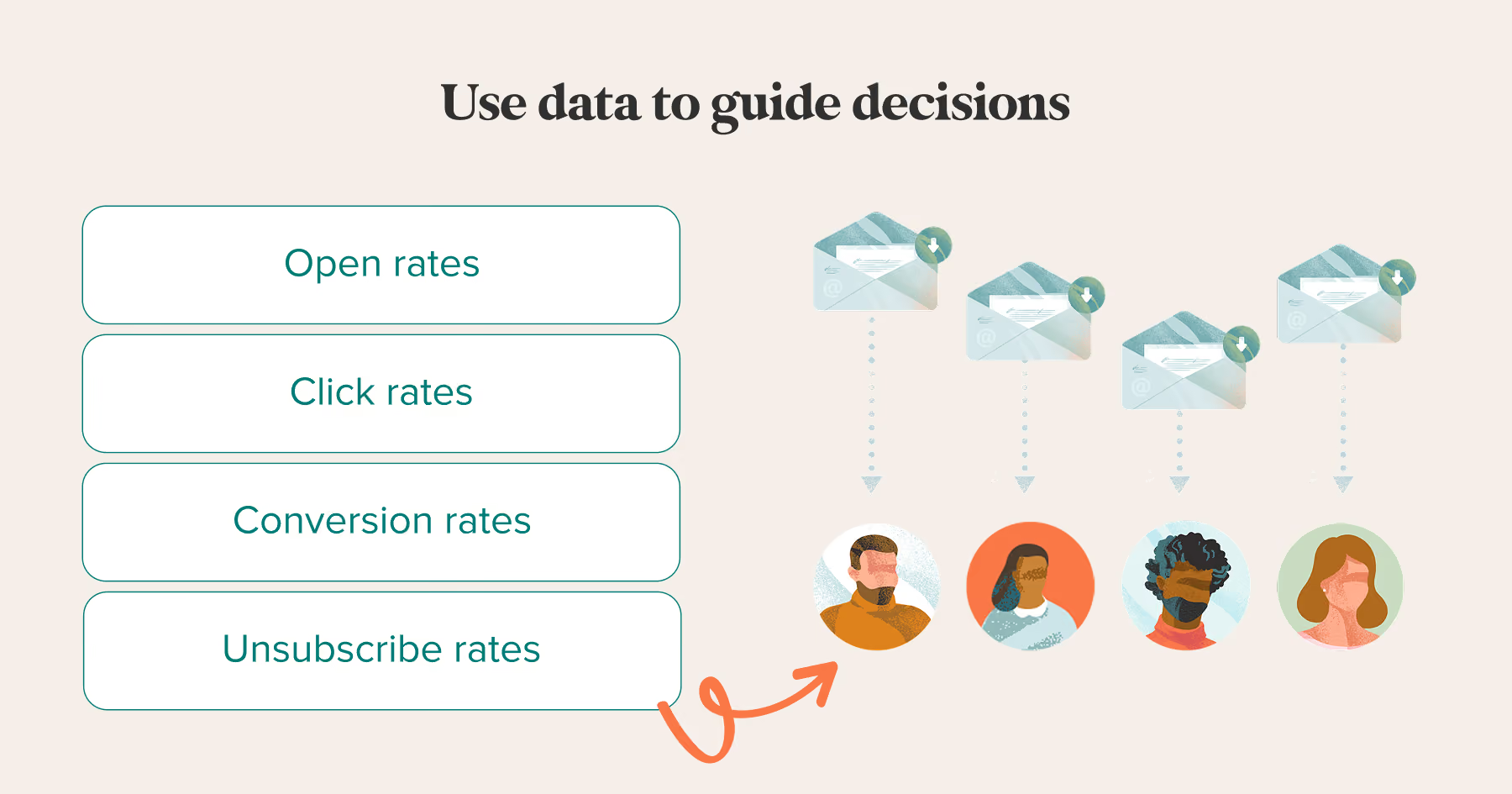
Metrics help clarify what is working and where there is room to improve. Instead of relying on assumptions, data provides clear signals that support smarter adjustments over time.
Key email metrics to monitor include:
- Open rates to understand how well subject lines capture attention
- Click rates to assess how relevant and engaging the content feels
- Conversion rates to measure direct revenue impact
- Unsubscribe rates to keep a close eye on overall list health
Look at performance patterns across multiple campaigns, rather than focusing on individual sends. Small refinements, when tested consistently, often lead to noticeable and lasting improvements.
Leverage ideas that encourage long-term loyalty
Growth comes from repeat customers, and email plays a major role in nurturing those relationships.
Proven loyalty-based email marketing ideas for small business growth include:
- Early access for subscribers
- Customer stories and testimonials
- Product education and usage tips
- Loyalty point reminders
- Birthday or anniversary messages
These emails deepen emotional connection and reinforce why customers chose your brand in the first place.
Common mistakes that limit email growth
Avoiding these pitfalls protects performance as your list grows:
- Sending too frequently without a clear value
- Ignoring inactive subscribers
- Treating all customers the same
- Skipping testing and optimization
- Relying on discounts as the main hook
Fixing these issues often improves results faster than launching new campaigns.
Choosing the right tools and partners
Technology should simplify work, not complicate it. Platforms with strong automation, segmentation, and analytics features are essential as volume increases.
Many growing brands rely on Klaviyo email marketing to centralize data and trigger behavior-based messaging. Working with a specialized Klaviyo email marketing agency can accelerate setup, optimization, and long-term results.
At Growth Gurus, we align email marketing strategies with core business objectives to drive measurable, long-term growth for small to medium businesses.

Conclusion
As privacy standards evolve and advertising costs continue to shift, owned channels have become increasingly important. For small businesses, email performance relies on earning trust, showing up consistently, and delivering relevant messages.
With careful planning, smart automation, and ongoing testing, even small businesses can create email systems that support long-term growth. If you need professional support to achieve sustainable, long-term results, Growth Gurus provides the expertise and execution required to turn email marketing into a dependable engine for growth.
Frequently asked questions
What is the best email marketing approach for a small business?

The best approach focuses on relevance and consistency. Automated welcome flows, segmented campaigns, and post-purchase emails tend to drive the strongest results. Success comes from understanding customer behavior and sending fewer, more meaningful messages.
How to use email marketing for small businesses?
Start by building a permission-based list and setting clear goals. Create core automations, segment your audience, and track performance regularly. Over time, refine messaging based on engagement and conversion data.
How often should small businesses send emails?
Most brands perform well with one to two emails per week, supported by automated flows. The right frequency depends on audience expectations and content quality.
Can email really help small businesses scale?
Yes. When executed well, email supports repeat purchases and customer retention, creating predictable revenue. It remains one of the most cost-effective channels available to growing brands.
Recent Blog Post


Ready to grow your business?
If you want your business to experience more sales and faster growth, all you need to do is book a meeting with us today.