Email marketing frequency: How often should you send emails

Finding the right email marketing frequency can make or break your customer relationships. Send too many emails and subscribers hit unsubscribe; send too few and they forget you exist. This guide walks you through strategies to determine how often your brand should reach inboxes, backed by real-world practices and data. Whether you run daily campaigns or monthly newsletters, you'll learn how to strike the perfect balance that keeps your audience engaged while driving revenue.
How frequently should you reach your subscribers by email?
Email marketing remains one of the most powerful tools for e-commerce brands. But here's the catch: frequency matters more than almost any other factor in your strategy. Get it right, and you build anticipation and trust. Get it wrong, and you're training people to ignore you or worse, marking you as spam.
The question keeping marketers up at night isn't whether to send emails. It's how often to send them without crossing the line from helpful to annoying.
So where's the sweet spot? The truth is, there's no universal answer that works for every brand. Your ideal email marketing frequency depends on your industry, your audience, your content quality, and what you're selling. A Klaviyo email marketing agency will tell you that successful brands test, measure, and adjust based on real subscriber behavior rather than following generic rules.
What is the best frequency for email marketing?
Most e-commerce brands should send between two and five emails per week to their main list. This range keeps you visible without overwhelming subscribers. However, this is a starting point, and your actual frequency should reflect how your audience responds.
The best frequency for email marketing balances staying top-of-mind with respecting inbox space. Some brands thrive by sending daily emails to highly engaged segments. Others find that one weekly email generates better open rates and fewer unsubscribes than multiple sends.
Consider your purchase cycle. If you sell products people buy monthly, weekly emails make sense. If your customers purchase quarterly, you might scale back to bi-weekly or monthly sends with more targeted campaigns in between.
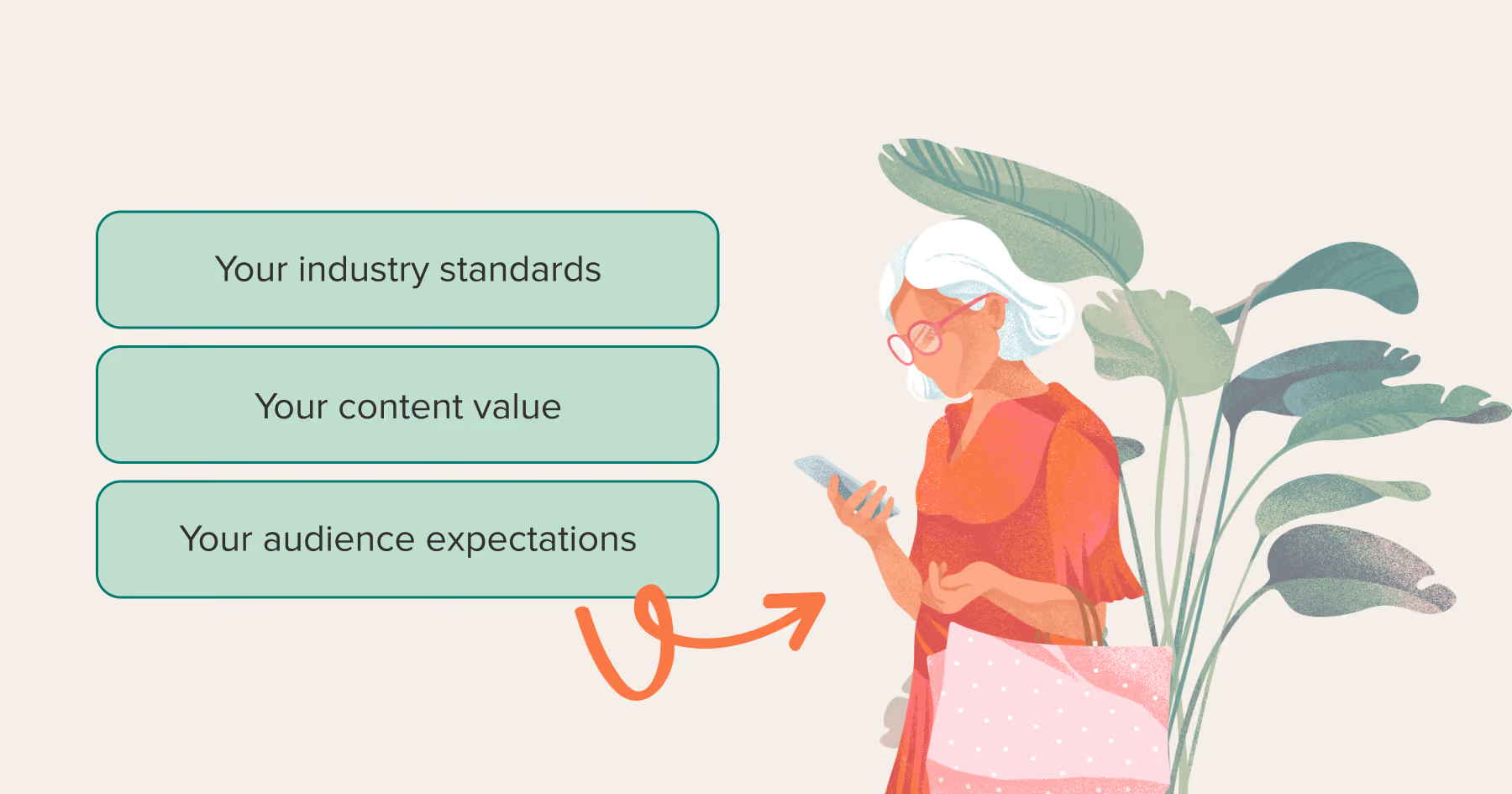
Key factors that influence your ideal frequency:
- Your industry standards: Fashion and lifestyle brands often succeed with higher frequencies because trends move fast and customers expect regular updates. B2B companies or those selling big-ticket items typically need fewer touches but more substantive content.
- Your content value: If every email offers exclusive deals, helpful tips, or entertaining stories, you can send more often. Generic promotional blasts wear out their welcome quickly.
- Your audience expectations: What did subscribers sign up for? Someone who opted in for daily deals expects a different frequency than someone who wanted a monthly newsletter.
Start with two to three emails weekly, then watch your metrics closely. Are open rates holding steady or dropping? Is your unsubscribe rate climbing? These signals tell you whether to increase, decrease, or maintain your current pace.
When does high frequency lead to email fatigue?
Email fatigue happens when subscribers feel bombarded and start tuning out your messages. You'll know you've crossed into dangerous territory when you see these warning signs:
- Your open rates drop week over week. If you're sending five emails per week and only 8% of people open them, down from 15% two months ago, you're likely overwhelming your list. Declining engagement means people have stopped caring about your content or are actively avoiding it.
- Unsubscribe rates spike above 0.5% per campaign. Every brand loses some subscribers, but if you're consistently seeing high opt-outs, frequency is often the culprit. People leave when they feel like you're taking up too much space in their inbox.
- Your emails start landing in spam folders. High frequency combined with low engagement signals to email providers that subscribers don't want your content. This damages your sender reputation and deliverability, creating a downward spiral.
Other red flags include:
- Click-through rates plummet even though opens stay stable, meaning people are checking subject lines but finding nothing worth acting on
- Survey responses indicate frustration about getting "too many emails"
- Spam complaints increase beyond 0.1% per send
- Your list growth stalls because word spreads that you over-email
The psychological component matters here. When someone sees multiple emails from the same sender piling up unread, guilt and annoyance build. Eventually, they unsubscribe just to clear the mental clutter, even if they liked your brand.
When do regular emails lead to engagement?
Consistency breeds familiarity, and familiarity builds trust. When done right, regular emails become an expected and welcome part of your customers' routine.
Think about your favorite newsletter or brand. You probably look forward to their emails because they arrive predictably and deliver value each time. That's the power of well-executed frequency.
Regular emails keep your brand top-of-mind during purchase decision windows. A customer might not need your product today, but when they're ready to buy in two weeks, your consistent presence means you're the first brand they think of. It takes several touchpoints before someone makes a purchase decision, and regular emails help you accumulate those touchpoints naturally.
Benefits of maintaining consistent frequency:
- Predictability increases: If you send every Tuesday and Thursday at 10 AM, people who like your content will watch for those emails. This predictability increases open rates because you're arriving when recipients are mentally prepared to engage.
- Better segmentation opportunities: An e-commerce email marketing agency like Growth Gurus knows that higher volume creates more data points about subscriber preferences. You can identify who opens product launches versus who engages with educational content, then adjust frequency for different segments.
- Stronger brand recall: Regular touchpoints mean customers remember you when purchase intent strikes, giving you an advantage over competitors who email sporadically.
The key difference between good frequency and bad frequency is value. If every email offers something worthwhile, whether it's an exclusive deal, helpful information, or entertaining content, people welcome regular contact. When you're just filling space or repeating the same promotions, more emails mean more annoyance.

Situations where frequent emails make sense
Daily or weekly newsletters
Content-driven brands thrive on daily emails. Media companies, deal sites, and curated product newsletters often send every single day because subscribers signed up specifically for that cadence. Morning Brew, The Skimm, and similar brands have built entire businesses on daily emails.
Daily newsletters work when:
- Your content is genuinely different each day
- Subscribers opted in, expecting daily updates
- Each email delivers immediate, actionable value
- You have the resources to maintain quality consistently
Weekly newsletters work for brands sharing deeper insights, roundups, or less time-sensitive content. A weekly cadence gives you time to craft quality content while maintaining regular contact. Many e-commerce brands use weekly newsletters to showcase new arrivals, share styling tips, or highlight customer stories.
Welcome and onboarding flows
New subscribers are your hottest leads. They just told you they want to hear from you, so capitalize on that interest immediately.
A strong welcome series might include three to seven emails over the first two weeks:
- Day 1: Immediate welcome email with brand introduction
- Day 2: Brand story and bestsellers showcase
- Day 4: Educational content about your products
- Day 7: Social proof and customer testimonials
- Day 10: Special first-purchase discount
- Day 14: Final reminder before transitioning to regular cadence
Your welcome sequence can be sent daily without annoying people because each email serves a specific purpose in helping new subscribers understand your brand and make their first purchase. After the welcome series, transition to your standard frequency.
Milestone celebrations
Birthdays, anniversaries, and loyalty milestones deserve their own emails outside your regular schedule. These messages feel personal and special, so they don't contribute to fatigue the way generic promotions do.
Effective milestone emails include:
- Birthday messages with exclusive discounts
- Anniversary notes celebrating the time since the first purchase
- VIP status notifications when customers reach loyalty tiers
- Personalized product recommendations based on purchase history
Milestone emails can interrupt your normal cadence because they're contextually relevant and emotionally resonant. They make customers feel valued rather than marketed to.
Seasonal or holiday promotions
Holiday shopping seasons justify increased frequency because customer intent is already high. People expect promotional emails during Black Friday, the winter holidays, or Valentine's Day.
You might normally send three emails per week, but during a five-day Black Friday event, sending one to two emails daily makes sense:
- Customers are actively shopping
- Deals are time-sensitive
- Competition for attention is fierce
- Purchase intent peaks during these windows
The trick is returning to normal frequency immediately after the promotional period ends. If you stay at holiday-level frequency year-round, you'll burn out your list.
Email marketing frequency best practices to boost engagement
Stay consistent with how often you send
Pick a schedule and stick to it. If you send every Monday and Thursday, your engaged subscribers will anticipate those emails. Erratic scheduling confuses people and makes your emails feel random rather than intentional.
Consistency also applies to volume. Sending once in January, seven times in February, and twice in March trains people to ignore you. They can't develop expectations around your content when the pattern keeps changing.
This doesn't mean you can never adjust frequency. Just make changes deliberately based on data, and consider telling subscribers when you're shifting to a new schedule.
Mind the timing
The best time to send emails varies by audience, but testing reveals patterns. For many e-commerce brands, Tuesday through Thursday mornings perform best. Weekend sends often see lower engagement unless your product category aligns with weekend activities.
Timing considerations:
- Time zones matter: If you have customers across the US, a 10 AM EST send means West Coast subscribers get your email at 7 AM. Some email platforms let you send based on recipient time zones, which can boost open rates significantly.
- Industry patterns differ: B2B emails perform better during work hours, while consumer brands often see evening engagement.
- Test your specific audience: Check your email analytics to identify patterns in open and click times, then schedule sends to match those windows.
Add personal touches to your emails
Personalization reduces the feeling of excessive frequency because emails feel relevant rather than generic. Using someone's name, referencing past purchases, or recommending products based on browsing history makes each message feel specifically crafted for that recipient.
Segmentation is personalization at scale. When you send different content to different groups based on their interests and behaviors, each subscriber gets fewer total emails but more relevant ones. A Klaviyo email marketing agency can help you build sophisticated segments that deliver the right message to the right person.
Even simple personalization like "We noticed you looked at these sneakers" makes an email feel less like spam and more like a helpful reminder.
Keep design and messaging clear
Every email should have one primary goal. Are you driving traffic to a sale? Sharing a new blog post? Announcing a product launch? Clarity in purpose makes your content more digestible and increases the chance someone will take action.
Clean design principles:
- Use hierarchy and white space so subscribers can grasp your main point in seconds
- Feature one clear call-to-action prominently
- Avoid cramming multiple promotions, products, and messages into one email
- Make emails mobile-friendly since most people check email on phones
When emails are easy to consume, people don't mind receiving them frequently. Avoid creating cognitive overload where everything feels equally important and therefore nothing stands out.
Let subscribers choose their preferences
A preference center gives people control over their email experience. Let them choose between daily digests, weekly roundups, or specific categories of content. Some might want only sale announcements, while others want everything you send.
Preference center options might include:
- Frequency selection (daily, weekly, bi-weekly, monthly)
- Content type choices (sales, new arrivals, style tips, company news)
- Product category interests (women's, men's, accessories, home goods)
- Special event notifications only
This approach reduces unsubscribes because people can dial back frequency without leaving your list entirely. It also gives you valuable data about what content resonates with different segments. Email marketing management services often implement preference centers as a retention strategy. Giving subscribers a choice respects their inbox and usually improves overall engagement metrics.
Experiment with different frequencies
A/B testing isn't just for subject lines. Test frequency with different segments to find your optimal cadence. Try sending one segment three emails per week and another segment five emails per week for a month. Compare engagement rates, revenue per subscriber, and unsubscribe rates.
Testing framework:
- Start with a hypothesis about what might work better
- Create comparable test segments of adequate size
- Run tests for at least three to four weeks to account for variability
- Measure both engagement metrics and business outcomes
- Document learnings and apply them systematically
Maybe promotional emails can go out more frequently than educational content, or perhaps engaged subscribers can handle higher frequency, while at-risk subscribers need fewer touches. Testing reveals the truth. Your assumptions about email marketing frequency best practices might not match how your specific audience behaves.
Monitor email deliverability
Frequency affects deliverability. Sending too many emails to unengaged subscribers damages your sender reputation, causing future emails to land in spam, even for people who want them.
Critical deliverability metrics to track:
- Bounce rates: Keep hard bounces below 2% by cleaning your list regularly
- Spam complaint rates: Maintain below 0.1% per campaign
- Inbox placement: Monitor whether emails reach the primary inbox, promotions tab, or spam
- Engagement signals: Opens and clicks tell email providers your content is wanted
If these metrics deteriorate, scale back frequency and clean your list. Remove subscribers who haven't engaged in six months or more. Working with professionals who understand email marketing frequency best practices in 2025 can help you maintain strong deliverability. They'll monitor the technical aspects that keep your emails reaching inboxes consistently.

It all comes down to respecting your audience
Behind every email address is a person with a full inbox, limited time, and competing demands for attention. Your job is to earn and keep their interest through relevance, value, and respect for their space.
The brands that succeed with email marketing are those that view subscribers as individuals with preferences rather than numbers to maximize. They understand that sending more isn't always better and that quality matters more than quantity.
When you approach email marketing frequency as a balance between your business needs and your customers' experience, you make better decisions:
- You test thoughtfully based on data
- You adjust based on subscriber feedback
- You prioritize long-term relationships over short-term metrics
- You segment to serve different audience needs
Some days this means sending an extra email because you have something genuinely valuable to share. Other times, it means holding back even though you could technically send more. The wisdom lies in knowing the difference.
Growth Gurus has seen countless brands transform their email performance by getting frequency right. The sweet spot exists where your content meets your audience's expectations consistently, predictably, and respectfully.
Conclusion
Finding the right email marketing frequency isn't about following universal rules or copying what competitors do. It's about understanding your unique audience, testing different approaches, and being willing to adjust based on what the data tells you.
Start with two to five emails per week as a baseline, then watch how your subscribers respond. Pay attention to open rates, click rates, unsubscribes, and revenue generated. These metrics tell the story of whether you're helping or harassing.
Remember that different segments within your list can handle different frequencies:
- Your most engaged customers might love daily updates
- Newer subscribers need time to warm up to your brand
- Lapsed customers require re-engagement before increasing frequency
- VIP segments often welcome exclusive, more frequent communication
Segmentation and personalization let you serve all these groups well simultaneously.
Above all, keep quality high. When every email delivers value, whether through exclusive offers, helpful information, or entertaining content, people welcome regular contact. When you're just filling space, even weekly emails feel like too much.
If you're struggling to find the right balance or need expert guidance on optimizing your email strategy, Growth Gurus can help. As a specialized email marketing agency, we work with e-commerce brands to develop data-driven frequency strategies that respect your audience while maximizing engagement and revenue. Get in touch to learn how we can transform your email marketing performance.
Recent Blog Post


Ready to grow your business?
If you want your business to experience more sales and faster growth, all you need to do is book a meeting with us today.