How to Improve E-commerce Customer Engagement With Two-way SMS

Two-way SMS gives e-commerce brands a way to turn text messaging from a one-way broadcast channel into an active customer conversation. Instead of sending a message and hoping someone clicks, brands can invite replies, answer questions, understand purchase intent, and use those conversations to guide customers toward the next step.

Two-way SMS: The practical guide to turning text replies into customers
Two-way SMS gives e-commerce brands a way to turn text messaging from a one-way broadcast channel into an active customer conversation. Instead of sending a message and hoping someone clicks, brands can invite replies, answer questions, understand purchase intent, and use those conversations to guide customers toward the next step.
How does two-way SMS can turn customer conversations into sales?
A customer receives a shipping notification and immediately has follow-up questions:
“Is this the right size?” “Can I change the delivery address?” “Does the item come with a warranty ?”
With standard one-way SMS, customers have no way to ask. The conversation stops, and they have to look elsewhere for an answer, or they might not look at all. When the item arrives, there's a high chance that a problem will arise from this lack of information.
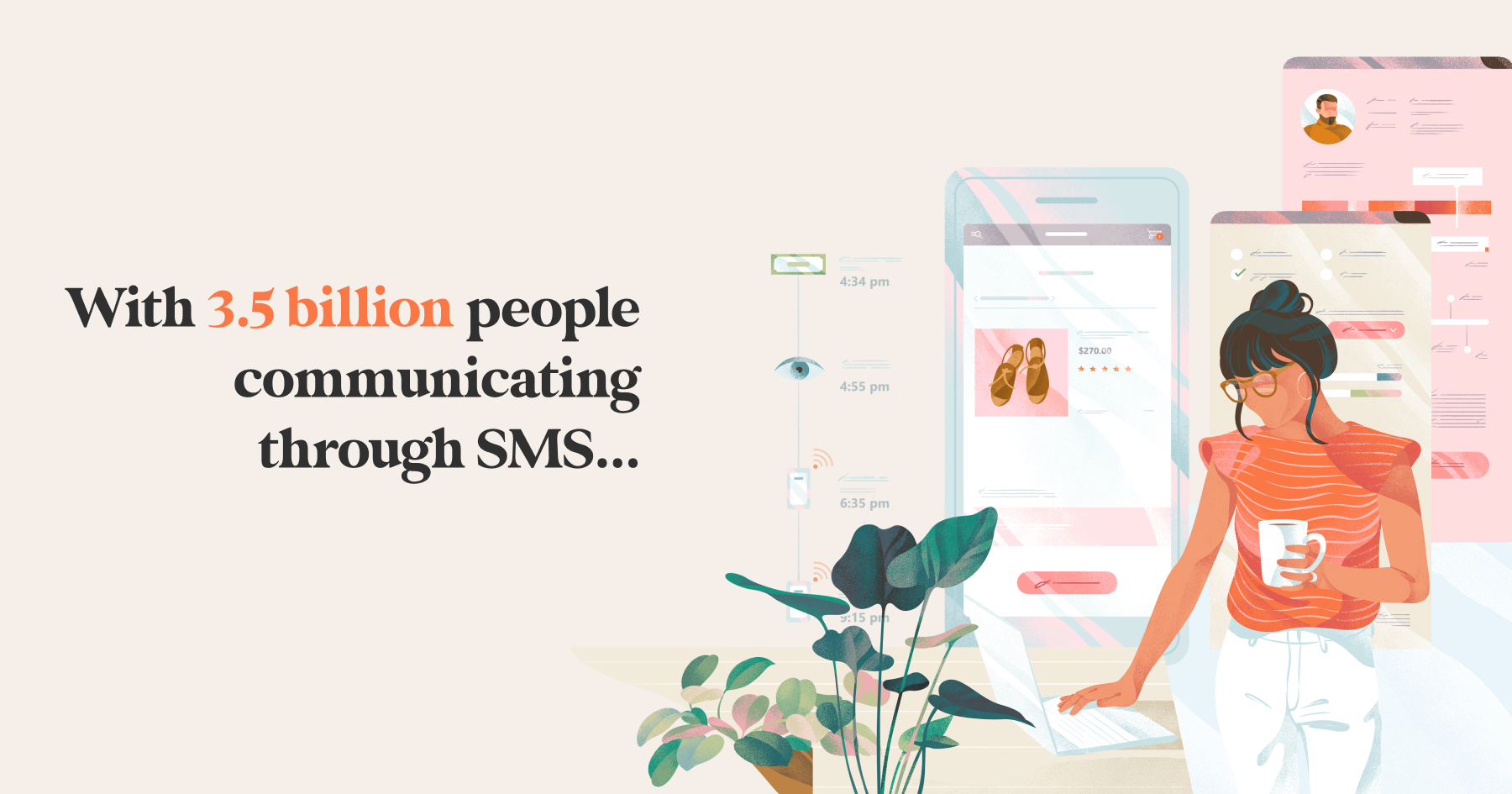
That is what two-way SMS is designed to address. Instead of treating SMS as a channel for sending promotions, brands can use it to invite replies, understand what customers need, and respond while their interest is still fresh. With 3.5 billion people communicating through SMS, the channel gives brands access to a huge audience.
For e-commerce brands, this creates an opportunity to turn everyday interactions into useful customer conversations. A simple reply can answer a question, remove a buying barrier, or reveal something about customer intent that can inform future interactions.
At Growth Gurus, we combine two-way SMS with email and lifecycle marketing to help brands understand customer intent in real time, reduce friction, and create a cohesive and meaningful experience across the customer journey.
What is two-way SMS?
Two-way SMS allows a customer to reply to a text and have that response handled through an automated flow, a live agent, or a combination of both. Instead of simply sending a message, the brand creates an opportunity for a conversation.
A traditional one-way message might read:
"Flash sale, 30% off today only. Shop now."
There is no clear reason to reply.
A message designed for two-way text messaging might say:
"Hey [Name], still deciding? We’re always happy to help if you have any questions!"
Inviting a response opens the door to a conversation. The customer can ask a question, share a preference, or explain what is stopping them from buying. The brand can then respond with information that is relevant to that specific interaction, helping the customer move to the purchase stage more easily and quickly.
Why customer replies matter for conversion
A click can tell you that someone is interested, and a reply can tell you why.
When a customer responds to a text, they can reveal information that brands can use to make the next interaction more relevant. They might ask about sizing, ingredients, shipping, pricing, product compatibility, or which option is best for their needs, which can be used to address the uncertainty that often gets in the way of a purchase.
For example, a customer who asks whether a jacket runs large may already be close to buying. Sending another discount code doesn’t answer their question, but giving them a useful sizing recommendation does.
This is where SMS customer engagement becomes more meaningful. The aim is to create interactions that help customers make decisions while giving the brand a better understanding of what they need.
How two-way SMS turns conversations into customers
Getting a customer to reply is a good starting point, but the real value comes from what happens next. A useful SMS conversation can answer a question, remove hesitation, and help someone feel confident enough to take action.
The key is to make every message relevant to where the customer is in their journey.
Start the conversation at the right moment
Timing can make a significant difference in how a customer responds. Someone who has just signed up for a product alert is in a very different position from someone who has abandoned a cart or recently made a purchase.
Rather than sending the same follow-up to everyone, consider what the customer is likely to need at that particular moment. A new subscriber might appreciate a quick question about what they are shopping for. Someone who has just purchased could be asked whether they need help choosing a complementary product.
The message should be useful and well-timed, not another promotional text competing for their attention.
Ask questions that are easy to answer
If you want customers to reply, make replying as simple as possible. Most people will not want to type out a detailed response to a brand's text.
For example, instead of asking:
"What are your skincare concerns?"
you could say:
"What are you shopping for? Reply DRY, OILY, or SENSITIVE, and we'll point you in the right direction."
That small change gives the customer an easy way to respond while giving the brand useful information about what they need. It also makes automation much easier to implement.
Respond to what the customer actually says
This is where two-way SMS starts to feel like a real conversation.
If a customer replies asking whether a product is suitable for sensitive skin, sending them another generic promotion is unlikely to help. They asked a question, so the response should answer it and make the next step clear.
Automation can handle straightforward questions, product recommendations, and common responses, while more complicated conversations can be handed over to a team member. The goal is to respond quickly without making every interaction feel robotic.
Make the next step easy
Once someone has shown interest, give them a simple way to keep moving.
Maybe they need to choose a size, compare two products, check whether an item is in stock, or finish their purchase. Whatever the next step is, avoid making the customer jump through unnecessary hoops.
A helpful conversation should naturally lead somewhere. When the path from "I'm interested" to "I'll buy it" is simple, there are fewer opportunities for the customer to lose interest.
How does two-way texting work for e-commerce brands?
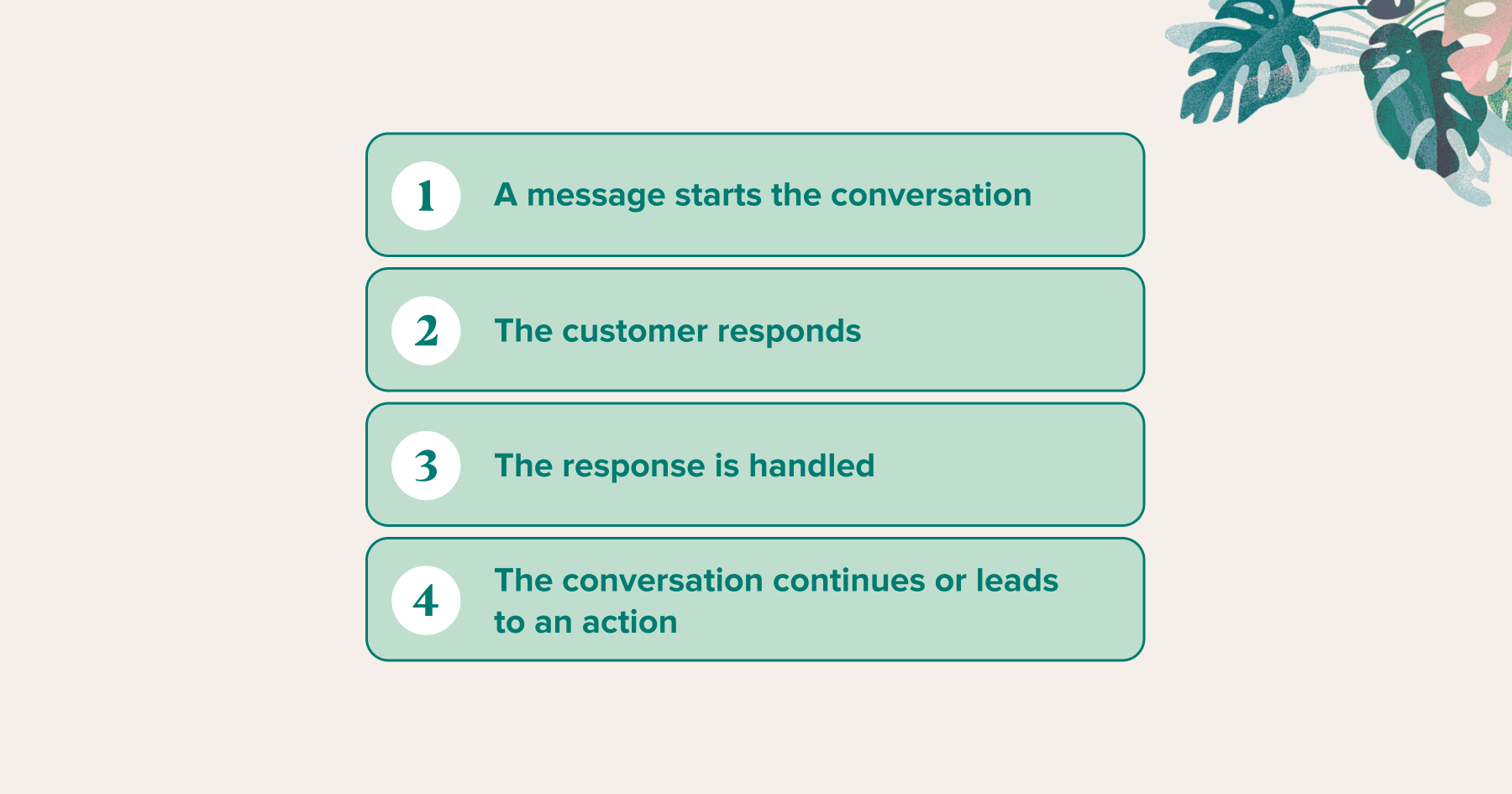
Two-way texting connects outgoing SMS with a system that can receive, interpret, and respond to customer replies. The exact setup will vary by brand, but the process typically follows four steps.
Step 1: A message starts the conversation
A text is triggered by a customer action or a campaign, such as an abandoned cart, recent purchase, product interest, or promotion. The message gives the customer a clear reason to reply.
Step 2: The customer responds
The customer can ask a question, share a preference, or indicate what they want to do next. Their response provides context that a click alone may not reveal.
Step 3: The response is handled
Common questions can be answered through automation, while more complex requests can be passed to a team member. The right approach depends on the type of question and the level of support required.
Step 4: The conversation continues or leads to an action
The response can guide the customer toward a product, checkout, support resource, or another relevant next step. Customer replies can also provide useful information for future segmentation and messaging.
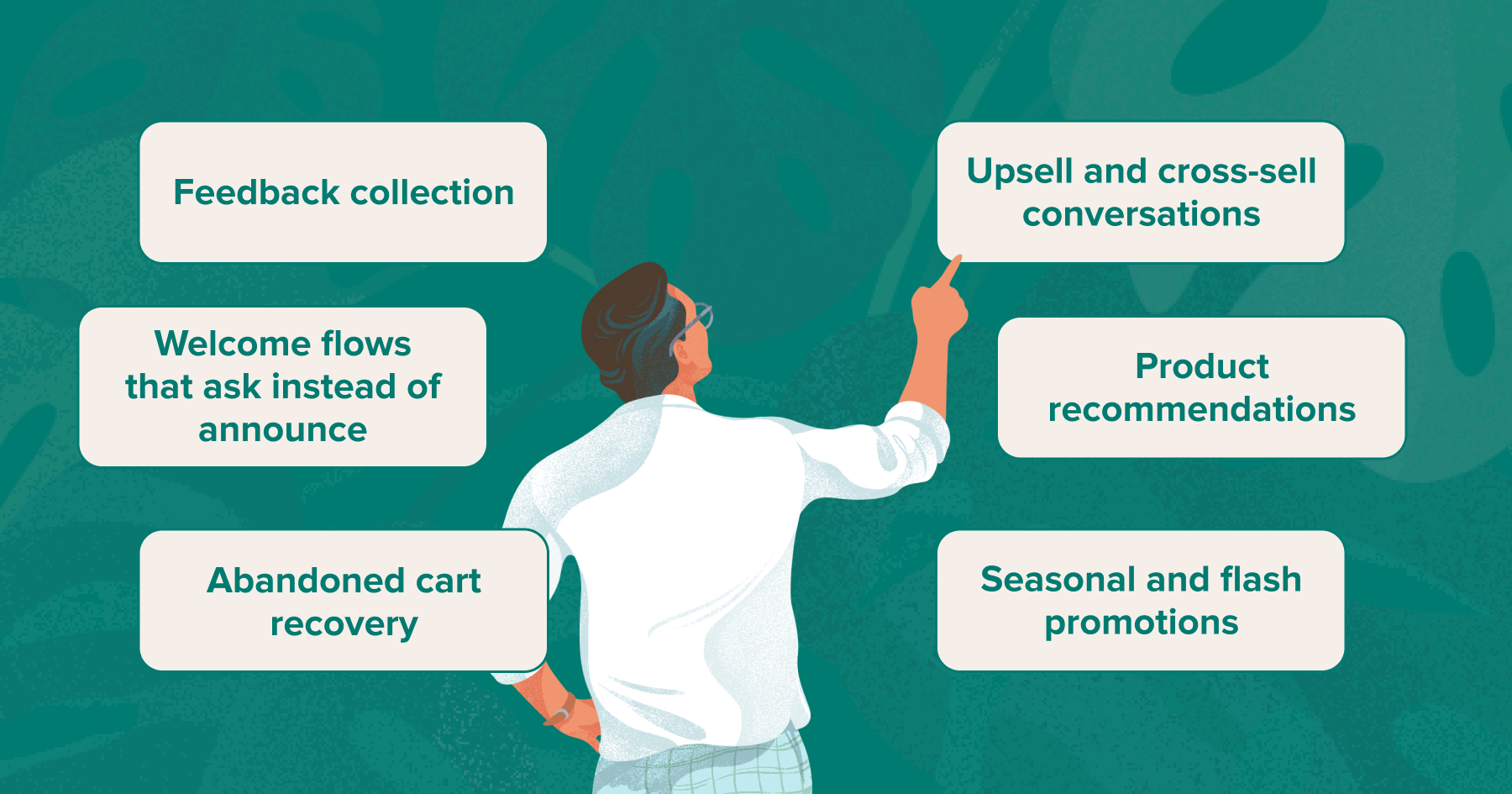
Six ways brands are using two-way SMS
1. Abandoned cart recovery
A customer may leave an item in their cart because they are unsure about sizing, shipping, price, or whether the product is right for them. A text that invites them to ask that question gives the brand a chance to address the hesitation while the purchase is still fresh in their mind.
Instead of:
"You left something in your cart. Complete your purchase now."
A brand could say:
"Still thinking about your [product]? Have a question about sizing or delivery? Reply here, and we'll help."
The response can then address the customer’s concern and give them a direct route back to checkout.
2. Welcome flows that ask instead of announce
A welcome text doesn't have to lead with a discount. Asking a new subscriber what they are interested in can start a more useful conversation.
For example:
"What are you shopping for? Reply SKINCARE, HAIRCARE, or BODYCARE, and we'll send some recommendations."
The customer's answer can shape the next message, whether that means recommending a product category, sharing useful information, or presenting an offer that matches their interests.
3. Feedback collection
Post-purchase feedback doesn’t always need to come in the form of a long survey. A simple text asking how the product fit, whether they liked it, or if everything arrived as expected gives customers an easy way to share their experience.
It also gives the brand an opportunity to respond if something didn’t go as planned.
For example:
"How did everything go with your order? Reply GOOD if everything arrived as expected, or HELP if there's anything we can fix."
The response can then determine what happens next, from requesting a review to directing an issue to customer support.
4. Upsell and cross-sell conversations
A recommendation feels more natural when it is connected to something the customer has already bought.
If someone purchased a particular skincare product, for example, a follow-up message could ask whether they need help choosing a complementary product. If the customer has a question, the brand can answer it within the same conversation rather than sending another generic promotion.
This approach can make upsell and cross-sell recommendations more relevant while giving customers the opportunity to ask questions and understand how the additional product could benefit them.
5. Product recommendations
Some customers know what they need but aren’t sure which product is right for them. A conversational recommendation flow can help narrow down the options.
A brand could ask:
"Looking for a new moisturizer? Reply 1 for dry skin, 2 for oily skin, or 3 for sensitive skin."
The response can then trigger a relevant recommendation, followed by additional information if the customer has questions.
This can work particularly well for categories where customers regularly need help comparing products, including beauty, apparel, supplements, and homewares.
6. Seasonal and flash promotions
Limited-time offers can create a reason to act now, but customers may still have questions before they buy.
Does the discount apply to a particular product? Can the item arrive before a specific date? Is a particular size still available?
Giving customers a way to ask those questions in the same text thread can help remove last-minute hesitation without slowing down the campaign.
Setting up two-way SMS for your e-commerce brand
Start with consent
Customers should clearly understand what they’re signing up for when they provide their phone number, including the types of messages they can expect and how they can opt out.
Consent and messaging practices should be reviewed against the requirements that apply to your business and customers. Keeping the process clear from the beginning helps protect the quality of your subscriber list and the customer experience.
Choose the right conversations
Not every SMS needs to become a conversation.
Start with moments where a response can genuinely help the customer or give the brand useful information. Abandoned carts, product recommendations, post-purchase questions, and high-intent promotions are logical places to start testing.
Decide what gets automated
Automation is useful for predictable questions and simple customer requests. Product details, shipping information, return policies, and basic recommendations may be suitable for automated responses.
More complicated questions, complaints, or situations that require judgment should be directed to a team member.
The important thing is to define these rules before launching. If customers are encouraged to reply, there needs to be a clear process for what happens after they do.
Segment before you personalize
Personalization depends on relevance. A message that reflects a customer's recent purchase or browsing behavior is more useful than one sent to everyone on the list.
Consider segments based on purchase history, lifecycle stage, engagement, product preferences, and recent behavior. Start with a few useful segments and refine them as you learn which conversations generate meaningful responses.
Write for a reply
A message designed to start a conversation should give customers a clear reason to respond.
Instead of:
"New collection available now. Shop here."
Try:
"The new collection is live. Looking for something specific? Reply here, and we'll help you find it."
The second message creates an opening for the customer to explain what they are looking for.
Connect SMS with the wider customer journey
The information gathered through SMS can help shape future email, product recommendations, website experiences, and retention activity.
That makes conversational SMS marketing more useful as part of a broader customer journey, where each interaction contributes to a clearer understanding of what the customer needs.
Measuring whether two-way SMS is working
A two-way SMS program should be measured by what happens after a customer responds.
Reply rate
Reply rate shows how often customers respond to messages that invite interaction. If the rate is low, review the timing, relevance, wording, and clarity of your conversation starters.
Conversation completion rate
This measures how many conversations reach a useful outcome, such as an answered question, product recommendation, support resolution, or purchase.
Conversion rate
Look at how many customers who engage with SMS go on to make a purchase. This helps connect customer conversations with actual commercial outcomes.
Revenue attributed to SMS
Revenue attribution can help you understand whether conversations are contributing meaningful sales. Compare revenue across different flows, segments, and message types to identify where the channel is performing best.
Opt-out rate
A rising opt-out rate can be a sign that customers are receiving too many messages or aren’t getting enough value from them. Monitor this alongside engagement and revenue.
Customer lifetime value
The value of SMS shouldn’t be judged entirely by immediate purchases. Look at whether useful customer interactions contribute to repeat purchases and longer-term retention.
Closing thoughts
Two-way SMS gives brands a chance to listen as well as communicate. Customer replies can reveal what people are looking for, where they’re getting stuck, and what could help them move forward. Those interactions can also uncover patterns that inform future messaging, segmentation, and personalization.
At Growth Gurus, we bring those insights into the wider customer journey, connecting SMS with email and your overall retention strategy. For e-commerce brands, that creates a more connected approach to customer communication, where a reply can inform what happens next instead of ending the interaction.
Contact us today to discover how we can help your business turn customer conversations into meaningful actions.
Frequently asked questions
How does two-way texting work for e-commerce brands?

Two-way texting allows customers to reply to SMS messages and have an ongoing conversation with a brand. A message might invite a customer to ask about a product, delivery, sizing, or an offer. Depending on the question, the response can be handled through automation, a conversational system, or a member of the customer support or marketing team.
How do you turn SMS replies into sales?
Start by identifying the customer's intent, then answer the question that may be preventing them from taking action. Once the concern has been addressed, provide a relevant recommendation or direct purchase link. The focus should be on helping the customer make a decision rather than immediately pushing a discount.
What is conversational commerce in SMS marketing?
Conversational commerce uses messaging channels to help customers discover products, ask questions, receive recommendations, and make purchase decisions through direct conversations. In SMS, this can involve automated or human responses that guide a customer through different stages of the buying journey.
What are examples of two-way SMS marketing campaigns?
Common examples include abandoned checkout conversations, product recommendation messages, welcome flows, back-in-stock alerts, feedback requests, post-purchase check-ins, replenishment reminders, and seasonal campaigns that invite customers to ask questions or request recommendations.
How does two-way SMS improve customer engagement?
It gives customers a direct way to respond instead of limiting them to clicking a link. Their replies can reveal preferences, questions, and buying concerns, allowing the brand to respond with more relevant information. Those insights can also inform future messaging, segmentation, and follow-up across the wider customer journey.
Recent Blog Post


Ready to grow your business?
If you want your business to experience more sales and faster growth, all you need to do is book a meeting with us today.