What do high-performing e-commerce email accounts have in common?

High-performing e-commerce email programs tend to share a set of recognizable characteristics. They understand their customers, build automated journeys around customer behavior, personalize communication thoughtfully, test consistently, and measure performance against commercial goals. This article explores the strategies and practices commonly found in successful email programs, with a focus on engagement, conversions, retention, and customer lifetime value.

What do successful e-commerce email programs have in common?
Sending emails regularly doesn’t necessarily mean an e-commerce brand has a strong email strategy. A busy calendar can still produce inconsistent results if campaigns lack a clear purpose, customer data is underused, or automated journeys are set up and then left untouched.
The strongest e-commerce email marketing strategies have several connected elements working together. They understand where customers are in their journey and use that information to deliver relevant messages at useful moments.
In this guide, we’ll explore the strategies commonly found across high-performing e-commerce email programs and how they can support stronger retention and revenue.
How to build a high-performing e-commerce email program
Strategy comes first
High-performing accounts have a clear purpose behind every major part of their email program. Those purposes might include driving repeat purchases, introducing new products, recovering abandoned carts, improving retention, or increasing customer lifetime value.
A strong e-commerce email marketing strategy connects these objectives with campaigns, automated flows, segmentation, and reporting. Instead of viewing each email as an isolated activity, each message contributes to the broader customer journey.
Understand your customers
Prioritize customer understanding and use information such as purchase history, product preferences, engagement, order frequency, and lifecycle stage to make communication more relevant.
Strong customer segmentation is particularly useful. A first-time buyer may need product education and reassurance, while a repeat customer might be more interested in complementary products or an early look at a new collection.
The key is using data with purpose. Simply collecting customer information doesn’t automatically improve email marketing performance. The real value comes from identifying insights that can influence timing, content, offers, and the next step in the customer journey.
Build automated flows across the entire customer journey
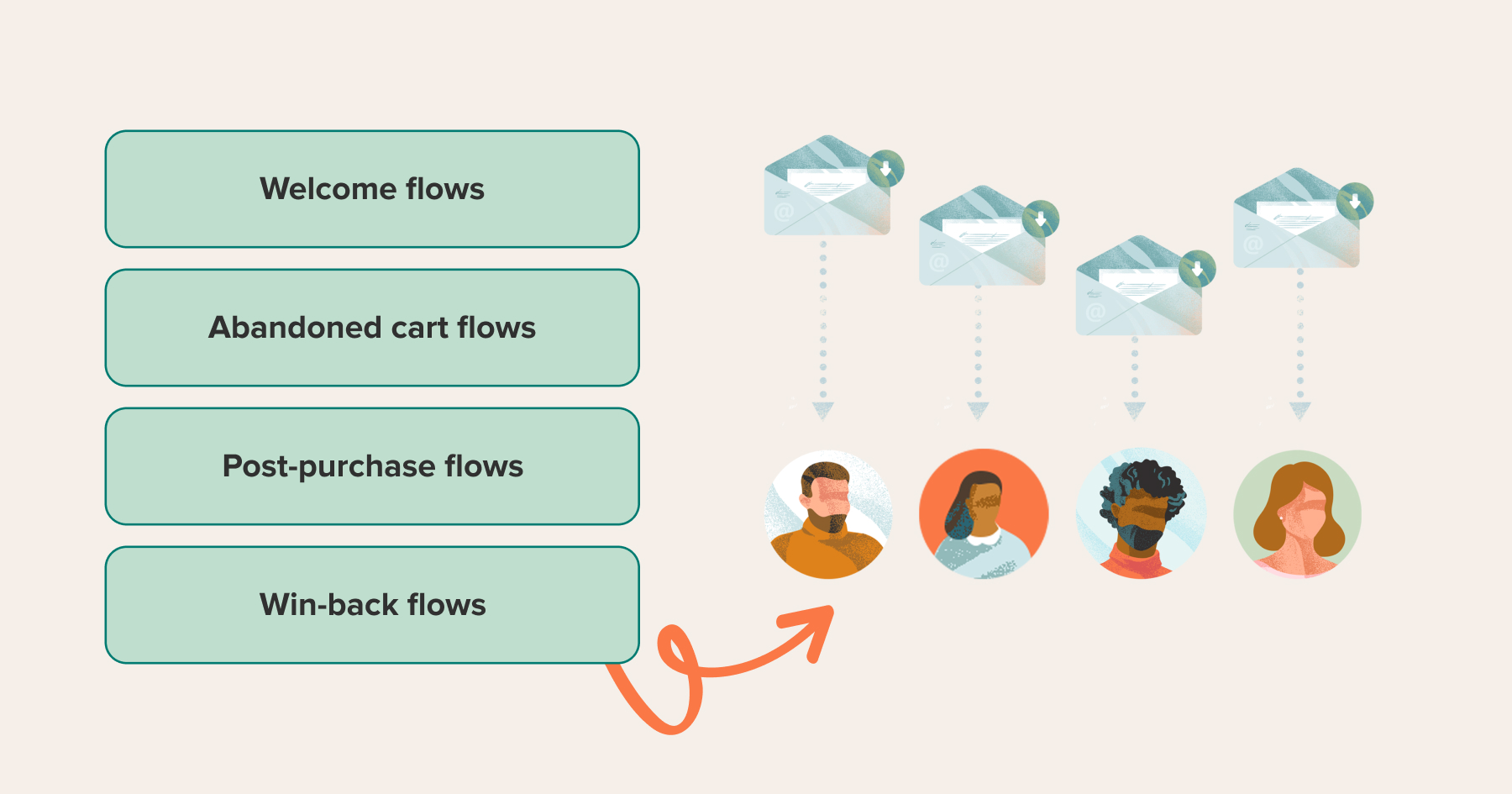
Automated flows are a core part of strong email programs because they allow brands to respond to customer behavior at the right time.
Welcome flows
Welcome flows introduce the brand, highlight what makes its products relevant, set clear expectations, and guide new subscribers toward their first purchase.
Abandoned cart flows
An estimated 79.17% of online shoppers add items to their cart without completing the purchase. A well-designed abandoned cart flow can help to recover those otherwise lost customers and revenue.
The effectiveness of these flows depends on timing, message sequence, product context, and the reason a customer may have left. A well-timed reminder can often be effective without relying on a discount.
Post-purchase flows
The customer relationship shouldn’t end after the transaction. Post-purchase emails can provide product education, request reviews, recommend relevant products, encourage replenishment, or help customers get more value from their purchase.
Win-back flows
Win-back communication allows brands to reconnect with customers who have stopped purchasing or engaging. Consider how long the customer has been inactive and what previously interested them, rather than sending the same generic offer to everyone.
Create personalization that feels relevant, not forced
Effective personalization is about context. A customer's previous purchases, browsing behavior, product interests, or lifecycle stage can help inform what they see and when they receive it.
Personalization also means adapting messaging to the customer relationship. A new subscriber and a long-term customer may have very different needs, even if they have signed up for the same list.
Balance promotional and value-driven content
Understand that customers need reasons to keep engaging between purchases. Promotions, product launches, seasonal offers, and limited-time campaigns can all support revenue, but they should sit within a broader content strategy.
Educational content, product guidance, customer stories, inspiration, and brand-led content can give subscribers other reasons to open and engage with emails. This balance can help maintain interest without making every interaction feel like another sales push.
Following this email marketing best practice can help brands build healthier, longer-lasting relationships with their subscribers.
Maintain healthy email lists and strong deliverability
List quality matters because an email program is only valuable if messages reach people who actually want to receive them. High-performing brands monitor engagement, unsubscribes, clicks, conversions, and other signals that can reveal whether their audience remains interested.
Setting clear expectations from the beginning is also important. Subscribers should understand what they’re signing up for, how often they’re likely to hear from the brand, and what type of content they can expect.
Test and optimize consistently
Customer preferences change, products change, offers change, and the performance of individual messages can shift over time. That’s why subject lines, creative, copy, offers, calls to action, layouts, audience segments, and send times need to be tested.
But testing for the sake of testing isn’t particularly useful. Every test should answer a meaningful question and provide an insight that can influence future campaigns or flows.
Measure revenue alongside engagement
Opens and clicks can help explain how subscribers interact with emails, but they do not show the full impact of email marketing on the business. High-performing brands also look at revenue, conversions, repeat purchases, and customer value.
Metrics such as email-attributed revenue, revenue per recipient, flow revenue, campaign revenue, and repeat purchase behavior provide a clearer view of business impact. Email conversion rate can also help show whether engagement is translating into meaningful action.
Connect email with your wider retention strategy
SMS, customer data, lifecycle marketing, onsite experiences, and other retention activities can complement email when you plan these channels together. This connected approach helps turn e-commerce email marketing into part of a broader retention strategy focused on driving repeat purchases and increasing customer lifetime value.

How Growth Gurus creates high-performing e-commerce email programs
Growth Gurus takes a strategy-first approach to evaluating e-commerce email programs, looking at how customer data, segmentation, automated flows, campaigns, testing, and reporting work together across the customer journey. Our approach focuses on building retention programs that are relevant to customers and commercially focused.
For brands looking to strengthen their email marketing for customer retention, Growth Gurus can support everything from the initial development of your email strategy to ongoing optimization and management. Our team works as an extension of your business to identify gaps, improve customer journeys, and create an email strategy designed to increase retention, revenue, and long-term customer value.
If you’re looking to improve your e-commerce email strategy, contact Growth Gurus to discuss how we can support your customer journey and long-term growth.
Frequently asked questions
How to improve email marketing ROI?

Improving email marketing ROI starts with connecting email activity to commercial goals. Focus on relevant segmentation, effective automated flows, personalized messaging, consistent testing, and revenue-focused reporting.
What makes an e-commerce email marketing account successful?
A successful e-commerce email marketing account typically has a clear strategy, strong customer segmentation, relevant automated flows, engaging campaigns, healthy list management, regular testing, and revenue-focused reporting.
What email marketing metrics indicate strong performance?
Revenue, conversions, revenue per recipient, flow revenue, campaign revenue, clicks, unsubscribes, repeat purchases, and customer lifetime value can all provide useful insights. The most important metrics depend on the goals of the specific campaign or automated flow.
How do you know if your email marketing is performing well?
Assess whether your email marketing is contributing to business results. Review revenue, conversions, repeat purchases, revenue per recipient, flow performance, campaign performance, and customer engagement.
What email flows should every e-commerce brand have?
The right flows depend on the products, buying cycle, audience, and business model. However, many e-commerce brands can benefit from welcome, abandoned cart, post-purchase, browse abandonment, replenishment, and win-back flows.
What is a good email marketing open rate for e-commerce?
There is no single open rate that defines strong e-commerce email performance. Open rates can vary based on factors such as audience, industry, subject line, sending frequency, and email type.
What separates good email marketing from great email marketing?
Great email marketing combines customer data, personalization, segmentation, automation, and testing to deliver relevant messages that drive revenue and retention.
Recent Blog Post


Ready to grow your business?
If you want your business to experience more sales and faster growth, all you need to do is book a meeting with us today.