What happens when you reduce email frequency instead of increasing it

When email performance starts to slow, many e-commerce brands assume the answer is to send more frequently. It can feel like a practical move because email is quick to launch, easy to measure, and closely tied to revenue. But higher frequency can sometimes create the opposite effect, especially when subscribers begin to feel overwhelmed or less interested. Reducing frequency can give your audience more space to engage with messages that feel timely and useful. This article explains what can happen when brands send fewer emails and how to approach that shift carefully.

What changes when you reduce email frequency instead of sending more
Email remains one of the strongest channels for e-commerce brands, but frequency can be difficult to manage. A calendar that feels active internally can feel overwhelming to subscribers if the messages are too similar, too promotional, or poorly timed.
Reducing frequency means being clearer about who should receive each message, why that message matters, and how it fits into the customer journey. The shift often moves the focus from filling the calendar to improving the quality, timing, and purpose of each send.
Why brands often increase email frequency first
When revenue slows down, email is often the first channel brands turn to. Paid media is expensive, organic traffic takes time, and website updates may not create immediate results. This is where a new email campaign, which can be planned and scheduled quickly, may seem like a good option.
In this way, e-commerce email marketing can become a quick fix for short-term goals. Brands add sale reminders, product highlights, back-in-stock messages, and last-chance promotions to try to increase activity. A stronger email marketing strategy starts by asking whether the audience needs another message, whether the offer is relevant, and whether the additional sends support the customer relationship.
The problem with sending too often
Sending too often can slowly train subscribers to ignore your emails, even if they were once engaged with the brand. The early impact may seem small, but the impacts can build over time and create email fatigue.
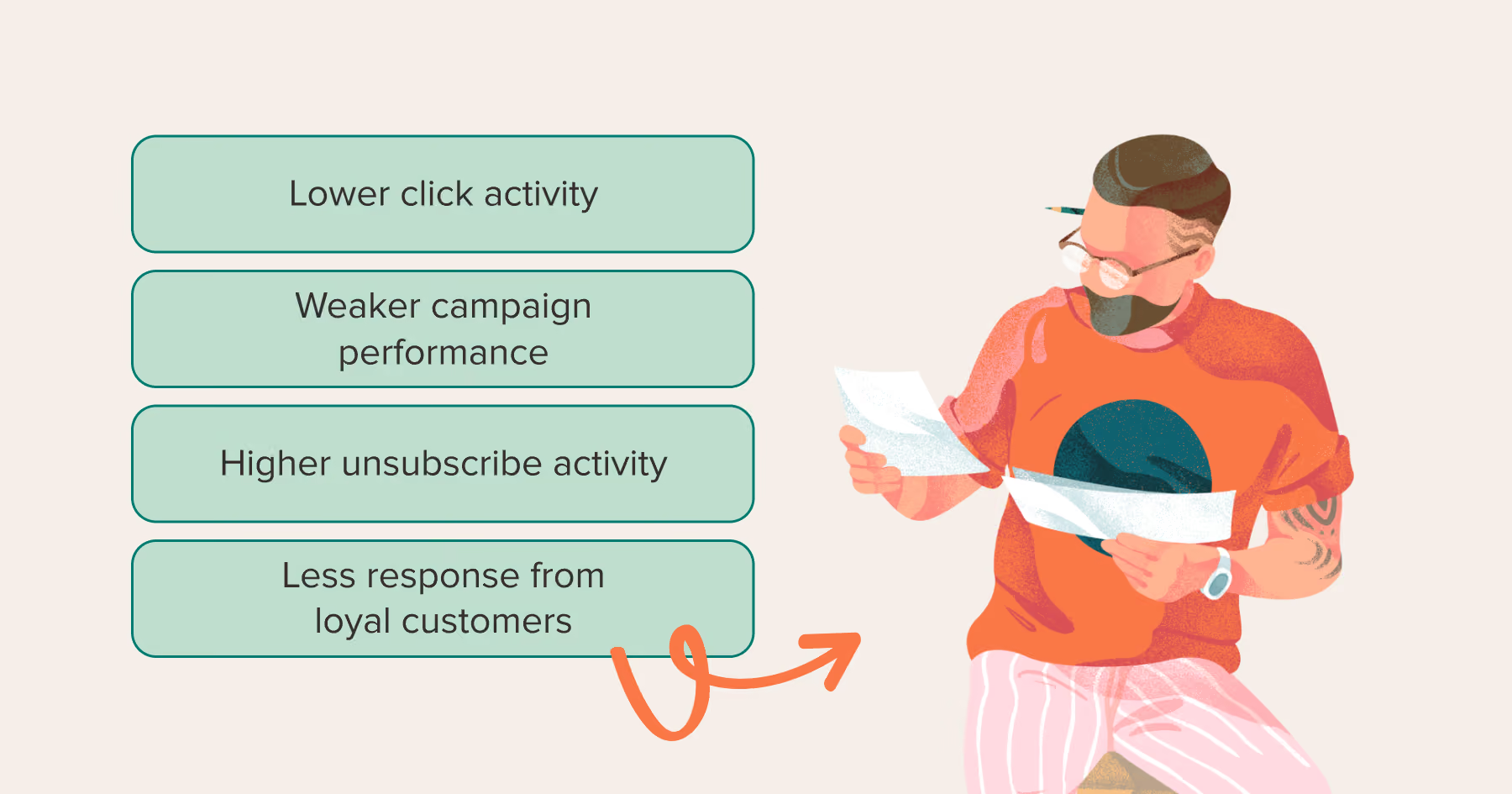
Common signs of subscriber fatigue include:
- Lower click activity: Subscribers may still open some emails, but fewer people take the next step because the messages feel repetitive or less urgent.
- Weaker campaign performance: Broad campaigns start generating fewer sales, especially when similar offers are sent too close together.
- Higher unsubscribe activity: A rising unsubscribe rate shows that subscribers are feeling overwhelmed
- Less response from loyal customers: Even strong customers may stop reacting when the inbox relationship starts to feel too heavy.
What changes when you send fewer emails
Reducing email campaign frequency can change how customers respond to your emails and how your brand reads performance. Instead of judging success by how often the brand appears in the inbox, the focus shifts to message quality, timing, audience fit, and customer response.
Campaign performance becomes easier to understand
When a brand sends constantly, email engagement rates can become harder to read because strong offers and weaker campaigns are mixed into the same busy calendar. Some subscribers may click because the message is relevant, while others may ignore it because they have already seen too many similar campaigns in a short period.
A lower send volume can make email engagement rates easier to interpret because clicks, purchases, replies, and revenue per recipient give a clearer view of what customers actually care about without being tainted by email fatigue. Open rates can still be useful, but they should not carry the full weight of performance analysis, especially when privacy changes can make them less reliable.
Subscriber pressure can start to ease
When subscribers receive too many emails, they may begin to disengage by deleting messages, unsubscribing after promotions, or marking emails as spam when the timing feels excessive. Once those reactions increase, the brand loses future opportunities with customers as their deliverability decreases
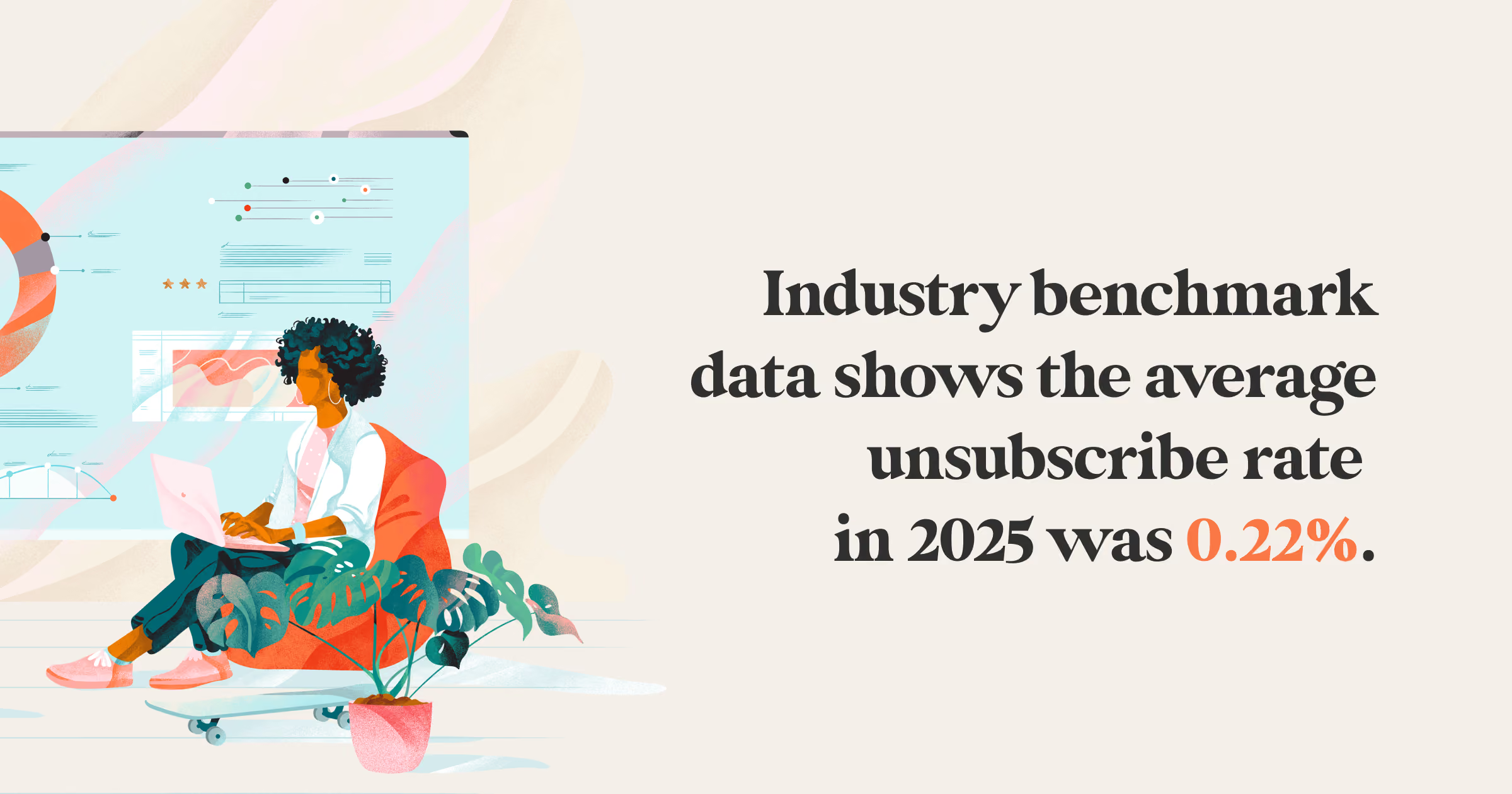
Industry benchmark data shows the average unsubscribe rate in 2025 was 0.22%. That number may look small, but e-commerce lists can be large, and small changes can add up quickly. A rising email unsubscribe rate should be treated as a signal that frequency, relevance, targeting, or expectation-setting needs attention.
Reducing sends can give your audience breathing room and help protect relationships with people who are interested, but not ready to buy today.
Deliverability can benefit from stronger signals
Inbox providers pay attention to how people respond to your messages. When subscribers click, save, reply, or engage sender reputation improves. When they ignore, delete, unsubscribe, or complain, deliverability is impacted.
This is where email deliverability becomes part of the frequency conversation. A brand that sends fewer, better-targeted campaigns may see stronger engagement signals because messages are reaching people with clearer interest. That does not guarantee inbox placement, but it can reduce unnecessary pressure on the list.
Revenue may shift before it stabilizes
Reducing frequency can feel uncomfortable because fewer campaigns may lead to fewer orders at first. Some brands notice a short-term dip when weak sends are removed from the campaign plan.
That does not always mean the change is hurting the business. A healthier program should be judged by revenue quality as well as volume. Look at revenue per recipient, conversion rate, repeat purchase behavior, unsubscribe patterns, and complaint activity.
If fewer emails create stronger customer response and lower list churn, the email strategy may increase revenue in the long run, even if the calendar looks lighter.
When reducing frequency is not the right move
Frequency is not always the main issue. Sometimes performance drops because the message lacks relevance, the offer is unclear, the creative feels repetitive, or the list is poorly segmented. These are common email marketing mistakes, and reducing sends will not fix them.
A brand may still need stronger welcome flows, better abandoned cart logic, sharper post-purchase education, stronger product recommendations, or clearer VIP treatment. These gaps can also weaken customer retention email marketing if email sending frequency decreases, because there is not enough lifecycle support in place.
Before cutting campaigns, identify whether the issue is volume, content quality, customer targeting, lifecycle gaps, or a mix of several factors.
Why an email audit should come before major changes
Before changing email frequency, run an e-commerce email audit. This gives you a clearer view of which campaigns are helping, which flows are missing, and where your audience may be showing signs of fatigue.
A useful audit should review:
- Campaign performance across key segments
- Revenue from important automated flows
- Unsubscribe and complaint trends
- Customer purchase cycles and timing
- Repeated offers across recent campaigns
- Overlap between SMS and email promotions
- List health and inactive subscribers
An audit turns frequency decisions into a strategy conversation instead of a guess.
How to reduce frequency without losing momentum
Reducing frequency works best when it starts with the emails that add the least value. Review recent campaigns and look for sends with weak clicks, low revenue, high unsubscribes, repeated messaging, or timing that does not match customer behavior. These are usually the safest places to cut, combine, or improve.
Strong email marketing campaign management should protect important touchpoints while removing unnecessary pressure from the inbox. That may mean pausing duplicate sale reminders, sending fewer broad campaigns, separating buyers from non-buyers, and giving recent purchasers a short break before the next promotional message.
The purpose is to keep useful communication in place while removing messages that create fatigue without meaningful return.
Finding the right balance for your audience
There is no single schedule that works for every e-commerce brand, so the final decision should be based on how your audience buys, engages, and moves through the customer journey.
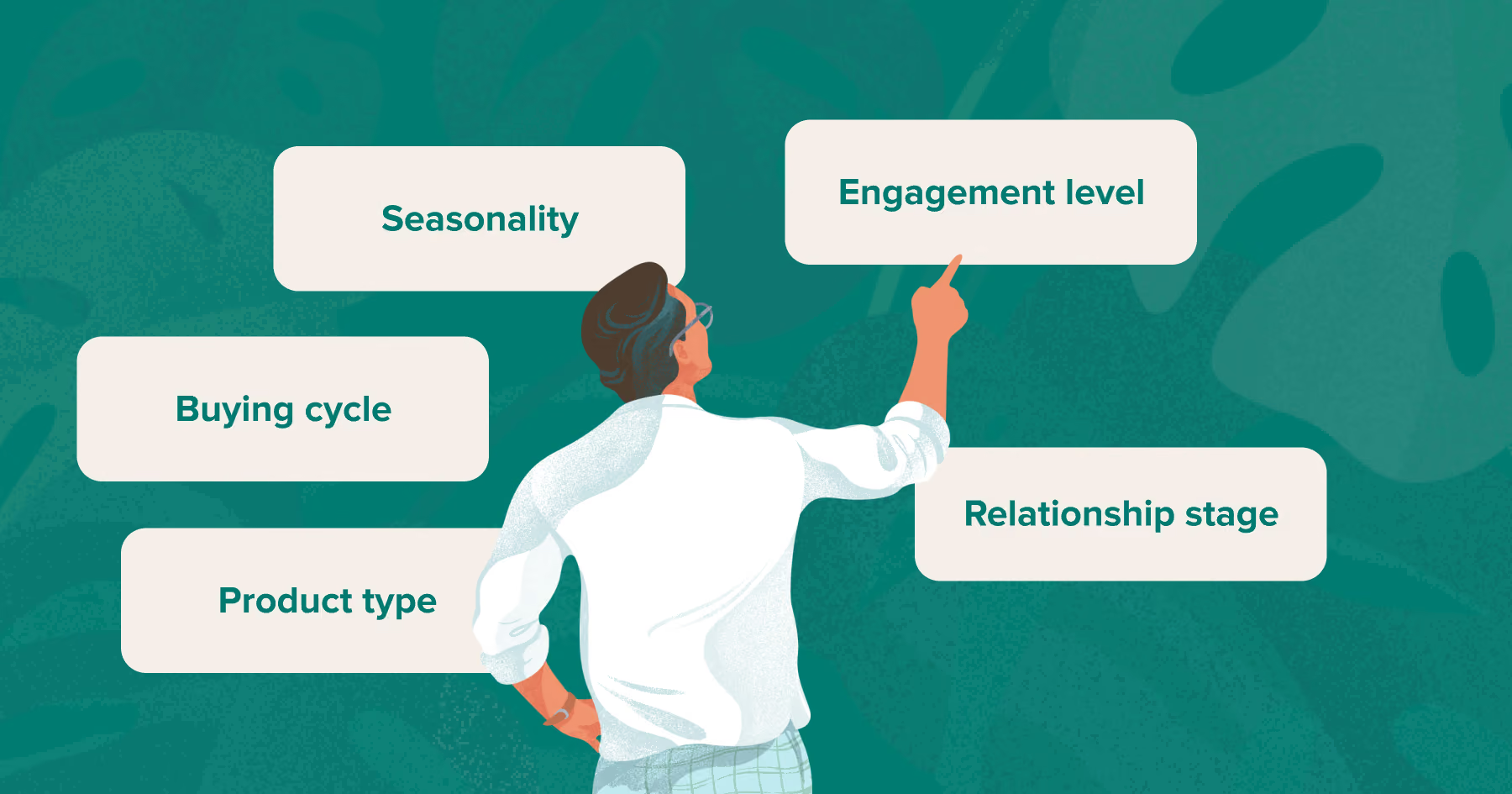
Best practices for email frequency include reviewing:
- Product type: Replenishable products may support more regular reminders, while high-consideration purchases often need more space.
- Buying cycle: A short purchase cycle may need a different rhythm than a longer decision process.
- Seasonality: Launches, holidays, and peak sales periods may temporarily change the schedule.
- Engagement level: Active subscribers may respond well to more touchpoints, while less active contacts may need fewer sends.
- Relationship stage: First-time buyers, VIP customers, and inactive subscribers should not always receive the same frequency.
The next step is to test your email sending frequency across different segments and refine it based on clicks, conversions, unsubscribes, and repeat purchases.
Final thoughts
Reducing email frequency should be treated as a careful strategic decision, not a quick reaction to lower engagement or slower revenue. The strongest results usually come from reviewing performance, testing changes by segment, and watching how subscribers respond over time.
A lower send schedule can help brands understand which messages are truly earning attention and which ones are simply filling space on the calendar. That insight can make future campaigns easier to plan, measure, and improve.
Growth Gurus helps e-commerce brands turn email and SMS into clearer, better-timed customer touchpoints through lifecycle automation, retention planning, and e-commerce marketing services.
Frequently asked questions
How often should e-commerce brands send emails?

It depends on the brand’s buying cycle, product type, and engagement level, since some audiences respond well to regular sends while others need more space.
Does sending fewer emails increase revenue?
Sending fewer emails can improve revenue quality when weak campaigns are removed and stronger segments receive better-timed messages, but results should be tracked carefully.
How to reduce unsubscribe rates?
To reduce unsubscribe rates, send to tighter segments, avoid repetitive promotions, improve relevance, and give recent buyers space before another sales-focused campaign.
Should every subscriber receive the same frequency?
No, different subscriber groups often need different timing because recent buyers, VIP customers, inactive contacts, and first-time buyers respond differently.
Can SMS help if email frequency is reduced?
Yes, SMS can help when it is used carefully for timely updates, back-in-stock alerts, replenishment reminders, order messages, and selected promotions.
Recent Blog Post


Ready to grow your business?
If you want your business to experience more sales and faster growth, all you need to do is book a meeting with us today.