How to prevent stockouts using smart SMS and email automation

Running out of stock can devastate an e-commerce business, resulting in lost sales, frustrated customers, and damaged brand reputation. Smart SMS and email automation provide a proactive solution to prevent stockouts before they happen. By implementing automated inventory alerts and customer communication flows, businesses can maintain optimal stock levels while keeping customers informed and engaged. These technologies transform reactive inventory management into a strategic advantage that drives both customer satisfaction and revenue growth.

How do SMS and email automation help you avoid stockouts?
Managing inventory effectively requires constant vigilance and instant communication when stock levels fluctuate. Traditional manual approaches to inventory monitoring often result in delays that cost businesses thousands in lost revenue. Modern SMS and email automation for inventory updates creates real-time communication bridges between stock levels, internal teams, and customers.
Growth Gurus is an email and SMS marketing company, specializing in developing automation strategies that prevent inventory issues in e-commerce before they impact your bottom line. Our approach combines advanced inventory monitoring with intelligent customer communication flows, ensuring sales momentum is maintained even during supply chain disruptions. Through strategic email marketing campaign management and SMS automation, businesses can transform potential stockout disasters into opportunities for customer engagement and loyalty building.
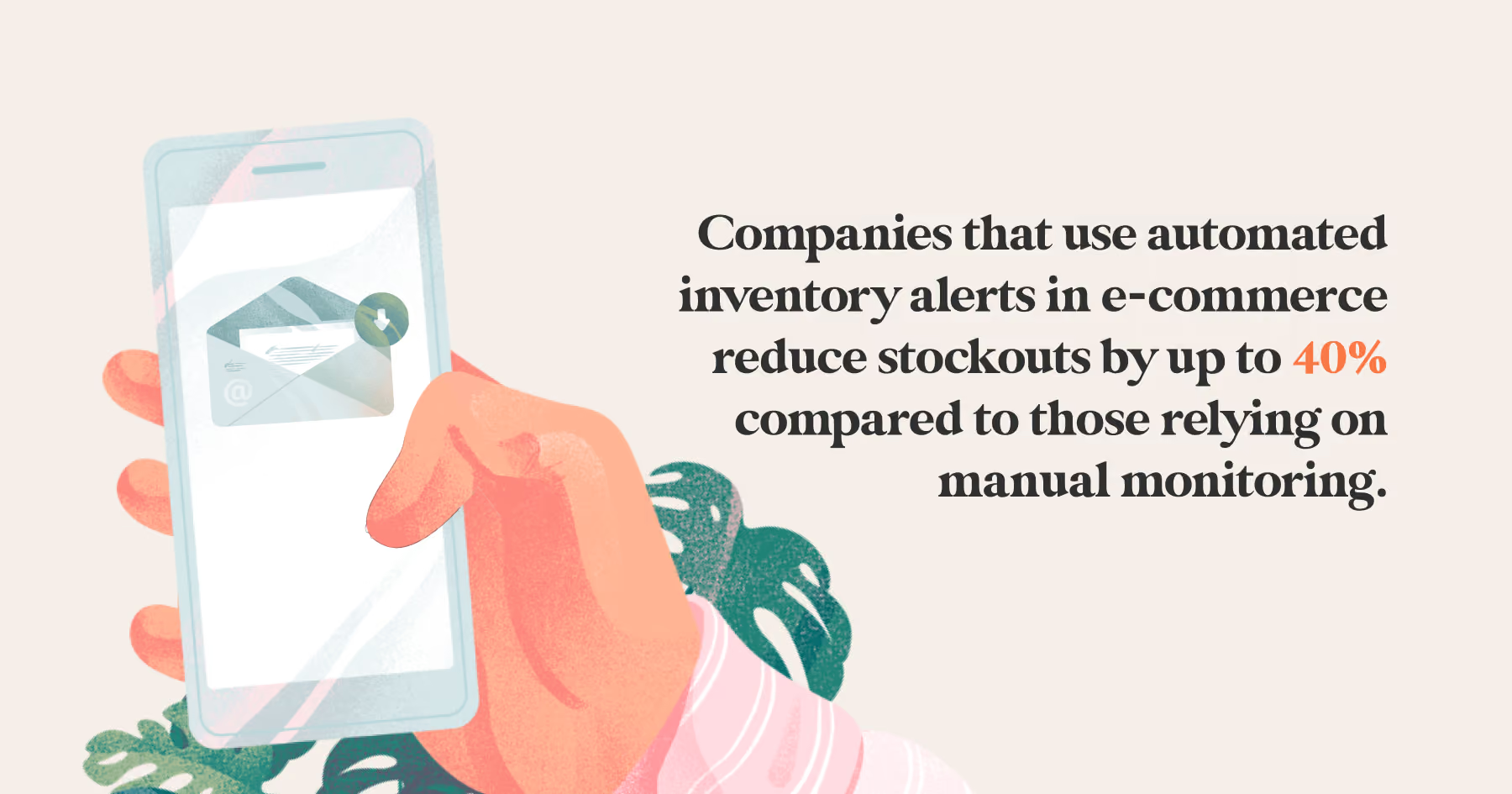
According to recent industry research, companies that use automated inventory alerts in e-commerce reduce stockouts by up to 40% compared to those relying on manual monitoring. This dramatic improvement stems from the speed and accuracy that automation brings to inventory management processes.
What is out-of-stock, and why does it happen?
Out-of-stock situations occur when customer demand exceeds available inventory, leaving businesses unable to fulfill orders for specific products. These scenarios develop through various factors, including unexpected demand spikes, supply chain delays, seasonal fluctuations, and inadequate forecasting. Understanding the root causes helps businesses implement preventive measures rather than reactive solutions.
Supply chain disruptions represent one of the most common causes of unexpected stockouts. When suppliers face production delays or shipping complications, businesses downstream feel the immediate impact through depleted inventory levels. Similarly, viral social media mentions or influencer endorsements can create sudden demand surges that exhaust carefully planned stock levels within hours.
Poor inventory forecasting contributes significantly to recurring stockout problems. Many businesses rely on historical sales data without accounting for market trends, competitor actions, or seasonal variations. This approach leaves companies vulnerable to demand fluctuations that could be anticipated through more sophisticated analysis and planning.
Inadequate safety stock levels compound these challenges by providing insufficient buffer inventory during unexpected situations. Businesses often underestimate the time required to restock popular items, resulting in gaps between when inventory is depleted and when new stock arrives.
How to retain customers when facing inventory issues
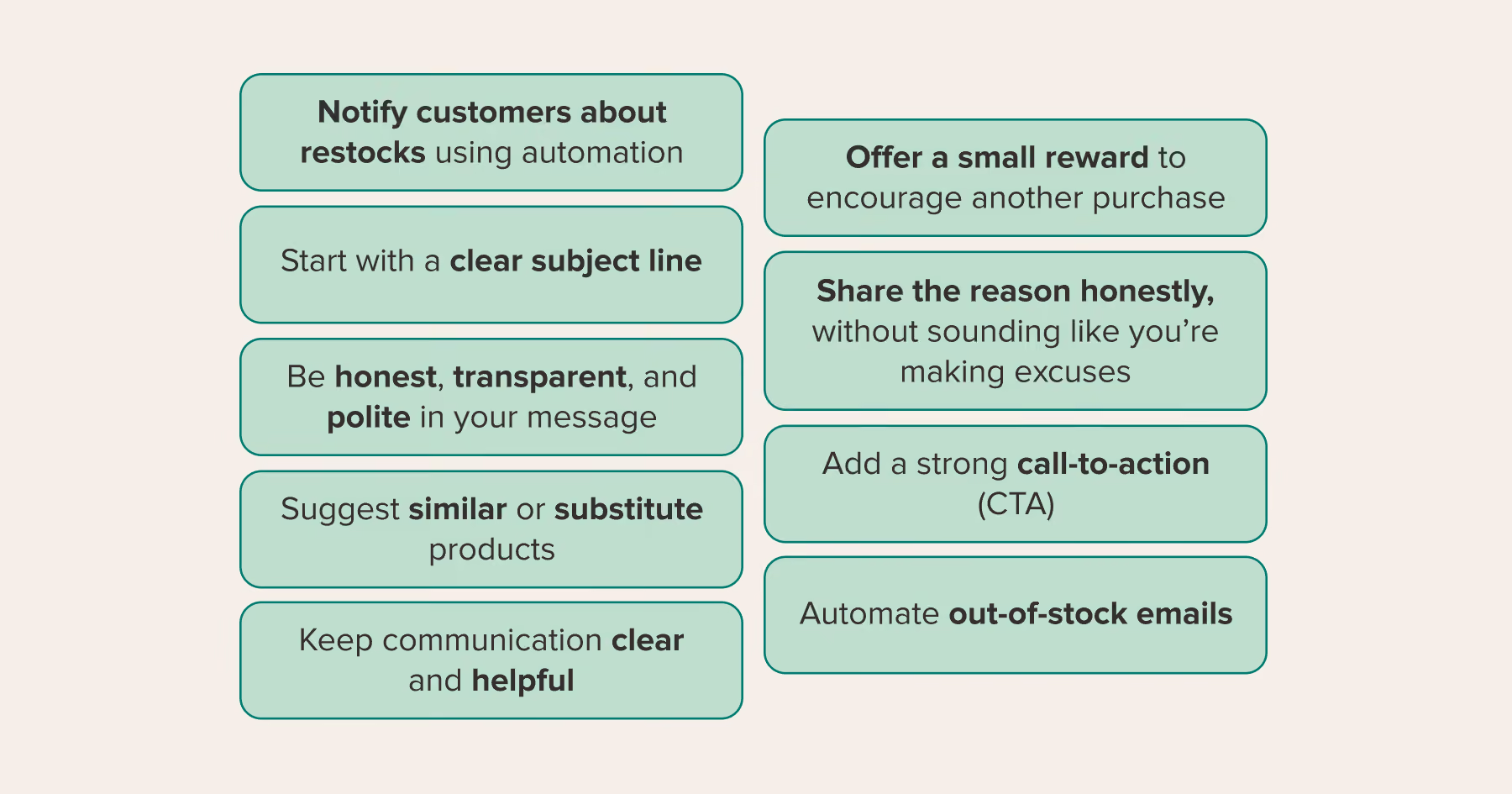
Notify customers about restocks using automation
Speed determines customer satisfaction when stockouts occur. Automated systems excel at delivering instant notifications, ensuring customers are informed about inventory issues before attempting to make purchases. Immediate Shopify inventory alerts prevent the frustration that builds when customers discover unavailable products during checkout processes.
Quick notifications demonstrate respect for customer time and maintain trust during challenging situations. Customers appreciate transparency and respond positively to businesses that communicate proactively rather than forcing discovery through failed purchase attempts.
Start with a clear subject line
Email subject lines must immediately convey the inventory situation without creating panic or confusion. Effective subject lines strike a balance between honesty and reassurance, allowing customers to understand the problem while maintaining confidence in your brand’s ability to resolve issues.
Examples of clear subject lines include “Your favorite item will be back soon” or “Update on your recent order.” These approaches acknowledge the situation without using alarming language that might permanently deter customers.
Be honest, transparent, and polite in your message
Transparency fosters customer loyalty during challenging times. Messages should explain the stockout situation clearly while maintaining a helpful, solution-focused tone. Customers value honesty over elaborate excuses and respond better to straightforward communication about inventory challenges.
Your message should acknowledge the inconvenience while emphasizing your commitment to resolving the situation quickly. This approach transforms potentially harmful experiences into demonstrations of your brand’s integrity and customer focus.
Suggest similar or substitute products
Product recommendations prevent lost sales while demonstrating your understanding of customer needs and preferences. Strategic substitution suggestions can introduce customers to new products they prefer over their original choices. This approach requires deep product knowledge and recommendation algorithms that identify truly suitable alternatives.
Effective substitution strategies consider customer purchase history, product specifications, and relationships with complementary items. Rather than random suggestions, focus on items that genuinely meet the exact customer needs while offering additional benefits.
Keep communication clear and helpful
Every customer interaction during stockout situations should prioritize clarity and helpfulness over corporate messaging. Avoid technical jargon or complex explanations that confuse rather than inform. Focus on actionable information that helps customers make informed decisions about their purchases.
Clear communication includes specific timelines for restocking, alternative purchasing options, and easy ways for customers to stay updated on inventory status. This information empowers customers to choose their preferred response rather than leaving them uncertain about next steps.
Offer a small reward to encourage another purchase
Strategic incentives can transform stockout disappointments into future sales opportunities. Small rewards, such as discounts, free shipping, or exclusive access to new products, demonstrate your commitment to customer satisfaction while encouraging continued engagement with your brand.
The key lies in offering meaningful rewards that feel genuine rather than manipulative. Customers recognize authentic efforts to make amends and respond positively to businesses that take responsibility for inventory challenges.
Share the reason honestly, without sounding like you’re making excuses
Explaining stockout causes helps customers understand your situation without appearing to shift blame. Focus on brief, factual explanations that acknowledge responsibility while providing context for the inventory challenge. This transparency often increases customer patience and understanding.
Avoid detailed explanations that sound defensive or accusatory toward suppliers or other parties. Instead, focus on what you’re doing to prevent similar situations in the future and how you’re working to resolve the current issue.
Add a strong call-to-action (CTA)
Every stockout communication should include clear next steps for customers. Strong CTAs guide customers toward desired behaviors, such as signing up for email restock notifications, exploring alternative products, or taking advantage of special offers.
Effective CTAs use action-oriented language that makes the next step feel natural and beneficial. Rather than pushing sales, focus on providing value through convenient options that serve customer interests while maintaining your business relationship.
Automate out-of-stock emails
Automation ensures consistent, timely communication when stockouts occur. Out-of-stock email alerts can be triggered immediately when inventory levels reach predetermined thresholds, maintaining communication speed that manual processes cannot match. These systems operate continuously, providing coverage during off-hours and peak periods when manual monitoring might falter.
Automated systems also enable segmentation, personalizing messages based on a customer’s purchase history, preferences, and engagement patterns. This personalization increases response rates and customer satisfaction compared to generic stockout communications.
What to avoid with out-of-stock email marketing
Delaying the notification
Delayed notifications amplify customer frustration and damage brand trust. When customers discover stockouts through failed purchase attempts rather than proactive communication, they question your operational competence and customer care commitment. Quick notification prevents this negative experience while demonstrating operational excellence.
Using vague or misleading language
Ambiguous communication creates confusion and erodes customer confidence. Phrases like “temporarily unavailable” without specific timelines leave customers uncertain about when they can expect resolution. Clear, specific language enables customers to make informed decisions about their purchases and future interactions with your brand.
Ignoring customer emotions
Stockout situations create genuine disappointment and frustration that require acknowledgment. Messages that focus solely on operational details without recognizing customer emotions feel cold and disconnected. Empathetic communication demonstrates your understanding of the customer experience while maintaining professional relationships.
Overloading with apologies
Excessive apologies can make situations seem worse than they are while creating doubt about your business competence. One sincere acknowledgment of the inconvenience, followed by solution-focused communication, strikes the right balance between accountability and confidence.
Using a cold, robotic tone
Automated messages should convey a human warmth and personality, rather than sounding mechanical or impersonal. Customers can distinguish between thoughtfully crafted automated messages and generic templates that lack consideration for their specific situation and needs.
Failing to update inventory data in real time
Outdated inventory information leads to continued customer disappointment and operational confusion. Real-time inventory updates ensure that automated messages are triggered at the appropriate times and contain accurate information about product availability and restocking timelines.
How does Klaviyo manage out-of-stock alerts?
Klaviyo email marketing provides tools for managing inventory-related customer communications through advanced automation workflows. The platform’s integration capabilities connect directly with ecommerce platforms to monitor inventory levels in real-time, triggering appropriate messages when stock thresholds are reached.
Klaviyo inventory automation enables businesses to create complex flows that consider customer segments, purchase history, and engagement patterns when determining message timing and content. These flows can include low inventory email automation for internal teams, customer notification sequences, and restock notifications that re-engage interested customers.
The platform’s analytics capabilities provide detailed insights into how inventory communications in e-commerce affect customer behavior, enabling continuous optimization of messaging strategies. Businesses can track open rates, click-through rates, and conversion metrics for different types of inventory-related messages, refining their approach based on actual performance data.
Advanced segmentation features enable highly personalized inventory communications that take into account factors such as customer lifetime value, purchase frequency, and product preferences. This segmentation ensures that high-value customers receive priority communication, while all customers receive relevant and timely information about product availability and updates.

Conclusion
Preventing stockouts requires a strategic combination of proactive monitoring, intelligent automation, and empathetic customer communication. Best SMS flows for inventory updates and smart email flows that reduce inventory issues, create comprehensive solutions that protect both revenue and customer relationships during inventory challenges. By implementing the strategies outlined in this guide, businesses can transform potential stockout disasters into opportunities to demonstrate operational excellence and exceptional customer care.
Success in modern ecommerce inventory management depends on embracing technology that connects inventory data with customer communication in real-time. Companies that master these connections gain a competitive advantage through improved customer satisfaction, reduced revenue loss, and a stronger brand reputation.
Growth Gurus is an e-commerce email marketing agency that helps businesses to integrate automated inventory management tools with customer engagement. Our expertise in solutions for inventory management in e-commerce ensures that your business stays ahead of potential stockout situations while maintaining the customer relationships that drive long-term growth and success. Contact us today to discover how we can assist you in developing automated systems that prevent the inventory issues commonly encountered by e-commerce businesses.
Recent Blog Post


Ready to grow your business?
If you want your business to experience more sales and faster growth, all you need to do is book a meeting with us today.