What drives people to unsubscribe from emails: 4 biggest factors

Email marketing remains one of the most powerful tools for e-commerce businesses, yet watching subscribers leave your list can feel discouraging. Understanding why people unsubscribe gives you the insights you need to build stronger connections with the audience that stays.

While some subscriber loss is natural and inevitable, many subscribers are lost due to avoidable strategic missteps. By addressing these common pain points, you can reduce unnecessary churn and cultivate a list of engaged customers who genuinely want to hear from you.
What might be the cause of a high unsubscribe rate, and how can we keep them?
You've crafted the perfect email campaign. Your subject lines are compelling, your design is flawless, and your offers are irresistible. You hit send with confidence, then watch in dismay as unsubscribe notifications start rolling in.
Understanding the reasons behind email unsubscribes is the first step toward building a healthier, more engaged email list. At Growth Gurus, we've analyzed countless campaigns and identified the core factors that push subscribers away. Let's explore what's really happening and how you can turn things around.
Understanding unsubscribes: They're actually your friend
Here's something that might surprise you: unsubscribes aren't the enemy. While losing subscribers stings, a healthy list naturally sheds inactive users. Industry data shows that maintaining an average email unsubscribe rate of around 0.5% is entirely normal and even beneficial.
When someone leaves your list, they're doing you a favor. They're removing themselves before they drag down your engagement metrics. Every person who wasn't opening, clicking, or converting was artificially inflating your list size while deflating your actual performance numbers.
Think of it this way: would you rather have 10,000 subscribers with a 2% open rate, or 5,000 subscribers with a 25% open rate? The smaller, engaged list wins every time. It costs less to maintain, delivers better results, and gives you accurate data to work with.
The 4 biggest factors behind email unsubscribes
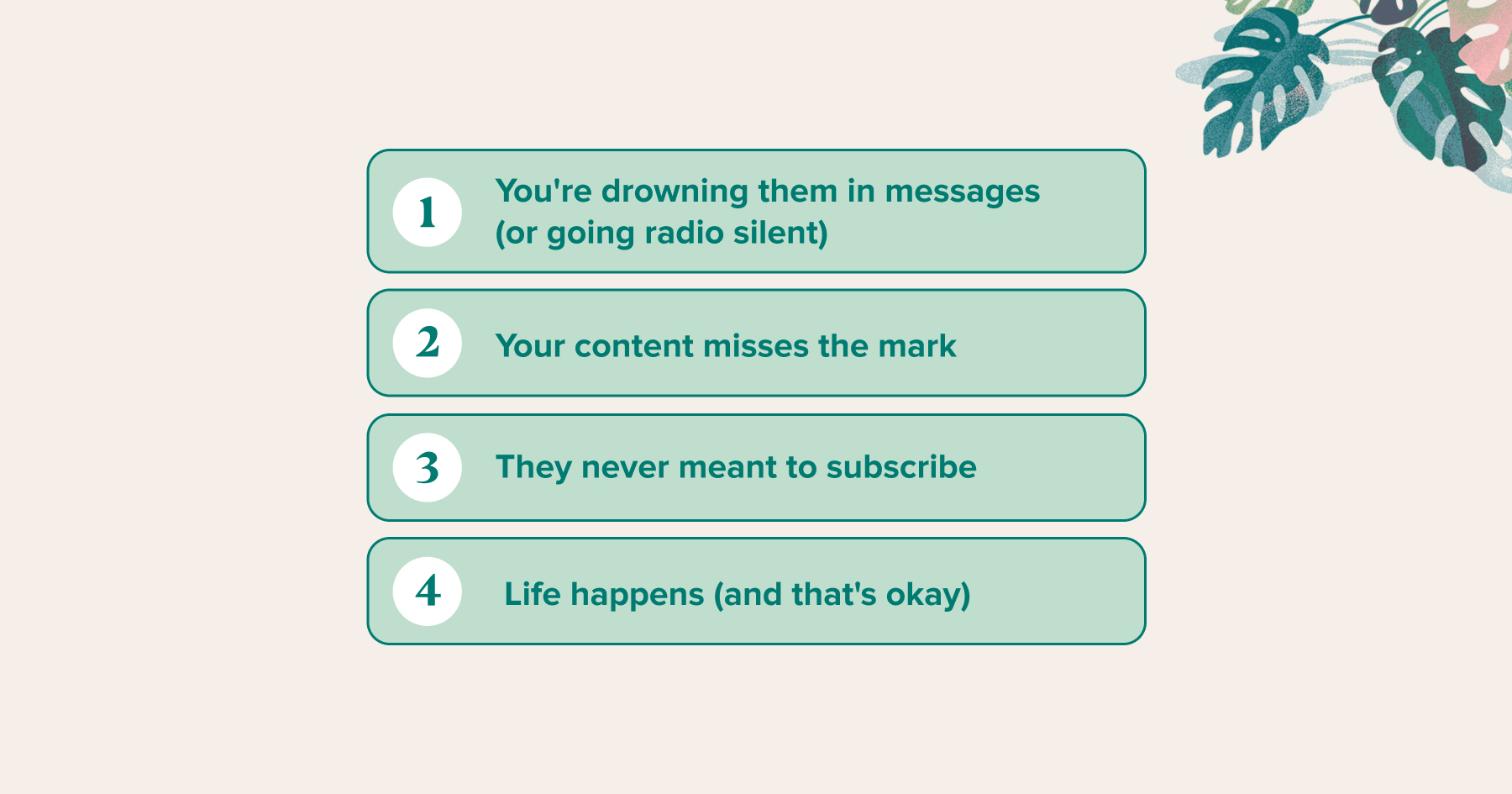
1. You're drowning them in messages (or going radio silent)
The number one reason people click that unsubscribe button? Email frequency. You're either overwhelming them with daily messages or disappearing for months at a time.
When subscribers receive three emails before lunch, they feel bombarded. Their inbox becomes a battlefield, and your brand becomes associated with stress rather than value. Even loyal customers have limits on how many promotional messages they can handle before they tune out completely.
The other side is equally problematic. When you send one email every three months, your subscribers tend to forget who you are. They signed up with enthusiasm, then heard nothing. By the time your next campaign arrives, they're likely to be confused about why they're receiving it and will be quick to unsubscribe on emails they don't recognize.
Finding the sweet spot requires testing and listening. Most e-commerce brands find success with two to four emails per month, but your audience might prefer weekly touchpoints or biweekly updates. The key is consistency paired with value.
How to fix it:
- Build a preference center: It allows subscribers to control their experience. Let them choose between weekly digests, promotional alerts, or monthly newsletters. When people have autonomy over their inbox, they tend to stay longer.
- Track your engagement patterns: If open rates drop after your third email in a week, you've found your threshold. Pull back before you lose subscribers permanently.
- Ask directly: Send a survey asking how often subscribers want to hear from you. The answers might surprise you and will definitely guide your calendar planning.
2. Your content misses the mark
Imagine subscribing to a cooking newsletter for vegetarian recipes, then receiving nothing except steak preparation guides. You'd leave, too.
Irrelevant content is one of the primary reasons for email unsubscribes. When subscribers feel like you're talking at them instead of to them, they check out. This happens when brands blast the same message to their entire list without considering individual interests, purchase history, or browsing behavior.
Generic promotional emails wear thin quickly. Your subscribers joined your list because they saw value in your brand, whether that was educational content, exclusive deals, or insider access. When every message is a hard sell for products they'll never buy, you break that initial promise.
How to fix it:
- Segmentation: Your email marketing campaign management should categorize subscribers based on their purchase history, engagement level, product preferences, and lifecycle stage. Someone who bought running shoes last week shouldn't receive the same email as someone browsing winter coats.
- Personalize beyond the first name: Use browsing data, past purchases, and stated preferences to tailor content. Dynamic content blocks enable you to display different products to distinct segments within the same campaign.
- Mix up your content types: Balance promotional emails with educational content, behind-the-scenes stories, customer spotlights, and helpful tips. Klaviyo email marketing tools make it easy to automate this variety while maintaining relevance.
3. They never meant to subscribe
Sometimes, unsubscribes happen because the wrong person received your emails in the first place. This occurs in two main ways:
A subscriber accidentally mistyped their email address during signup. Through a coincidence, that typo created a valid email address belonging to someone else entirely. That person opens your welcome email, has no idea who you are, and immediately unsubscribes.
Or, someone maliciously signed up another person for multiple email lists as a prank. The victim receives your emails without consent and promptly removes themselves.
Neither scenario reflects poorly on your content or strategy. These subscribers were never qualified leads, and their departure actually improves your metrics.
How to fix it:
- Implement double opt-in verification: After someone submits your form, please send a confirmation email requiring them to click a link. This extra step ensures the email address belongs to someone genuinely interested in your content.
Yes, double opt-in might slow your list growth slightly. Some people forget to complete the second step, and confirmation emails may occasionally end up in spam folders. However, the tradeoff is worth it. You'll build a list of confirmed, engaged subscribers who actually want to hear from you.
4. Life happens (and that's okay)
Sometimes people unsubscribe for reasons utterly unrelated to your email strategy. They changed jobs, and that work email is no longer in use. They moved across the country and no longer need your local services. They found a different solution that better fits their needs. They were only interested in your emails during a specific project or season.
These departures sting because you did everything right. Your frequency was perfect, your content was relevant, and your emails looked beautiful. Yet they still left, and there's absolutely nothing you could have done differently.
Accept this reality gracefully. Not every subscriber is meant to stay forever, and that's perfectly fine. Fighting to retain someone whose circumstances have fundamentally changed wastes resources that could be spent nurturing engaged subscribers who genuinely benefit from your emails.
How to manage it:
Add an optional exit survey to your unsubscribe page. Don't require it (that would violate regulations), but offer subscribers a chance to share why they're leaving. This feedback helps you distinguish between fixable issues and inevitable churn.
Consider offering a pause option instead of immediate unsubscribe. Some platforms allow subscribers to temporarily pause emails for 30, 60, or 90 days. This accommodates people going through busy seasons who might want to return later.
Working with an e-commerce email marketing agency
Managing all these factors while running a business is exhausting. Between frequency optimization, segmentation strategy, content creation, and technical maintenance, email marketing becomes a full-time job.
That's where Growth Gurus steps in. As a specialized e-commerce email marketing agency, we handle the complexity so you can focus on what you do best. Our team understands the nuanced balance between staying top-of-mind and respecting inbox space. We build segmentation strategies that deliver the right message to the right person at the right time, dramatically reducing unwanted unsubscribes while boosting engagement across your list.
We leverage automation tools like Klaviyo for email marketing to create sophisticated workflows that feel personal and timely. Every campaign is tailored to your specific audience, industry, and business objectives. The result is healthy unsubscribe rates, growing engagement, and emails that actually drive revenue.
Ready to transform your email marketing and build a list of engaged, loyal subscribers? Growth Gurus specializes in crafting email strategies that resonate with your audience and deliver results. Contact us to find out how we can help your brand connect meaningfully with customers through every message.

Frequently asked questions
What is considered a reasonable unsubscribe rate?

A healthy unsubscribe rate typically ranges from 0.2% to 0.5% per campaign. If you're consistently above 1%, something needs attention. However, context matters. A re-engagement campaign targeting inactive subscribers will naturally see higher unsubscribe rates than your regular newsletter.
Should I be worried about every person who unsubscribes?
No. Individual unsubscribes are expected. Only worry when you see sudden spikes or sustained increases above your baseline. These signals indicate problems with frequency, content relevance, or technical issues.
How can I reduce my unsubscribe rate?
Focus on the four factors covered in this article: optimize your sending frequency, deliver relevant segmented content, verify email addresses through double opt-in, and accept that some departures are unavoidable. Regular list cleaning and engagement monitoring also help maintain a healthy subscriber base.
Is it better to have more subscribers with higher unsubscribe rates or fewer subscribers with better engagement?
Always choose quality over quantity. A smaller list of engaged subscribers yields better open rates, higher conversions, and lower costs than a bloated list containing inactive contacts. Engaged subscribers actually read your emails, click your links, and buy your products.
Can people resubscribe after leaving my list?
Yes, though regulations vary by location. Under most laws, if someone unsubscribes, you must remove them completely and cannot re-add them without explicit new consent. However, they can always sign up again through your website or landing pages if they change their mind.
How do unsubscribes affect my sender reputation?
Moderate unsubscribe rates are normal and won't hurt your sender reputation. However, high rates combined with spam complaints signal to email providers that you're sending unwanted content, which can damage deliverability. Maintaining list hygiene and relevant content protects your sender score.
Recent Blog Post


Ready to grow your business?
If you want your business to experience more sales and faster growth, all you need to do is book a meeting with us today.