Signs your email marketing needs a tune-up and how to fix it

Email marketing remains one of the most powerful channels for e-commerce brands to connect with customers, drive sales, and build loyalty. However, even well-planned email campaigns can lose effectiveness over time if they are not regularly reviewed and optimized. An email marketing health check is essential for identifying signs that your strategy needs a tune-up and implementing fixes that boost engagement, deliverability, and conversions.

When to optimize your email marketing and how to do it right
Knowing when to optimize your email marketing is crucial. If you notice declining open rates, reduced click-throughs, or stagnant list growth, it’s time to take action. Growth Gurus is an email marketing agency that recommends a systematic approach, starting with an email marketing audit to assess the current state of your campaigns. This involves evaluating your email list hygiene, segmentation, content relevance, deliverability, and automation workflows to ensure optimal performance. The goal is to fix email marketing issues before they harm your sender reputation or customer relationships. By conducting regular email marketing health checks, you ensure your campaigns remain effective and aligned with your business goals.

What is email health, and why is it important?
Email health refers to the overall condition of your email marketing efforts, including deliverability, engagement, compliance, and list quality. A healthy email program ensures that your messages reach inboxes, resonate with recipients, and comply with regulations such as GDPR and CAN-SPAM. Maintaining good email health enhances ROI, fosters trust, and amplifies the impact of your marketing investment. Neglecting this can lead to poor deliverability, high bounce rates, spam complaints, and lost revenue. Regular email marketing audits and health checks help identify weak points and opportunities to improve email marketing performance.
Why is your email marketing not converting?
You’ve built the list. You’ve crafted the emails. You’ve hit send. But the results? Underwhelming. If conversions are stagnant or slipping, it’s not a fluke; it’s a sign your email marketing isn’t working.
Let’s unpack what’s going wrong, so you can start getting it right.
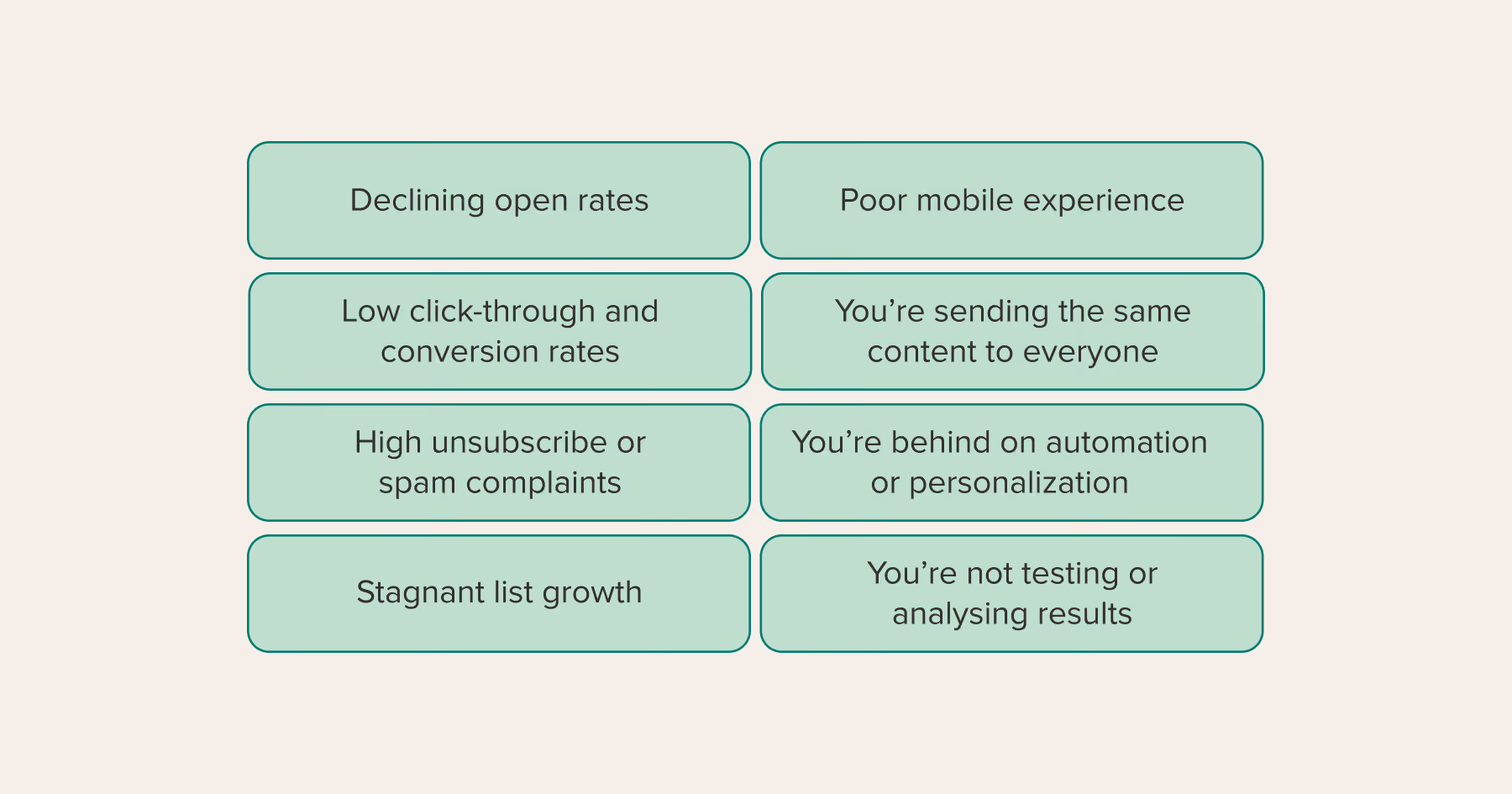
Declining open rates
One of the earliest signs that your email marketing isn’t working is a decline in open rates. This can indicate issues with subject lines, sender reputation, or list relevance. If your emails aren’t compelling enough to get opened, the rest of your campaign suffers. Low open rates also hurt your sender score, further reducing deliverability. To address this, focus on crafting engaging subject lines, cleaning your email list, and utilizing email deliverability tips, such as implementing authentication protocols and avoiding spam triggers.
Low click-through and conversion rates
Even if your emails get opened, low click-through and conversion rates reveal problems with content relevance or call-to-action (CTA) clarity. Generic or poorly designed emails fail to motivate recipients to engage. This often happens when you send the same content to everyone without segmentation or personalization. Improving your email segmentation strategy and personalizing messages beyond the first name can increase click-through rates and conversions.
High unsubscribe or spam complaints
A high unsubscribe rate or spam complaints signal that your emails are not meeting subscriber expectations. This may be due to sending content too frequently, sending irrelevant content, or a lack of preference options. Offering subscribers control over email frequency and content type can reduce churn. Also, maintaining email list hygiene by removing disengaged users helps keep your list healthy.
Stagnant list growth
If your email list isn’t growing, it limits your ability to reach new customers and scale revenue. Stagnant growth may result from poor opt-in forms, lack of incentives, or ineffective lead magnets. Creating eye-catching opt-in forms tailored to specific sections of your website and offering valuable content can help attract more subscribers.
Poor mobile experience
With over half of emails opened on mobile devices, a poor mobile experience can drastically reduce engagement. Emails that don’t render well on phones or tablets frustrate users and increase unsubscribes. Ensuring responsive design and testing emails across devices is critical.
You’re sending the same content to everyone
Sending identical emails to your entire list ignores individual preferences and behaviors. This reduces relevance and engagement. Implementing an email segmentation strategy enables you to tailor messages to specific demographics, purchase history, or engagement levels.
You’re behind on automation or personalization
Automated lifecycle and behavioural flows nurture customers at the right moments, increasing conversions and loyalty. If you haven’t set up welcome series, cart abandonment flows, or re-engagement campaigns, you’re missing out on revenue opportunities.
Personalisation is no longer limited to using someone’s first name. Behavioral triggers, dynamic content, and product recommendations demonstrate that you understand your customers.
You’re not testing or analysing results
Without A/B testing for email campaigns and analysing key metrics, you won’t know what works or how to improve. Testing subject lines, send times, content, and CTAs helps optimize email campaigns for better performance. Tracking KPIs that matter ensures your efforts align with business goals.
How to perform an email marketing health check
Performing an email marketing health check involves a thorough review of your campaigns and infrastructure:
- Analyze performance metrics, such as open rates, click-through rates, conversion rates, bounce rates, and unsubscribe rates, to identify trends and patterns.
- Conduct an email list hygiene audit to remove invalid, duplicate, or inactive addresses.
- Check sender reputation with tools like Google Postmaster Tools.
- Verify email authentication protocols, including SPF, DKIM, and DMARC, to improve deliverability.
- Review email content and design for relevance, mobile responsiveness, and brand consistency.
- Evaluate automation workflows for accuracy and effectiveness.
- Ensure compliance with email marketing best practices and legal requirements.
Tools to help you with email marketing audit and improve
Several tools can assist in conducting an email marketing audit and fixing email marketing issues:
- Email verification services to maintain email list hygiene.
- Deliverability monitoring tools to track sender reputation and spam complaints.
- Analytics platforms to measure campaign performance and customer engagement.
- A/B testing tools integrated with your email platform.
- Automation builders, such as Klaviyo, are used for email marketing to create lifecycle flows.
- CRM integration tools to sync customer data for better segmentation and personalization.
How to fix low-performing email campaigns
Low-performing email campaigns can be frustrating, especially when you’re aware of the potential of email marketing to drive revenue and strengthen customer relationships. Fortunately, there are proven strategies to turn things around and improve your email marketing performance.
Set SMART goals and benchmarks
Start by defining clear goals for your email campaigns. Use the SMART framework to ensure your goals are:
- Specific: Define exactly what you want to achieve, such as increasing click-through rates by 15% or reducing unsubscribe rates by 5%.
- Measurable: Choose metrics that can be tracked, like open rates, conversions, or revenue per email.
- Achievable: Set realistic targets based on past campaign data and industry benchmarks.
- Relevant: Align goals with your overall marketing and business objectives.
- Time-bound: Set deadlines to evaluate progress, such as monthly or quarterly reviews.
Establishing benchmarks based on your historical data helps you measure improvement and stay focused on meaningful metrics rather than vanity numbers.
Understand and map the customer journey
Email campaigns perform best when they align with where customers are in their journey. Map out your typical customer lifecycle stages, from awareness and consideration to purchase and loyalty, and identify key touchpoints where email can add value.
For instance, sending a welcome series immediately after sign-up nurtures new subscribers, while cart abandonment emails target shoppers who left without completing a purchase. Post-purchase follow-ups encourage repeat buying and reviews.
Understanding these stages allows you to design relevant email flows that guide customers smoothly toward conversion and retention.
Build a segmentation strategy that grows with you
Segmentation is one of the most effective ways to improve engagement and conversions. Dividing your email list into smaller groups based on demographics, purchase behavior, engagement levels, or preferences lets you tailor messages to each segment’s unique needs.
Start with basic segments such as:
- New subscribers
- Frequent buyers
- Inactive users
- Geographic location
As your data grows, incorporate behavioral segmentation like past purchases, browsing activity, or email interaction. A well-executed email segmentation strategy can increase revenue by up to 760%, according to Campaign Monitor.
Tailor your content and offers to each segment to make emails more relevant and compelling.
Automate lifecycle and behavioural flows
Automation helps deliver timely, personalized emails without manual effort. Set up automated workflows for critical moments in the customer lifecycle, such as:
- Welcome series for new subscribers
- Cart abandonment reminders
- Post-purchase thank you and review requests
- Re-engagement campaigns for inactive users
Automation ensures your brand stays top-of-mind and nurtures leads effectively. Platforms like Klaviyo email marketing offer robust automation capabilities, allowing you to create intricate workflows based on customer behavior and attributes.
Personalise beyond the first name
Instead of simply inserting the recipient’s name, use available data to customize content, product recommendations, and offers.
Examples include:
- Showing products related to past purchases
- Tailoring messaging based on browsing history
- Incorporating location-specific promotions
- Adjusting send times based on time zones or past engagement
Dynamic content blocks allow you to display different content within the same email depending on the recipient’s profile. This level of personalization significantly boosts engagement and conversion rates.
Maintain a consistent brand voice and visual identity
Consistency in your brand’s tone, style, and visuals builds recognition and trust. Ensure your emails reflect your brand’s personality through:
- Consistent color schemes and fonts
- A clear and friendly tone of voice
- Cohesive imagery and design elements
- Clear and prominent calls to action
A professional and cohesive look makes your emails more memorable and credible.
Use testing as a growth lever
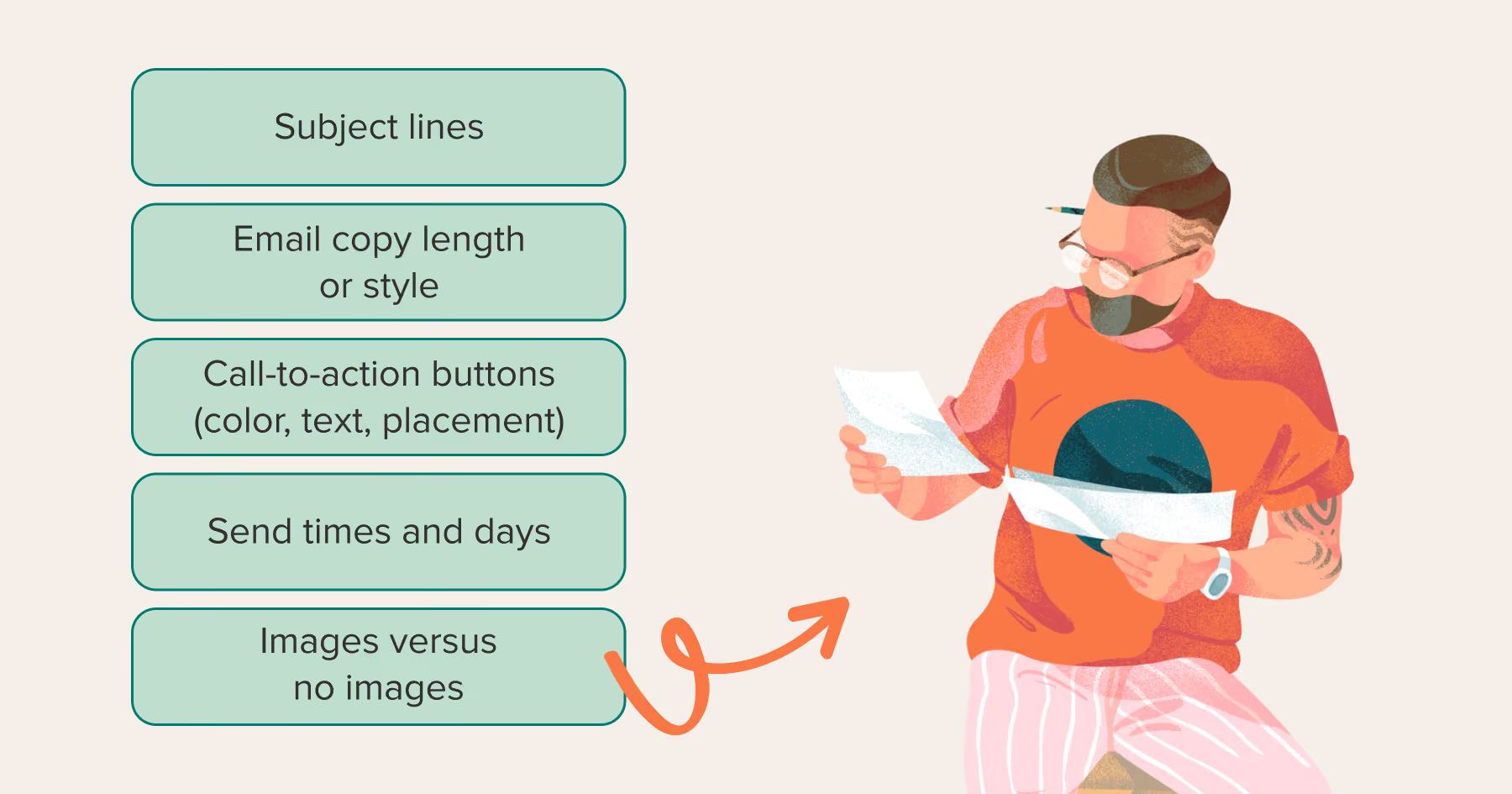
A/B testing for email campaigns is crucial for determining what resonates most effectively with your audience. Test one variable at a time, such as:
- Subject lines
- Email copy length or style
- Call-to-action buttons (color, text, placement)
- Send times and days
- Images versus no images
Use statistically significant sample sizes to ensure reliable results. Analyze the data and implement winning variations in future campaigns.
Continuous testing helps you stay ahead of changing preferences and improves your email marketing best practices.
Optimise send frequency and timing
Finding the right balance in how often you email your list is critical. Too many emails can annoy subscribers and increase the number of unsubscribes, while too few can lead to disengagement.
Use your engagement data to determine optimal frequency. For example, some segments may prefer weekly updates, while others prefer monthly updates.
Timing also matters; Sending emails when recipients are most likely to check their inbox (e.g., mid-morning or early evening) can improve open rates.
Track KPIs that matter
Focus on meaningful key performance indicators (KPIs) that reflect your goals, such as:
- Conversion rate
- Revenue per email
- Click-to-open rate (CTOR)
- Unsubscribe rate
- Spam complaint rate
Tracking these metrics helps you understand the effectiveness of your campaign and identify areas for improvement.
Choose the right email marketing platform
Your platform should support your segmentation, automation, testing, and analytics needs. Utilize Klaviyo’s email marketing platform for its robust features, specifically tailored to e-commerce brands.
A good platform integrates easily with your CRM and website data, enabling seamless personalization and real-time updates.
Integrate with your CRM and website data
Syncing your email marketing platform with your CRM and website allows you to leverage rich customer data for segmentation and personalization. You can trigger emails based on website behavior, track purchase history, and automatically update subscriber profiles. This integration enhances your email segmentation strategy and improves the accuracy of targeting.
Reuse and repurpose high-performing content
Identify emails or campaigns that performed well and repurpose their content for future use. For example:
- Turn a successful newsletter article into a product promotion email
- Use customer testimonials from past campaigns in new emails
- Adapt popular blog content into an educational email series
Repurposing saves time and leverages proven messaging to maintain engagement.
Stay compliant and transparent
Ensure your emails comply with regulations like GDPR and CAN-SPAM by:
- Including clear unsubscribe options
- Honoring opt-out requests promptly
- Being transparent about data usage
- Avoiding deceptive subject lines or content
Compliance protects your sender reputation and builds subscriber trust.
Build for scale
Design your email marketing strategy and infrastructure to accommodate future growth and expansion. This means:
- Choosing scalable platforms
- Developing flexible segmentation and automation workflows
- Maintaining regular email list hygiene tips to keep data clean
- Documenting processes and testing results for continuous improvement
Planning for scale ensures your email marketing remains effective as your brand grows.
By applying these detailed strategies, you can optimize low-performing email campaigns and unlock the full potential of your email marketing efforts. Whether it’s refining your segmentation, automating personalized flows, or continuously testing your content, each step contributes to stronger engagement and higher conversions.
Partnering with Growth Gurus for email marketing success
Growth Gurus stands out as a reliable partner for brands seeking to enhance their email marketing performance. Their expertise in email marketing campaign management, combined with a deep knowledge of platforms like Klaviyo, enables them to conduct thorough email marketing audits and implement tailored solutions. From optimizing email flows with an email flow optimization guide to refining segmentation and personalization, Growth Gurus helps brands address email marketing issues and unlock growth potential. Their hands-on approach ensures your email marketing health check leads to actionable improvements that drive engagement and revenue. If you want to take your email marketing to the next level, partnering with Growth Gurus is a smart step toward sustained success.
Recent Blog Post


Ready to grow your business?
If you want your business to experience more sales and faster growth, all you need to do is book a meeting with us today.