Why story-based emails drive higher engagement with readers

Email inboxes overflow with promotional content that rarely captures genuine attention. While most brands compete with discount codes and product features, story-driven emails cut through the noise by creating emotional connections that standard marketing can't replicate. This approach transforms subscribers from passive recipients into engaged readers who anticipate your messages and respond with meaningful action.

How story-driven emails boost engagement among readers
Inboxes have become battlegrounds. Each day, the average person receives dozens of promotional messages competing for attention. Most get ignored, deleted, or sent straight to spam. The few that break through share something powerful: they tell stories that matter.
When brands treat every email like a transaction, customers tend to tune out. People don't want another discount code thrown at their screens. They want to feel something. They want context, connection, and reasons to care about what you're offering. This explains why email marketing storytelling transforms ordinary campaigns into conversations that readers actually look forward to.
What is storytelling in email marketing?
Storytelling in email marketing involves replacing traditional promotional messages with narratives that emotionally engage readers. Instead of leading with product features and aggressive calls-to-action, story-driven emails create context around your brand, products, and customers.
At its core, this approach borrows from the oldest human communication method: sharing experiences through stories. When applied to email campaigns, storytelling transforms your messages from interruptions into content that subscribers genuinely want to read.
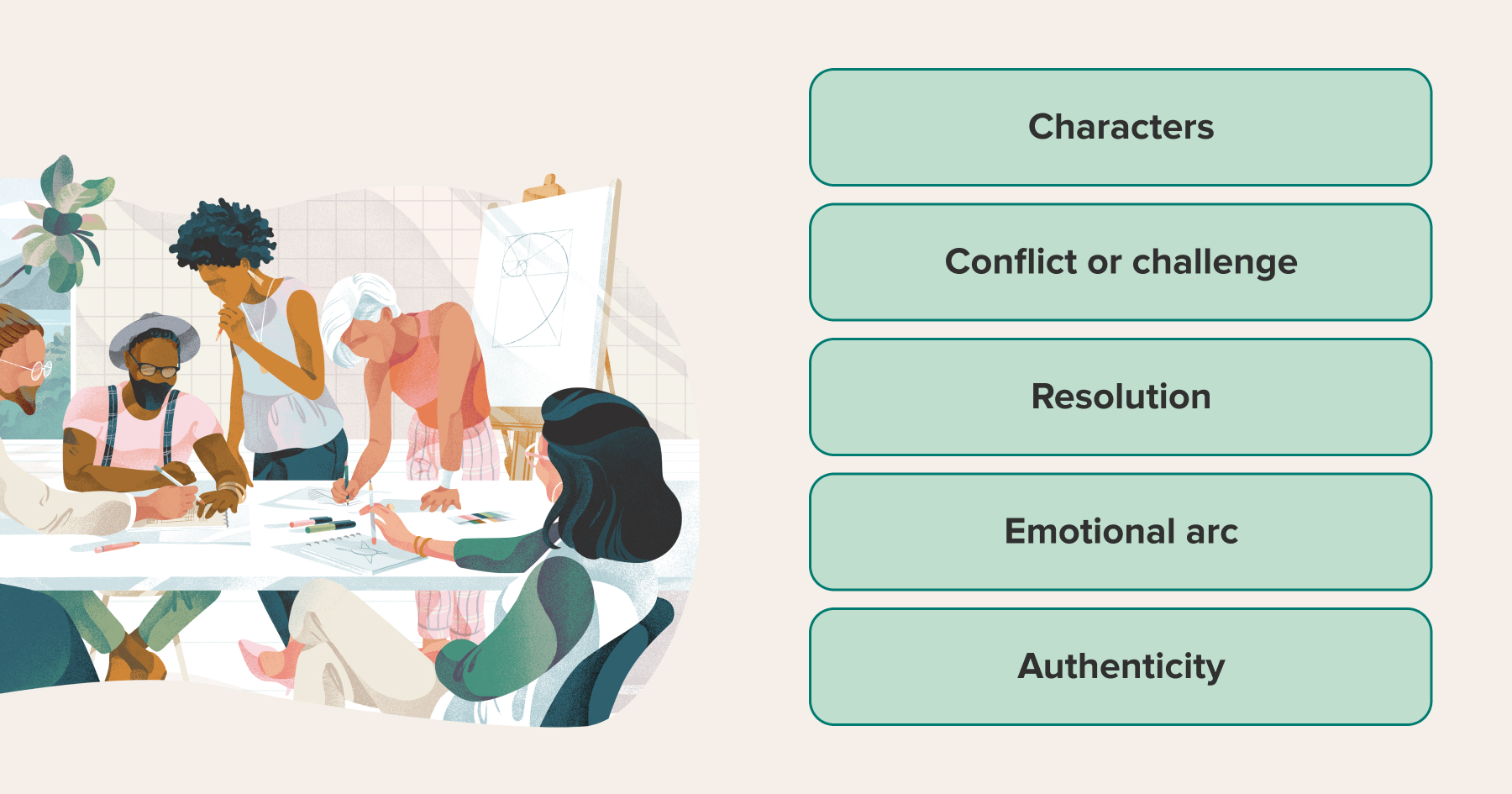
Key elements of email storytelling include:
- Characters: Real people, whether customers, team members, or relatable personas
- Conflict or challenge: Problems your audience faces that your products help solve
- Resolution: How the situation improves, featuring your brand naturally
- Emotional arc: Taking readers on a journey that creates feelings and connection
- Authenticity: Real voices and genuine experiences rather than polished corporate speak
The format can vary widely. You might tell a complete story within a single email, or serialize a narrative across multiple messages in a drip campaign. Some brands weave stories into every communication, while others reserve storytelling for specific campaign types. The consistent thread is prioritizing human connection over hard selling.
Why story-based emails drive better engagement
Stories create memories that last
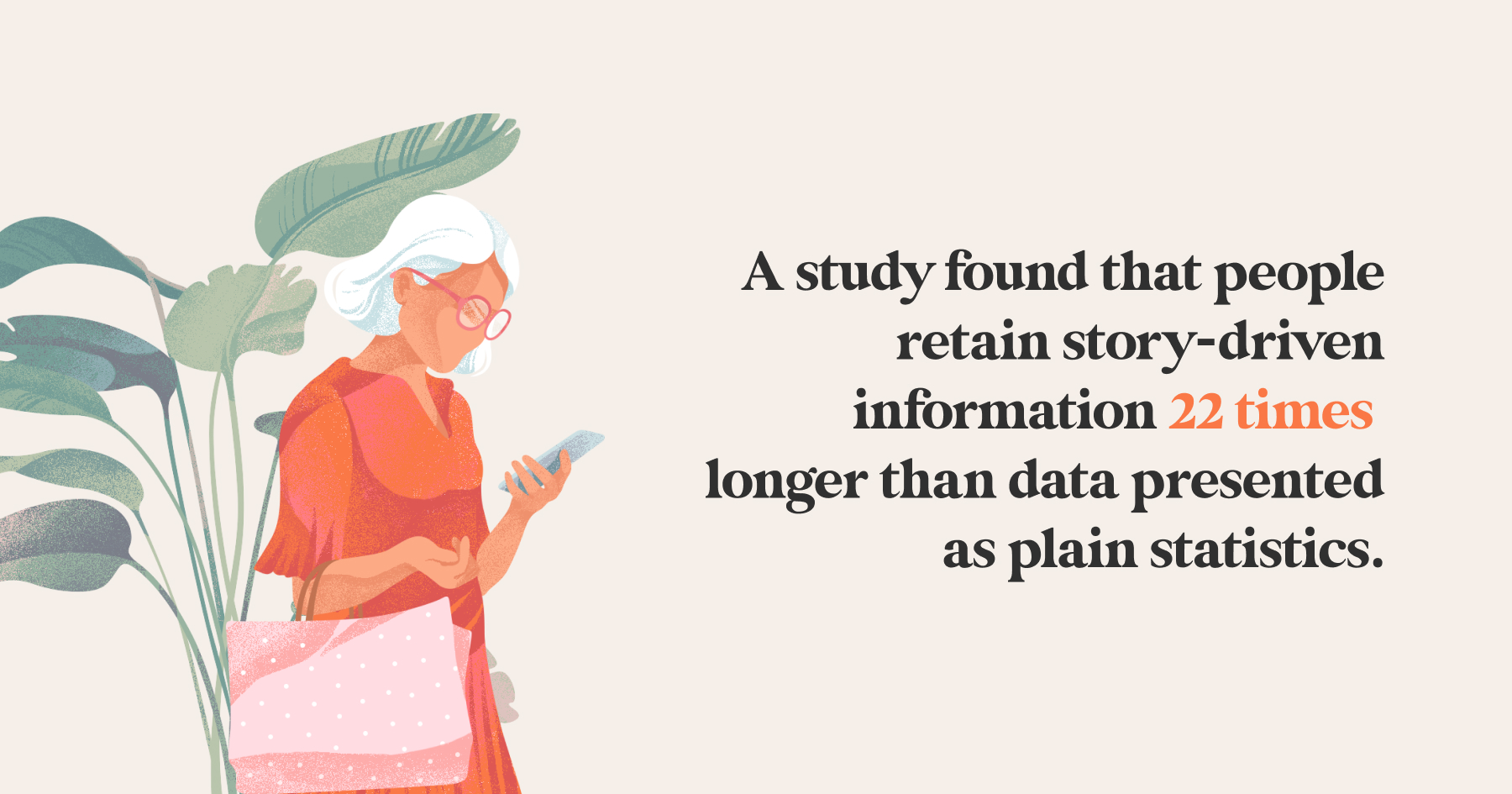
Humans remember narratives far better than isolated facts. A study found that people retain story-driven information 22 times longer than data presented as plain statistics. When you weave product benefits into a compelling narrative, readers absorb the message while barely realizing they're being marketed to.
Consider how this works in practice. A skincare brand could send an email listing ingredients and their benefits. Or they could share the founder's struggle with sensitive skin, the years spent formulating safe products, and how each ingredient was carefully chosen. The second approach embeds the same information within an emotional framework that readers can personally connect with.
This memory advantage compounds over time. Each story-based email reinforces your brand identity in ways that promotional blasts never achieve. Readers begin to recognize your voice, messages, and form mental associations between your brand and the emotions your stories evoke.
Emotional connections drive action
Purchase decisions rarely stem from pure logic. Research in consumer psychology reveals that emotions have a profound influence on purchasing decisions. Storytelling email marketing taps directly into these emotional drivers, creating pathways to conversion that standard promotional content can't match.
When a message makes someone laugh, nod in recognition, or feel inspired, that emotional response lingers. The brand becomes associated with those positive feelings. A customer who feels understood is far likelier to click through, explore products, and complete purchases.
Authenticity builds trust faster
Modern consumers have developed radar for detecting inauthentic marketing. They scroll past polished corporate speak without a second thought. What really connects is authentic voices sharing genuine experiences.
Behind-the-scenes stories work particularly well for building this trust. When you reveal the people behind your brand, the challenges you've overcome, or the values that guide your decisions, you transform from a faceless seller into a relatable entity. Customers see that humans with intentions and principles drive your business.
This transparency becomes especially valuable in e-commerce, where customers never physically interact with your team. Story-driven emails bridge that gap, creating personality and presence in a digital space.
Stories differentiate your brand
Every market segment is crowded. Several competitors likely offer products similar to yours at comparable prices. When features and pricing blur together, brand personality becomes the decisive factor. Effective storytelling in email marketing establishes that personality better than any other tactic.
Your unique angle might highlight heritage and tradition. You may be the innovative disruptor challenging industry norms. Your brand champions sustainability or champions underrepresented communities. Whatever sets you apart, stories communicate these distinctions in ways that resonate emotionally rather than sounding like empty claims.
Successful brand storytelling angles include:
- Heritage and tradition: Celebrating your history and time-tested craftsmanship
- Innovation and disruption: Positioning as the challenger transforming your industry
- Mission-driven values: Highlighting social impact, sustainability, or community focus
- Personality and humor: Using distinctive voice and wit to stand out
Take inspiration from brands that have mastered this approach. Some companies celebrate their history and craftsmanship in every message they send. Others position themselves as movements rather than businesses, inviting customers to join something bigger than commerce. The specific angle matters less than consistency and authenticity in how you present it.
Customer-centric narratives increase relevance
The most powerful marketing stories position customers as heroes, not the brand itself. This subtle shift transforms how audiences perceive your messages. Instead of feeling sold to, they see themselves reflected in scenarios that mirror their own challenges and aspirations.
When crafting these narratives, consider the problems your products solve from your customer's perspective. Don't describe features; describe the transformation customers experience. Show them struggling with the issue, discovering your solution, and celebrating the results. This framework makes every email personally relevant, rather than generic and promotional.
Klaviyo for email marketing enables segmentation, taking customer-centric storytelling further. You can tailor narratives to specific audience segments based on purchase history, browsing behavior, or demographic information. Someone who just discovered your brand receives different stories than a loyal repeat customer, ensuring every message feels personally relevant.
Interactive elements deepen engagement
Static text represents just one storytelling format. Modern email capabilities support interactive elements that transform passive reading into active participation. Quizzes, polls, branching narratives, and choice-driven content invite readers to shape their experience rather than merely consuming it.
Interactive storytelling serves dual purposes:
- Engagement boost: Makes emails memorable and enjoyable, increasing future message interaction
- Data collection: Generates valuable insights about preferences and interests for future campaigns
- Personalization: Creates unique experiences based on individual choices and responses
- Entertainment value: Transforms promotional content into engaging experiences that subscribers actually enjoy
For example, a fashion online store might present a style quiz in the form of a narrative journey. Each answer leads to a new story branch, ultimately revealing personalized product recommendations tailored to your needs. The customer has fun, feels understood, and discovers items perfectly matched to their taste. That's far more engaging than browsing generic product grids.
Visual storytelling enhances impact
While words carry stories, images amplify their emotional impact. The right visual paired with compelling copy creates an immediate connection. Photos showing real customers, behind-the-scenes glimpses of your team, or authentic product usage scenarios all strengthen narrative authenticity.
Avoid generic stock photography, as it erodes credibility. Readers instantly recognize inauthentic imagery that contradicts the genuine tone of your message. Instead, invest in original photography that truly represents your brand and customers. These authentic visuals transform emails from forgettable promotions into windows into an honest company with real people.
Video content takes visual storytelling even further. Short clips introducing team members, demonstrating product creation, or sharing customer testimonials add dimensions that static images can't achieve. As email clients increasingly support embedded video, incorporating this medium into your narrative strategy becomes more accessible and impactful.
Series storytelling builds anticipation
Single-email stories are compelling for specific messages, but serialized narratives foster ongoing engagement. When readers know your emails contain continuing stories, they actively anticipate each installment rather than viewing messages as interruptions.
Drip campaigns structured around developing narratives keep subscribers invested over time. You might follow a customer's journey with your product across several emails, reveal your brand origin story in chapters, or create fictional scenarios that entertain while showcasing solutions. Each email concludes with a reason to look forward to the following message.
Stories scale personalization
Personalization at scale seems contradictory. How do you make thousands of recipients feel as if they are individually addressed? Stories provide an elegant solution. When narratives reflect everyday experiences, challenges, or aspirations, each reader personalizes the interpretation based on their circumstances.
A well-crafted story about overcoming obstacles resonates across diverse audiences because everyone faces difficulties. The specific details differ, but the emotional journey remains universal. This allows you to create messages that feel personal without requiring individual customization for each subscriber.
Advanced platforms combine storytelling with dynamic content blocks that adjust details based on recipient data. The narrative framework remains consistent, while specific elements adapt to match each subscriber's profile. This hybrid approach delivers the engagement benefits of storytelling with the relevance of personalization.
Measuring story-driven campaign success
Shifting from product-focused to story-driven emails requires demonstrating results through data. Fortunately, narrative approaches typically improve key metrics across the board. Track open rates to measure the effectiveness of your subject lines. Monitor click-through rates to assess story engagement. Analyze conversion rates to quantify revenue impact.
Beyond these standard metrics, observe qualitative signals. Are subscribers replying to your emails? Do they forward messages to friends? When customers reference your stories in other interactions, you've achieved something promotional emails rarely accomplish: memorable brand experiences worth sharing.
A/B testing helps refine your storytelling approach over time. Test different narrative angles, story formats, and emotional tones to discover what resonates most with your specific audience. These insights guide future campaigns, continuously improving engagement and results.
Implementing storytelling in your strategy
Transitioning to story-based emails doesn't require scrapping existing campaigns overnight. Start by identifying key messages that lend themselves to narrative treatment. Welcome sequences work beautifully for brand origin stories. Product launches benefit from development narratives. Re-engagement campaigns gain power from customer success stories.
Begin with your brand's core values and unique positioning. What makes your company different? Why did you start this business? What change do you want to create? These foundational elements provide endless story material that distinguishes your emails from competitors' generic promotions.
Collaboration with an e-commerce email marketing agency experienced in narrative campaigns can accelerate this transition. Agencies specializing in storytelling bring fresh perspectives on your brand's narrative potential while handling technical execution across sophisticated automation platforms.
How to use storytelling in your email marketing campaigns
Transitioning to story-based emails doesn't require scrapping existing campaigns overnight. Start by identifying key messages that lend themselves to narrative treatment. Welcome sequences work beautifully for brand origin stories. Product launches benefit from development narratives. Re-engagement campaigns gain power from customer success stories.
Practical ways to implement storytelling in email campaigns:
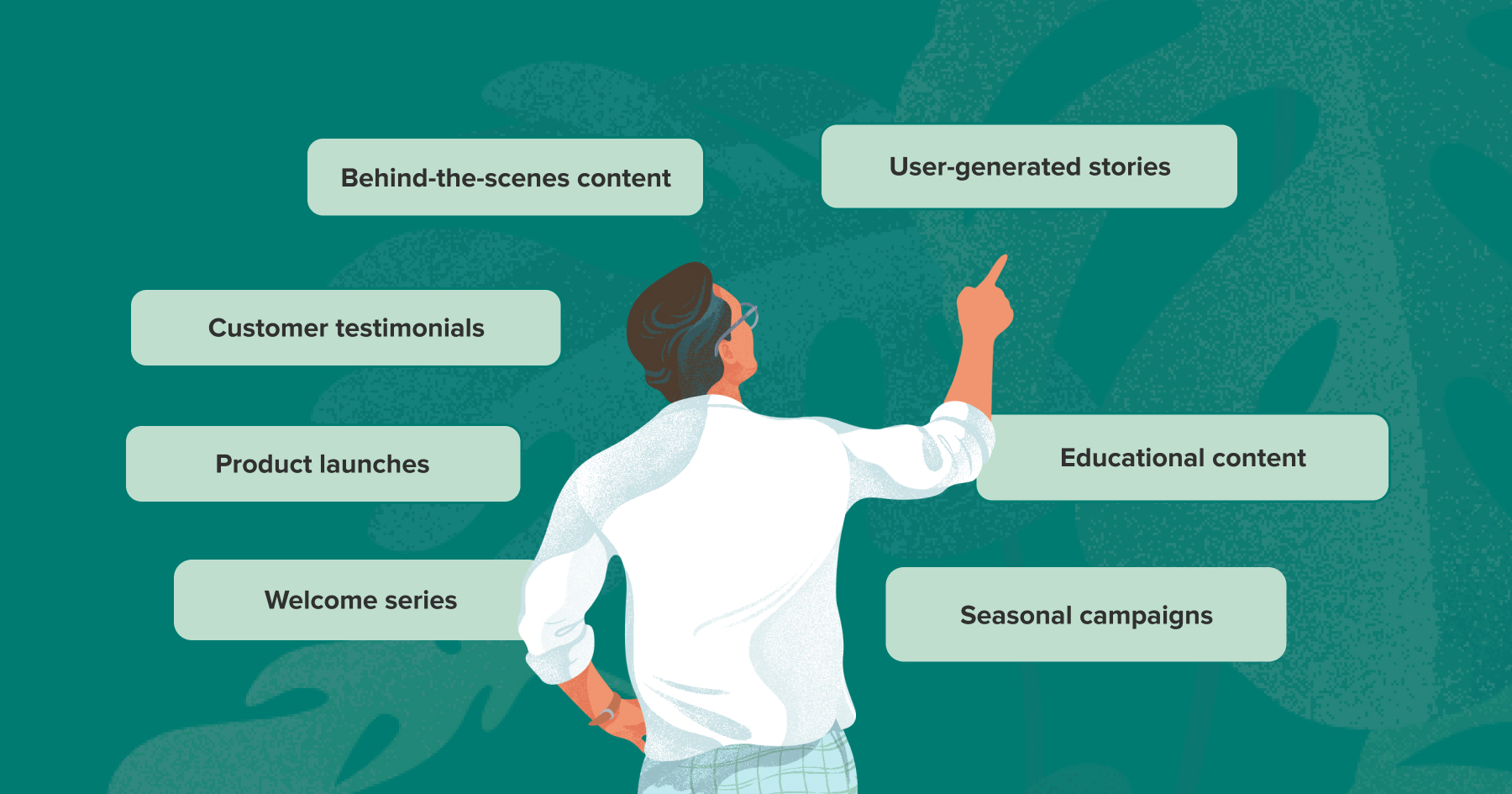
- Welcome series: Share your brand's founding story and mission to create an immediate connection with new subscribers
- Product launches: Tell the development journey behind new items rather than listing features
- Customer testimonials: Transform reviews into narrative case studies showing fundamental transformations
- Behind-the-scenes content: Reveal your team, processes, and values to humanize your brand
- User-generated stories: Feature customer experiences and how they use your products in their lives
- Educational content: Teach through stories and examples rather than dry instructions
- Seasonal campaigns: Connect holidays and events to personal stories your audience relates to
Begin with your brand's core values and unique positioning. What makes your company different? Why did you start this business? What change do you want to create? These foundational elements provide endless story material that distinguishes your emails from competitors' generic promotions.
When crafting each story, follow a simple framework: establish a relatable situation, introduce a challenge or tension, show the resolution, and naturally connect it back to your brand. This structure keeps readers engaged while subtly highlighting your value.
The future belongs to story-driven brands
As inboxes become increasingly crowded and consumer attention becomes more scarce, brands that master emotional connection through storytelling will emerge as leaders. Promotional tactics that were effective five years ago are increasingly failing as audiences develop immunity to traditional marketing language.
The brands winning customer loyalty today understand that every email represents an opportunity to strengthen relationships through stories that inform, entertain, and inspire. They've stopped interrupting people with sales pitches and started earning attention with content subscribers genuinely value.
Growth Gurus helps brands make this essential transition, transforming email marketing from a promotional channel into a storytelling platform that drives genuine engagement and sustainable growth. When done well, story-based emails don't feel like marketing at all. They feel like messages from a brand that understands you, shares your values, and deserves your attention.
Frequently asked questions
How long should story-based emails be?

Length depends on your story's complexity and audience preferences. Test different formats, but prioritize compelling narrative over arbitrary word counts. Some stories work perfectly in 200 words, while others require 600 words or more to develop correctly. The key is maintaining engagement throughout, regardless of length.
How often should I send story-driven emails?
Frequency depends on your narrative strategy and audience expectations. If you're running serialized stories, maintain consistent timing so readers know when to expect installments. For standalone narratives mixed with promotional content, balance story-heavy emails with quicker product-focused messages to avoid overwhelming subscribers.
What if my products aren't naturally interesting?
Every product solves problems, which means every product has the potential to tell a story. Focus on customer transformations rather than product features. A boring industrial supply becomes interesting when viewed through the lens of the facility manager who avoided disaster because they had the right parts on hand.
How do I measure if storytelling is working?
Compare engagement metrics before and after implementing story-based approaches. Look at open rates, click-through rates, conversion rates, and revenue per email. Also, monitor qualitative indicators such as reply rates, forward rates, and unsubscribe trends. Positive shifts across these metrics validate your storytelling strategy.
Recent Blog Post


Ready to grow your business?
If you want your business to experience more sales and faster growth, all you need to do is book a meeting with us today.