Why retention is becoming more important than acquisition

E-commerce growth is changing as brands face higher acquisition costs, crowded ad platforms, and shoppers who take longer to decide. While new customers remain important, keeping existing customers engaged is becoming a smarter way to build more steady, predictable revenue. This article looks at why retention matters, how repeat purchases support growth, and how email and SMS can help brands strengthen customer relationships over time.

Why brands are shifting focus from acquisition to retention
Acquisition channels are becoming harder to predict because many brands are competing for the same audiences across search, social media, shopping platforms, influencer campaigns, and paid media placements. Even when campaigns bring traffic, the quality of that traffic can vary, which makes it harder to rely on acquisition alone for steady revenue. If the post-purchase journey is weak, the business may keep paying to replace customers instead of building value from the ones it already brought in.
The growing value of existing customers
Existing customers already know the brand, which gives e-commerce businesses a useful starting point for future engagement. They have seen the product, placed an order, received the delivery, and formed an opinion about the overall experience. If that experience was positive, the brand has a stronger chance of earning another purchase through relevant communication and timely follow-up.
A thoughtful customer retention strategy helps brands understand what customers need after the first purchase and how to keep the relationship active over time. The goal is to build on the trust created by the first purchase and ensure future communication feels relevant and personalized.
Customer retention vs acquisition cost
A first order can look positive in a sales report, but it does not always show the true cost of winning that customer. Before the purchase happens, a brand may have already spent on ad clicks, creative testing, campaign management, landing page work, and first-order incentives. After the order is placed, product costs, shipping, payment fees, and fulfillment reduce the margin further.
Retention changes the financial picture because a returning customer gives the brand another chance to earn value from the original acquisition spend. That can improve payback, make each customer relationship more profitable over time, and reduce the pressure to win a completely new buyer for every sale.
This is why a repeat purchase strategy matters; it helps brands create more value from the customers they have already paid to acquire.
Using lifecycle messaging to guide customers
Customer lifecycle marketing helps brands match their communication to each stage of the customer journey. A new subscriber may need brand education, a first-time buyer may need reassurance, a returning customer may be ready for product suggestions, and an inactive customer may need a relevant reason to come back.
This approach works because customers do not all need the same message at the same time. Lifecycle messaging helps brands create a smoother journey from awareness to purchase, then from purchase to repeat engagement, loyalty, and reactivation.
The role of email and SMS in retention
Email and SMS are valuable because they give e-commerce brands a direct way to continue the relationship after someone joins the list or places an order. These channels can support product education, offer timing, customer segmentation, replenishment reminders, loyalty campaigns, and reactivation journeys.
Working with an e-commerce email marketing agency like Growth Gurus can allow brands to build email and SMS journeys around real customer behavior, including how shoppers browse, buy, return, and disengage. This gives brands a clearer way to use owned channels for education, reminders, segmentation, and reactivation instead of relying only on paid campaigns.
Practical campaign ideas for retention
Retention campaigns should be shaped around customer behavior, product type, and buying cycle stages. The goal is not to send more messages, but to send messages that match what the customer may need after buying.
Some retention marketing examples include refill reminders for skincare products, styling ideas for fashion customers, reorder prompts for food or beverage buyers, subscription reminders for repeat-use products, and product suggestions based on previous purchases.
These campaigns work because they are based on actions the customer has already taken. They help the brand stay useful between purchases instead of only appearing during a promotion, discount, or seasonal sale.
Building customer journeys that feel useful
The best customer retention strategies for e-commerce are not built from isolated campaigns. They are built by connecting each message to the next step in the customer journey.
For example, a first-time buyer, returning customer, and inactive customer should not move through the same message path. Each group needs different messaging based on purchase history, engagement level, and the action the brand wants to encourage next.
When each touchpoint has a clear role, the customer journey feels more helpful and less repetitive. This makes it easier for brands to guide customers from first purchase to repeat engagement without overreliance on promotions or discounts.
Improving performance through retention optimization
Customer retention optimization focuses on the details that influence whether customers stay engaged. This can include flow timing, email subject lines, SMS timing, product recommendations, offer strategy, segmentation, creative, and the way messages are sequenced after the first purchase.
A useful way to measure this is by reviewing your repeat purchase rate. It helps see whether customers are coming back after their first order or dropping off too early, giving a clearer view of whether retention campaigns are supporting long-term customer value.
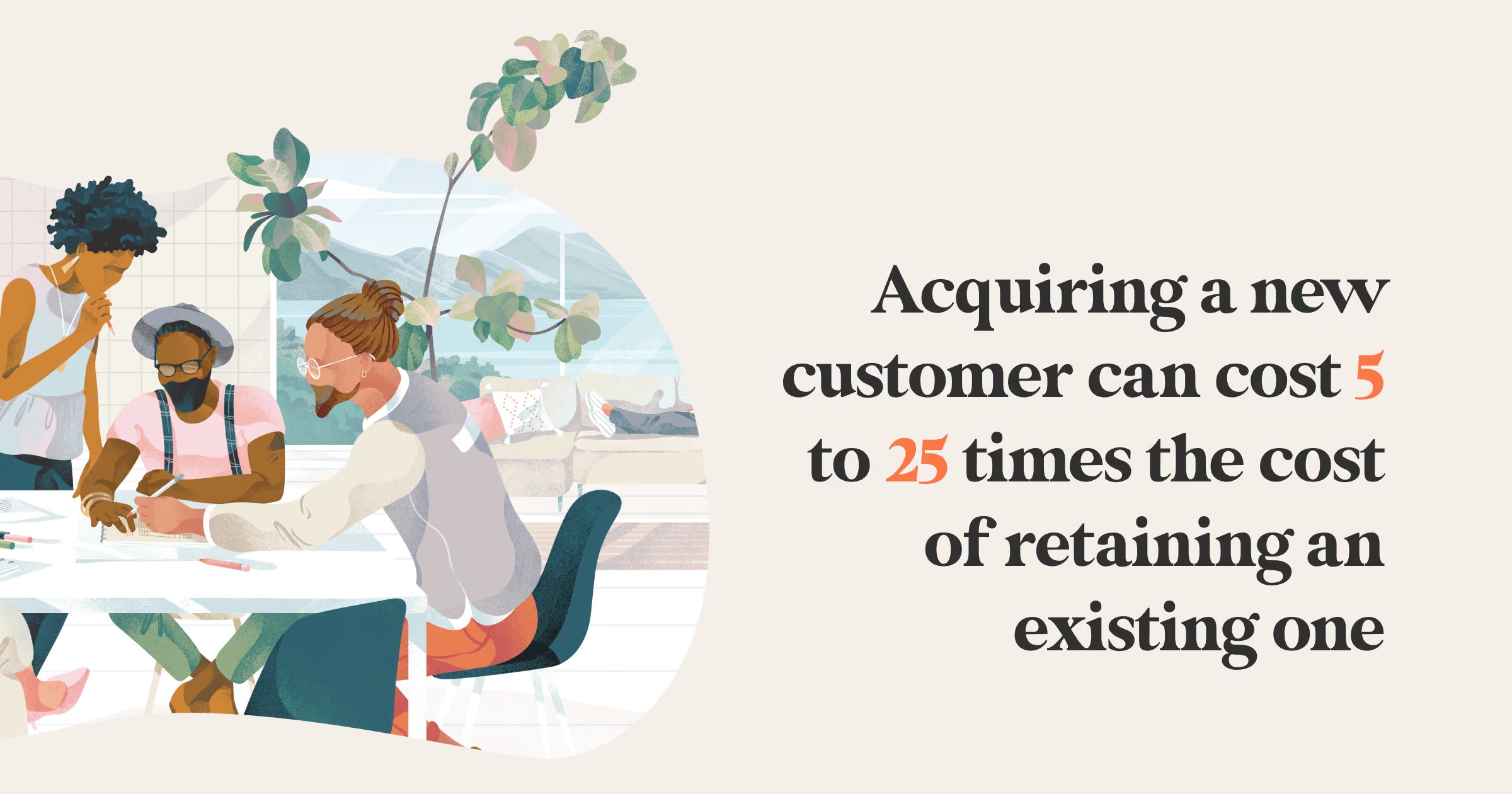
Acquiring a new customer can cost 5 to 25 times the cost of retaining an existing one, which makes retention a practical focus for e-commerce brands looking to improve long-term efficiency.
How Growth Gurus supports retention-focused growth
Growth Gurus helps e-commerce brands build email and SMS journeys that keep customers engaged after the first interaction. Instead of treating flows, campaigns, segmentation, and reporting as separate tasks, we connect them into a retention system that supports better timing, stronger relevance, and clearer customer movement.
For our client Omnilux, we built out a connected retention-focused email and SMS strategy that targeted existing customers segmented by age, gender, and interest, and helped guide them through the customer journey by providing useful educational content to maximize results from their newly purchased device. This led to a 91% increase in annual revenue for the brand and highlights how important having a clear and effective retention strategy is for brand and revenue growth. Read the full story here.
Through our retention marketing services, brands can better understand where customers engage, where they drop off, and which flows or campaigns need improvement. This makes it easier to shape communication around customer behavior, improve underperforming touchpoints, and build a clearer path from first purchase to repeat engagement.

Final thoughts
Retention is becoming a bigger priority because e-commerce growth is changing. Brands still need acquisition, but they also need a stronger plan for the customers they have already worked hard to win.
When email, SMS, automation, segmentation, and lifecycle planning work together, brands can create better experiences after the first purchase. For brands that need a more structured approach, a lifecycle marketing agency can help connect these channels into a retention strategy that supports stronger loyalty, steadier revenue, and long-term growth.
Frequently asked questions
How to increase customer lifetime value?

E-commerce brands can increase customer lifetime value by improving post-purchase communication, personalizing email and SMS, encouraging repeat orders, and building loyalty journeys.
Why is customer retention important?
Customer retention is important because it supports repeat sales, stronger relationships, steadier revenue, and less pressure on paid acquisition channels.
Why does customer retention optimization matter after the first purchase?
It helps brands identify where customers drop off and improve the touchpoints that guide them toward another order. It therefore helps to improve retention and repeat purchase rates.
How does retention fit into an e-commerce growth strategy?
Retention helps brands increase repeat purchases, improve customer value, strengthen owned channels, and reduce pressure on constant new customer acquisition.
Which e-commerce marketing services can help with retention?
Email, SMS, automation, segmentation, campaign planning, and reporting can help brands improve post-purchase communication and keep customers engaged after buying.
Recent Blog Post


Ready to grow your business?
If you want your business to experience more sales and faster growth, all you need to do is book a meeting with us today.