9 steps to build an SMS marketing campaign that drives results

SMS marketing is one of the most direct ways to reach customers. By sending short, relevant, and timely messages, businesses can spark immediate interest and guide consumers toward a desired action. This channel is beneficial for sharing urgent updates, limited-time deals, or real-time alerts that cut through the noise of crowded inboxes. Because nearly everyone has a mobile device within reach, SMS offers a unique advantage in forging personal connections and boosting conversions.

9 essential steps for creating a successful SMS marketing campaign
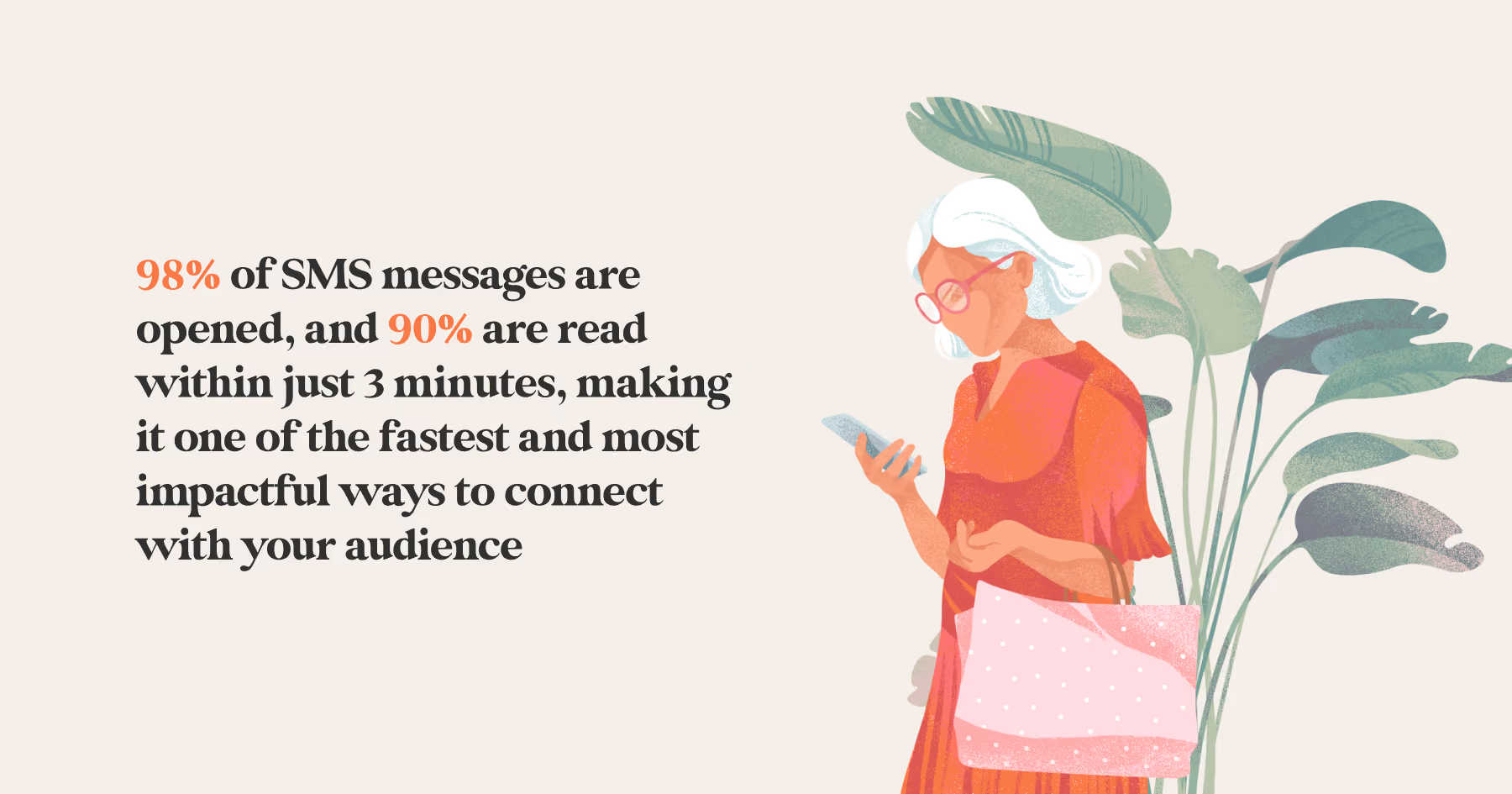
Launching an effective SMS marketing campaign requires strategic thinking and careful planning. Unlike some channels, texting is personal and direct. In fact, 98% of SMS messages are opened, and 90% are read within just 3 minutes, making it one of the fastest and most impactful ways to connect with your audience. People value their phone number as much as other platforms, so your strategy must be well-crafted to gain trust, drive engagement, and inspire action.
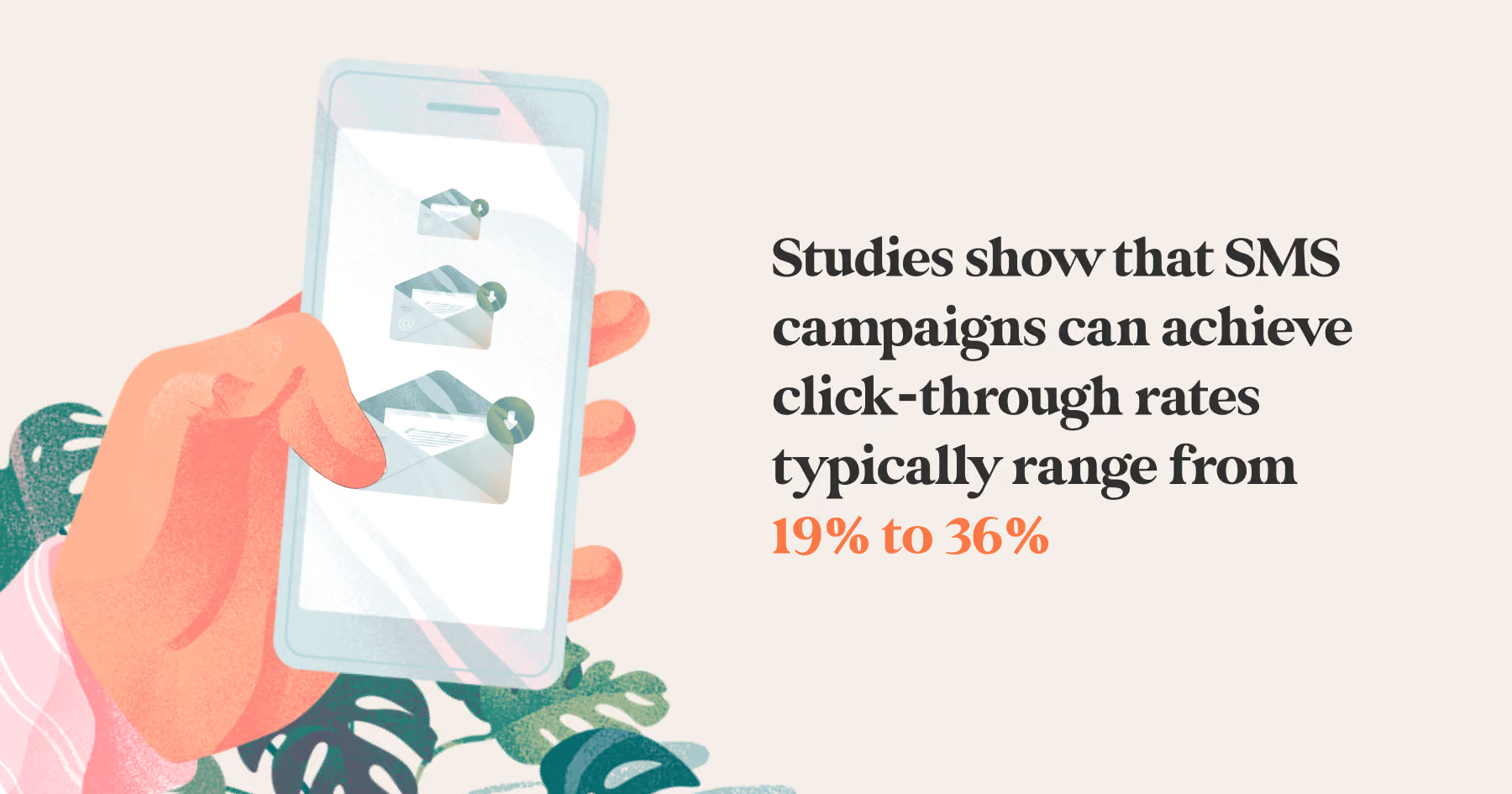
Too many businesses launch text promotions without considering audience preferences, timing, or content length. Rather than blindly sending generic messages, you want to craft a structured approach that aligns each text with a clear purpose. You can look at some of the best SMS marketing campaigns for inspiration, but remember that success isn’t achieved by copying—it comes from understanding customer needs, offering genuine value, and messaging consistently. Studies show that SMS campaigns can achieve click-through rates typically range from 19% to 36%, making a thoughtful approach even more essential.
Creating an effective text strategy also goes beyond writing concise copy. It involves everything from compliance with regulations to choosing the right automation tool, like Klaviyo, which empowers businesses to send highly targeted messages. In this guide, we’ll walk through nine essential steps for building an SMS marketing campaign that drives real results, from setting objectives to evaluating performance data. By following these best practices, you’ll be well on your way to creating high-impact text campaigns that resonate with your audience and help you stand out in a competitive market.
Understanding SMS marketing and its different types
SMS marketing is sending promotional messages, offers, and updates through text. Businesses across all industries, from e-commerce to nonprofits, use text campaigns to engage their audience directly and immediately. SMS stands out for its short, snappy format and instant delivery—recipients can read and reply within seconds.
Several types of SMS marketing exist:
- Promotional messages: These are time-sensitive messages that often include deals, discounts, or product announcements. They work best when there’s a clear benefit for the subscriber, like a limited-time offer or an exclusive coupon code.
- Transactional messages: Think of order confirmations, shipping updates, or account notifications. These provide essential information about a customer’s activity, such as confirming a purchase or alerting them to delivery status. Transactional texts are high-conversion touchpoints because recipients are expecting or seeking these updates.
- Automated drip campaigns: Like email drip sequences, SMS drip campaigns trigger texts based on specific user behaviors or timelines. For instance, a new subscriber who opts in might receive a welcome message followed by a gentle nudge toward a product they showed interest in.
How to create the best text messaging marketing campaign
To create genuinely SMS marketing campaigns, you want each message to flow naturally in the broader customer journey. Below are nine key steps to guide your process.
1. Define your clear and measurable campaign objectives
Your very first move is to know what you want to achieve. Are you aiming for immediate sales? Do you want to notify customers about an upcoming product launch? Perhaps you’re hoping to drive traffic to a specific landing page. Whatever your goal, make it clear and measurable.
Some Examples:
- Increase weekly e-commerce sales by 15%.
- Gain 1,000 new SMS subscribers over the next quarter.
- Recover a set percentage of abandoned carts via follow-up messages.
A clear, measurable target helps you shape content, decide frequency, and evaluate success. Without it, you risk sending random messages that neither resonate with your audience nor fulfill your business needs.
2. Understand your audience, and make it clear you do
Texting is personal. When someone gives you their phone number, they expect relevant, timely content. Take advantage of segmentation tools to group your audience by location, purchase history, interests, or engagement level. Personalize your messages so that your recipients see how well you understand them.
A big part of audience understanding is finding the right tone. Let that style shine in your SMS if your brand is fun and casual. If you cater to a more formal audience, keep the language polite and respectful. You build a stronger bond that encourages repeat engagement by speaking to customers on their level.
3. Create persuasive and concise content for SMS
Character count in text messaging is limited, so choose your words wisely. A compelling message should include these components:
- Front-load the value: Place your offer or most important information first in case the message gets truncated or the recipient only reads the preview.
- Use action-oriented language: Direct, clear calls-to-action drive higher response rates. Tell recipients exactly what you want them to do.
- Create urgency: Limited-time offers, countdown timers, or "while supplies last" messaging can drive immediate action.
- Personalize whenever possible: Including the customer's name increases open rates.
- Keep links short: Use URL shorteners to preserve precious character count while still enabling click tracking.
- Maintain brand voice: Despite brevity, your brand personality should still come through in word choice and tone.
- Include opt-out information: Always provide a clear way for recipients to unsubscribe, typically with the "Reply STOP to opt out" language.
4. Whenever possible, offer exclusive deals or incentives
One of the main reasons people opt-in to receive marketing texts is the promise of special perks. Meeting that expectation by providing exclusive discounts, early access, or loyalty rewards can significantly boost engagement. When subscribers know they get something unique through SMS that isn’t available elsewhere, they will likely stay on your list.
Exclusivity fosters a sense of belonging—people feel part of an “inside circle.” Even small incentives, such as free shipping or a bonus item, can significantly affect subscriber loyalty. Promote these offers sparingly, but make them valuable so they don’t lose their appeal.
5. Time your SMS campaigns for maximum impact
Timing can make or break an SMS campaign. Sending messages at odd hours can annoy subscribers while hitting that sweet spot (often midday or early evening) keeps your brand top-of-mind without feeling intrusive. Of course, the perfect send time depends on your audience’s habits.
If your business spans multiple time zones, consider segmenting by geographic region. Also, be mindful of big holidays or regional events. Don’t spam customers with last-minute offers when they’re likely busy with festivities. Instead, schedule your messages to land when engagement is most probable. Testing various send times can help you discover your audience’s peak responsiveness.
6. Define your key performance indicators (KPIs) and track progress
To improve, you need to measure your outcomes. Setting KPIs establishes benchmarks that show whether your campaign is meeting objectives. Common KPIs in SMS marketing include:
- Open rate: It’s tricky to measure because phone texts are typically auto-opened. Still, some tools provide approximate data.
- Click-through rate (CTR): The percentage of recipients who clicked a link in your message.
- Conversion rate: How many people took the desired action (e.g., purchase) after receiving a text.
- Unsubscribe rate: The percentage of recipients opting out after receiving a message.
- Response rate (if applicable): How many recipients respond if your campaign prompts replies?
Tools like Klaviyo SMS marketing provide dashboards that simplify KPI tracking. Utilizing this tool, you learn which messages resonate and which don’t. For instance, a sudden spike in unsubscribes might signal too many texts or irrelevant offers. Conversely, a strong conversion rate could confirm that your latest deal or approach hits the mark.
7. A/B test and refine your approach regularly
Even the best SMS marketing campaigns can benefit from experimentation. A/B testing allows you to compare elements like message copy, send times, or incentives to see what works best. By sending Variant A to half of your list and Variant B to the other half, you can gather data on performance. Additionally, you can A/B test for different segments to find out which content works best for which audience.
Potential test areas:
- Short vs. longer text copy (while still staying concise).
- Different discount types (percentage off vs. dollar off).
- Variation in send days or times.
Collecting this information doesn’t just help improve your current campaign; it provides insights for future text promotions. Continuous testing and iteration keep your SMS strategy fresh, relevant, and aligned with your audience's best response.
8. Repetition leads to greater impact
People often need multiple touchpoints before they take action. However, repetition in SMS marketing doesn’t mean spamming the same message repeatedly. It means carefully crafting a sequence of messages that reinforce your offer or brand message.
Consider a brief series: a reminder about an upcoming sale, a follow-up when the sale starts, and a final “last-chance” text. Each message carries a new angle or sense of urgency. The repetitive element lies in drawing attention to the same event or promotion in a complementary way. Just be mindful of frequency; too many texts can frustrate subscribers and lead them to opt-out.
9. Make SMS a key element of your integrated marketing approach
The most successful marketers use text messaging with other channels like email marketing. For instance, if you’re promoting a new product, you could send a teaser email a few days before launch, follow up with a text on release day, and reinforce the message on social media. These overlapping touchpoints create a comprehensive experience.
A key reason to integrate is consistency. Consumers can become confused if your SMS says one thing and your email says another. Keep your brand message unified across platforms. This synergy helps build familiarity, which in turn drives trust and sales.

Final word
Creating an impactful SMS campaign involves setting concrete objectives, segmenting audiences, crafting concise yet persuasive copy, and monitoring key performance indicators set the groundwork for continual growth. With well-timed repetition, exclusive offers, and thoughtful integration across marketing channels, SMS can become a powerhouse that drives consistent sales and brand loyalty.
If you’re ready to take your text strategy to the next level, consider partnering with an SMS marketing agency that can fuse creative messaging with data-driven tactics. Growth Gurus understands that effective text outreach combines personalization, brevity, and perfect timing. By analyzing your audience, designing automated workflows, and tracking engagement metrics, we help you achieve optimal results.
Growth Gurus also specializes in email marketing, providing a complete communication system with prospects and loyal customers. Our text campaign services can be seamlessly merged with automated email sequences, ensuring no opportunity is missed. Let us turn your subscriber list into a revenue-generating asset.
Recent Blog Post


Ready to grow your business?
If you want your business to experience more sales and faster growth, all you need to do is book a meeting with us today.