Multilingual email campaigns: Tools & strategies to expand your online brand

Multilingual email campaigns are essential for businesses aiming to expand their reach across different markets. These campaigns allow brands to communicate effectively with customers in their preferred language, enhancing engagement and driving conversions. For e-commerce brands, multilingual email marketing is an indispensable tool for tapping into global markets.
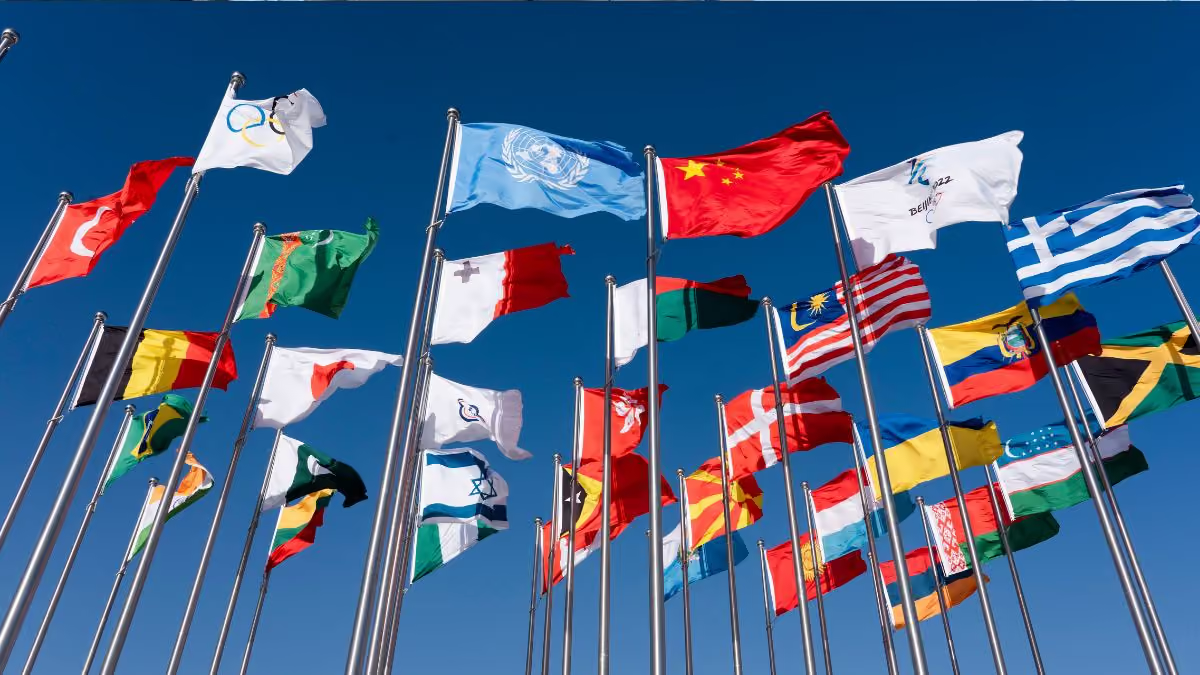
With the right strategies and tools, you can build stronger connections with your audience, increase customer loyalty, and boost sales. In this post, we’ll explore why multilingual campaigns are crucial for e-commerce brands and how to manage them effectively.
How multilingual email campaigns can help you scale your online brand
As e-commerce businesses expand into new international markets, their ability to communicate with diverse audiences becomes increasingly vital. Multilingual email campaigns are a powerful tool for creating personalized experiences for global customers. Growth Gurus, an e-commerce email marketing agency, helps brands design and implement these campaigns with advanced strategies and cutting-edge tools. By tailoring your email content to multiple languages, you can deliver highly relevant and targeted messages that resonate with each market, fostering trust and increasing the likelihood of conversion.

Why multilingual email campaigns matter
Communicating in your customer’s language delivers measurable impact:
- Higher engagement: Studies reveal that customers are four times more likely to engage with content in their native language.
- Increased trust: According to recent research, 56.2% of consumers prioritize content in their language over even lower prices, and 40% simply will not purchase from websites not in their native language.
- Brand strength and loyalty: Localized emails are more relevant, fostering stronger connections and increasing brand loyalty over time.
Multilingual email campaigns are not a trend; they are a growth accelerator for brands looking to globalize without losing the personal touch.
Understanding your global audience
The first step in crafting an effective multilingual email campaign is understanding your target audience. Markets around the world have different needs, behaviors, and preferences. Cultural nuances play a significant role in how people perceive and engage with content. To achieve success, you need to identify key characteristics of each market you plan to target. This includes understanding local customs, language preferences, and digital behaviors.
Before launching multilingual campaigns, businesses must gather data on their global audience and segment it based on language and location. This will help ensure that each market receives content that speaks to their unique interests and needs. Research and testing are crucial when determining which languages and markets to prioritize.
Best practices for crafting multilingual emails
Here are some best practices for crafting emails that resonate with a global audience:
Accurate translation vs. localization (cultural adaptation)
While translation is a key element of multilingual campaigns, localization is what truly makes an email message feel native to the reader. Localization involves adapting content to reflect local customs, humor, values, and cultural nuances. For instance, an email campaign promoting a sale during the holiday season might need to be tailored to align with the specific holidays celebrated in each country. This ensures your messages feel relevant and authentic.
Designing language-friendly templates (fonts, layouts, etc.)
When designing multilingual email templates, consider how different languages may impact the layout and design. Some languages, like Arabic or Hebrew, are written from right to left, while others, like English or Spanish are read from left to right. Additionally, text length can vary significantly between languages, which may require adjustments to the template’s structure.
Fonts also play a crucial role in making sure your emails are readable in different languages. Use web-safe fonts that support the characters used in the languages you are targeting. Also, ensure that your email templates are responsive, as different regions may access emails on various devices.
Using language-specific subject lines to boost open rates
Subject lines are the first impression you make on your readers, and getting them right is critical to your success. Tailor your subject lines to the languages of the audience you are targeting. This helps your emails stand out in inboxes and improves the open rates. For example, an English-language subject line may not have the same impact on a Spanish-speaking customer. A localized subject line, written in the customer’s native language, increases the likelihood of that customer opening and engaging with your email.
Strategies for managing multilingual campaigns at scale
Managing multilingual email campaigns across multiple regions requires organization and automation. Here are some strategies to streamline your efforts:
Creating separate workflows for each language audience
One of the most effective ways to manage multilingual campaigns is by creating separate workflows for each language group. This allows you to tailor the timing, frequency, and content of your campaigns based on regional preferences. Segmenting your email list by language ensures that each recipient receives emails in their preferred language, which boosts engagement and reduces the risk of unsubscribes.
Automating language-based segmentation and content delivery
Automating language-based segmentation allows you to streamline content delivery and ensure that the right messages reach the right audience at the right time. Using email marketing platforms like Klaviyo email marketing, you can create dynamic content blocks that automatically adjust based on the recipient’s language preferences. By automating this process, you can efficiently scale your multilingual campaigns while maintaining a personalized experience for each customer.
A/B testing across different regions and languages
A/B testing is an essential practice for optimizing email campaigns. It allows you to experiment with different elements such as subject lines, content, design, and calls to action (CTAs) to see what works best for each region. By running A/B tests across different languages and markets, you can fine-tune your campaigns for maximum effectiveness. This data-driven approach ensures that you’re continually improving the performance of your multilingual email marketing efforts.
Common challenges and how to overcome them
Running multilingual email campaigns at scale is not without its challenges. Here are some common obstacles brands face and how to overcome them:
Translation errors and brand voice inconsistency
One of the most common challenges in multilingual email marketing is maintaining consistency in brand voice across different languages. Translation errors can result in messages that are inaccurate, awkward, or even offensive in certain cultures. To avoid this, it’s crucial to work with professional translators who are familiar with both the language and the culture. Additionally, always review and edit translated content to ensure it aligns with your brand’s tone and messaging.
Handling non-Latin scripts and right-to-left languages
Languages like Arabic, Hebrew, and Urdu present unique challenges for email marketers because they are written from right to left. Designing templates that support these languages requires additional considerations, such as adjusting text direction and ensuring fonts are compatible. Testing your emails with these languages before sending them out is crucial to ensure the design is correct and the content is legible.
Managing unsubscribes and preferences across regions
As your global audience grows, managing unsubscribes and preferences across different regions can become complex. Different countries have varying regulations on data privacy and email marketing. For example, the General Data Protection Regulation (GDPR) in Europe has strict rules for managing email preferences. To manage unsubscribes and preferences effectively, use email marketing platforms like Klaviyo, which offer robust tools to handle preferences, ensure compliance, and streamline communication across regions.
How to use Klaviyo for multilingual email marketing & e-commerce localization
Klaviyo email marketing has invested powerfully in tools for multilingual email campaigns. Standout features include:
- Smart Translations: Translate campaign content into 60+ languages directly within Klaviyo. Activate this from account settings and select languages for each campaign or flow. You can set fallback languages and manually adjust automatic translations for the best quality.
- Dynamic content: Personalize emails to show different blocks, images, or offers based on a subscriber’s language or region.
- Segmentation and automation: Build flows that send the correct language version to each subscriber automatically, based on their profile or behavior.
- Easy testing and previewing: Use Klaviyo’s preview tools to ensure translations look right in every language, including special characters and right-to-left scripts.
With these tools, brands can scale their campaigns without needing to recreate entire emails manually, streamlining setup and improving performance for each market.
Conclusion
Multilingual email campaigns are a vital strategy for scaling your online brand and connecting with global customers. By understanding the cultural and language differences of your target markets, adopting best practices for creating localized content, and using tools like Klaviyo for seamless execution, you can enhance engagement and drive sales. Growth Gurus, an ecommerce email marketing agency, offers expertise in helping businesses expand globally through well-crafted multilingual campaigns. By implementing the strategies and best practices outlined in this post, you can take your brand to new heights, engaging customers in their native language and boosting conversions across the globe.
Recent Blog Post


Ready to grow your business?
If you want your business to experience more sales and faster growth, all you need to do is book a meeting with us today.