Ways to measure SMS response rates and how to improve them

SMS marketing is one of the most effective ways to engage customers directly. With an open rate higher than most other communication channels, it holds the potential to drive significant business growth. However, measuring and improving the SMS response rate is crucial for optimizing the effectiveness of your campaigns. In this post, we will explore how to measure SMS response rates, why it's important, and practical ways to fix a low response rate to maximize your SMS marketing efforts.

Ways to measure SMS response rates and how to improve them
Measuring the SMS response rate is essential for understanding how well your campaigns are resonating with your audience. A higher response rate indicates better engagement, but a low response rate suggests a need for improvements in your messaging strategy. For businesses relying on SMS marketing to drive sales, improving this metric can translate into higher conversion rates, better customer satisfaction, and increased revenue.
As a leading SMS marketing company, Growth Gurus understands the nuances of optimizing SMS campaigns. Whether you're using tools like Klaviyo for SMS marketing or other SMS marketing services, understanding response rates and improving them can enhance customer engagement. This article will delve into how you can accurately measure SMS response rates, identify the reasons behind low response rates, and implement strategies to boost them.
Understanding SMS response rate
The SMS response rate refers to the percentage of recipients who take a desired action after receiving an SMS. This could include actions like clicking a link, making a purchase, or replying to the message. A high SMS response rate indicates that your content and approach are relevant and valuable to your audience, while a low rate suggests that your messages may not be compelling enough to prompt action.
What a “response” looks like can vary by campaign objective:
- Direct replies to a message
- Sending back a keyword (e.g., “YES” to confirm an appointment)
- Clicking a tracked link unique to that SMS
- Completing a targeted survey or poll
- Redeeming a mobile coupon
Monitoring these responses in detail allows marketing teams to see which tactics make the biggest difference for their audience.

How to calculate SMS response rates
To calculate the SMS response rate, you need to know two important pieces of data:
- Total number of responses: The number of replies or actions taken after receiving your SMS message. This includes responses like clicks, purchases, or other desired actions.
- Total number of messages sent: The number of SMS messages you sent out.
The formula for calculating SMS response rate is simple:
SMS Response Rate (%) = (Number of Responses / Number of Messages Sent) × 100
For example, if a business sent 1,000 texts and received 200 replies, the SMS response rate would be 20%. This simple calculation applies regardless of campaign size and makes it easy to track changes after tweaking your strategy.
SMS response rate can and should be measured for every campaign. Over time, these metrics form a valuable benchmark for what works well and where improvements are needed.
What is the average response rate for SMS?
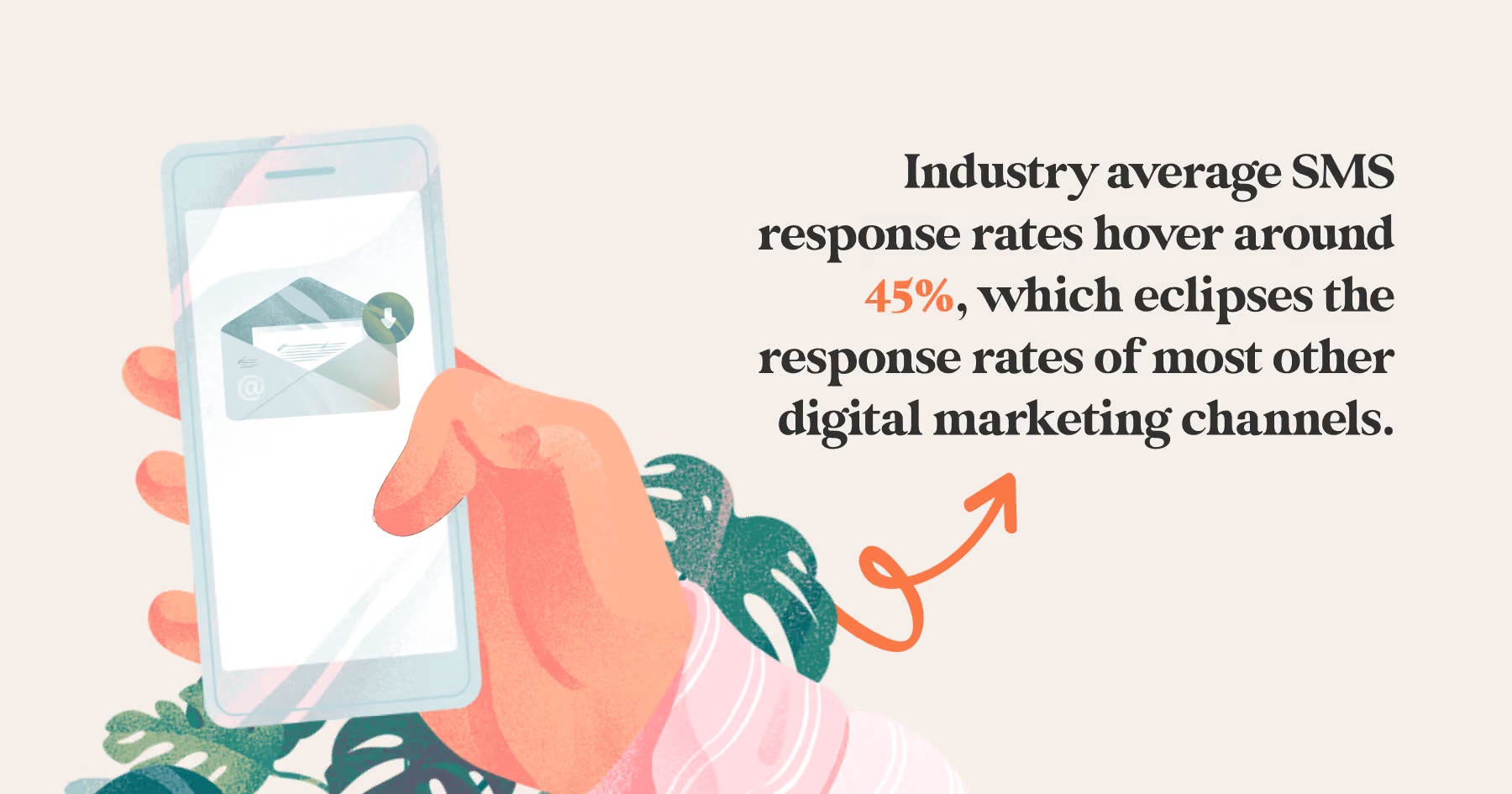
Industry average SMS response rates hover around 45%, which eclipses the response rates of most other digital marketing channels. That means nearly half of your recipients are likely to take action after receiving a message. Of course, these numbers can fluctuate depending on the nature of your campaign and your target audience. For example, winback or re-engagement campaigns might see averages closer to 15%.
These benchmark figures provide context: if you're consistently falling short of the industry average, it's a signal to revisit your tactics.
How SMS response rates compare to other channels
SMS marketing has some distinct advantages over other communication channels. According to recent studies, SMS marketing boasts an impressive response rate when compared to email and social media marketing. For instance:
- SMS response rate averages 45%; email’s average response rate lags far behind at 6%.
- The average response time for an SMS is a blazing-fast 90 seconds, while other channels might see responses trickle in much later.
- Click-through rates for SMS can also exceed 19%, whereas email CTRs usually fall between 0.77% and 4.36%.
This makes SMS a highly valuable channel for businesses looking to drive quick actions, whether it's a promotional offer, a reminder, or a survey.
However, as with all marketing channels, the key is to ensure your SMS messages are timely, relevant, and engaging. Otherwise, even the best-performing channel won't yield great results.
Factors influencing SMS response rate
Several factors can impact your SMS response rate, including:
- Timing: Sending messages at the right time can significantly boost response rates. Messages sent during off-peak hours may have higher engagement as people are more likely to respond during their downtime.
- Personalization: Customers are more likely to engage with personalized content. Tailoring messages to specific needs or interests can make your messages more compelling.
- Call to Action: Including a clear, actionable message in your SMS is crucial. A vague or unclear call to action (CTA) can lead to lower response rates.
- Relevance: Messages that are aligned with customer preferences, behaviors, or past interactions have a much higher chance of prompting a response.
- Incentives: Offering exclusive deals or discounts can increase the likelihood of customer engagement.
Understanding these factors and adjusting your strategy accordingly can help improve your SMS marketing response rate.
7 ways to improve SMS response rate
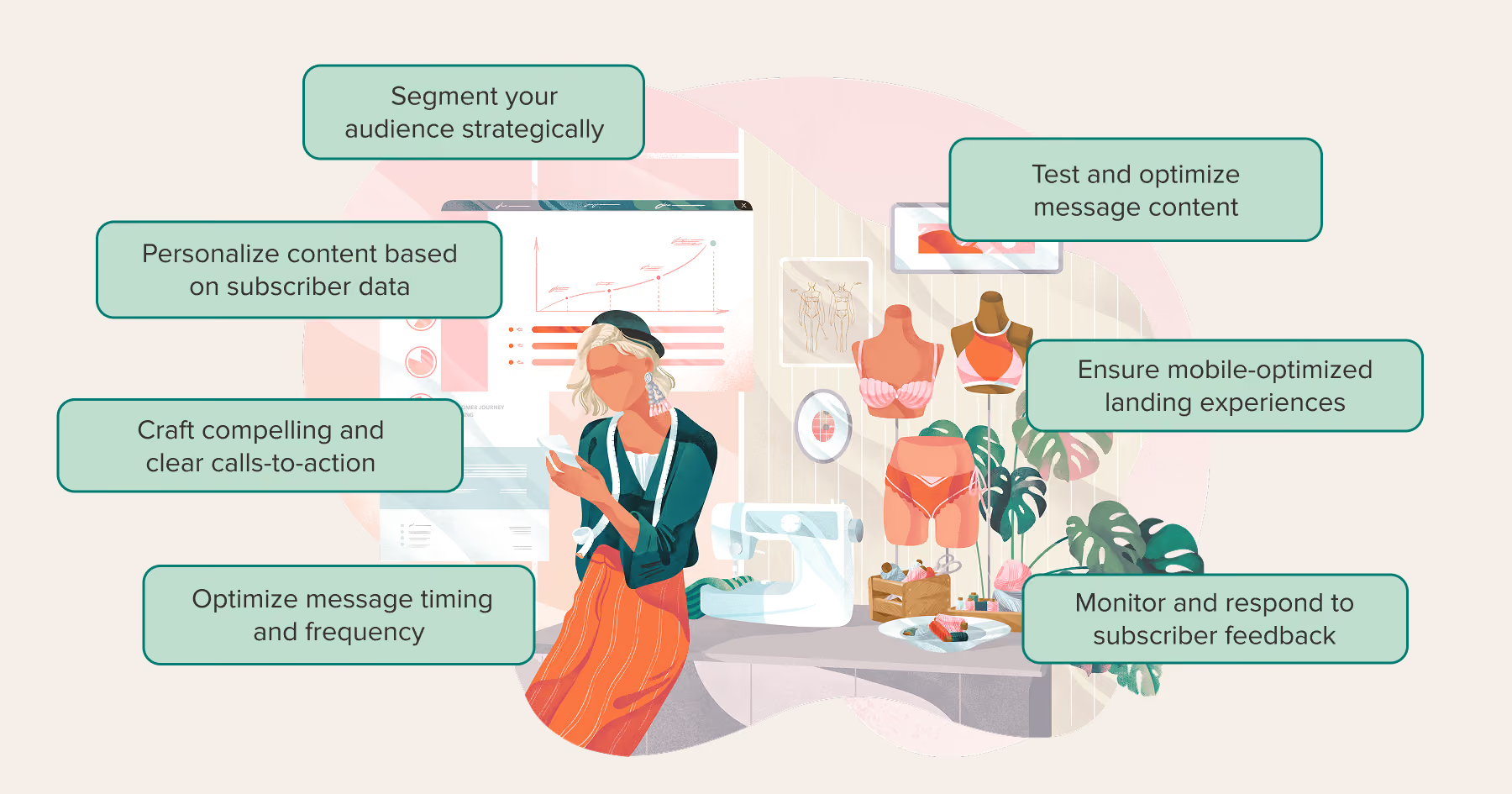
Improving your SMS response rate requires a combination of strategy, creativity, and technical know-how. Here are seven effective ways to enhance your SMS campaigns:
1. Optimize message timing and frequency
Strategic timing optimization can increase response rates by 20-30% without changing message content. Analyze your audience's behavior patterns to identify peak engagement windows, then schedule messages accordingly. Most subscribers respond best to messages sent during late morning hours (10 AM - 12 PM) when they're actively checking their phones without being overwhelmed by morning communications.
Frequency optimization requires balancing staying top-of-mind with avoiding subscriber fatigue. Start with 2-3 messages per week for promotional content, then adjust based on unsubscribe rates and engagement metrics. High-value, time-sensitive messages can justify higher frequencies, while general promotional content should maintain more conservative schedules.
2. Craft compelling and clear calls-to-action
Your call-to-action serves as the bridge between message consumption and desired response. Use action-oriented language that creates urgency while communicating the expected next step. Instead of vague phrases like "learn more," use specific directions like "Shop now - 24 hours left" or "Claim your 20% discount."
Position your call-to-action prominently within the message structure, typically at the end, where natural reading flow creates optimal action-taking conditions. Test different CTA variations to identify language that resonates most strongly with your specific audience segments.
3. Personalize content based on subscriber data
Personalization transforms generic messages into relevant, engaging communications that drive higher response rates. Use subscriber names, purchase history, browsing behavior, and preference data to create tailored content that speaks directly to individual interests and needs.
Advanced personalization includes dynamic content insertion based on real-time data, such as abandoned cart items, recently viewed products, or location-based offers. This level of customization creates powerful relevance that motivates immediate action-taking behavior.
4. Segment your audience strategically
Audience segmentation enables targeted messaging that dramatically improves response rates compared to broad, untargeted campaigns. Create segments based on purchase behavior, engagement history, demographic characteristics, and lifecycle stage to deliver highly relevant content to each group.
Behavioral segmentation often produces the strongest results, as it reflects actual customer actions rather than stated preferences. High-value customers, recent purchasers, and dormant subscribers each require different messaging approaches to maximize response rates.
5. Test and optimize message content
Systematic A/B testing reveals which content elements drive the strongest response rates within your specific audience. Test individual elements like subject lines, offer types, message length, and call-to-action wording while keeping other variables constant to isolate performance factors.
Content optimization should focus on clarity, value proposition strength, and emotional resonance. Messages that combine rational benefits with emotional triggers typically outperform purely logical or purely emotional approaches.
6. Ensure mobile-optimized landing experiences
High response rates mean little if subscribers encounter friction after clicking your message links. Ensure all linked content loads quickly on mobile devices and provides seamless user experiences that support conversion completion.
Optimize landing pages for mobile-first experiences, with clear navigation, fast loading times, and streamlined conversion processes. Remove unnecessary form fields and steps that create abandonment opportunities between initial response and final conversion.
7. Monitor and respond to subscriber feedback
Active subscriber feedback monitoring helps identify response rate decline causes before they become significant problems. Pay attention to unsubscribe feedback, direct replies, and engagement pattern changes that signal audience sentiment shifts.
Implement feedback loops that allow subscribers to express preferences and concerns, then use this information to refine your messaging approach. Responsive adjustments based on subscriber input often produce immediate response rate improvements.
Implementing these strategies can help increase your SMS response rate, leading to higher engagement and ultimately better business outcomes.
Drive subscriber action with Growth Gurus
If you're looking for professional guidance in optimizing your SMS marketing campaigns, Growth Gurus is here to help. As an SMS marketing agency, we specialize in creating customized SMS campaigns that drive meaningful results for businesses across various industries.
Growth Gurus offers expert insights into SMS strategy, A/B testing, and segmentation to improve your campaigns' performance. Whether you're using Klaviyo SMS marketing or other SMS marketing services, we can help you achieve higher response rates by developing engaging content and identifying the most effective messaging strategies for your audience.
Let Growth Gurus assist you in transforming your SMS marketing approach and drive better subscriber actions with data-driven insights.
Recent Blog Post


Ready to grow your business?
If you want your business to experience more sales and faster growth, all you need to do is book a meeting with us today.