Email A/B testing: the approach to take your campaigns from good to great

Every e-commerce brand aims to send emails that capture attention and inspire clicks. But what separates campaigns that perform decently from those that drive real revenue? The difference often lies in testing. Email A/B testing helps you pinpoint exactly what resonates with your customers so your messages don’t rely on guesswork but on clear, measurable insights.

How email A/B testing can take your campaigns from good to great
Email A/B testing helps e-commerce brands make smarter marketing decisions by replacing guesswork with data. It lets you compare two or more versions of an email to find what connects most with your audience, boosting engagement, conversions, and revenue. When done strategically, A/B testing transforms average email campaigns into high-performing sales drivers.
For brands looking to improve performance with precision, Growth Gurus, an ecommerce email marketing agency, helps design and manage A/B testing strategies that drive measurable results through data-backed insights and expert execution.
What is A/B testing for email campaigns?
A/B testing for email marketing, sometimes called split testing, compares two versions of the same email to see which performs better. You send Version A to one segment of your audience and Version B to another, then measure which one produces stronger results based on metrics like open rates, click rates, or conversions.
For example, if you’re unsure whether “Limited-Time Offer” or “Your Exclusive Deal Awaits” will drive more opens, you can test both. The data reveals which subject line performs best, allowing you to send the winning version to your remaining subscribers.
This approach takes the uncertainty out of campaign creation. Instead of relying on opinions or intuition, you base your decisions on what your customers actually do: how they open, click, and buy.
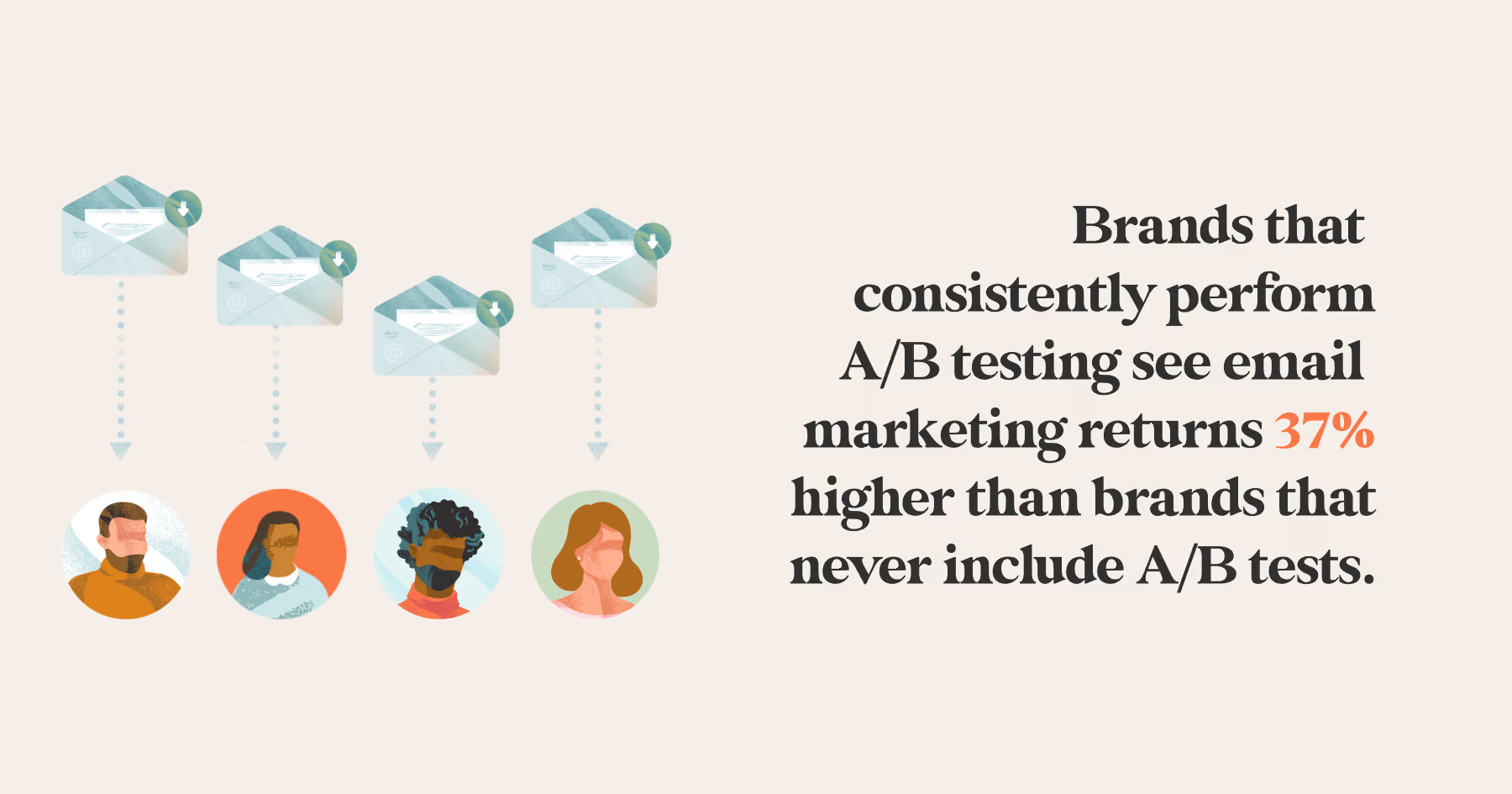
Statistically, brands that consistently perform A/B testing see email marketing returns 37% higher than brands that never include A/B tests. When each campaign is shaped by real performance data, every email sent becomes an opportunity to refine and improve.
Why A/B testing fuels better email decision-making
A/B testing gives you clarity. It shows what your audience truly responds to, rather than what you assume they will. This data-driven approach helps eliminate bias and ensures your marketing decisions are grounded in evidence.
Here’s why it matters so much for e-commerce brands:
1. It reveals what drives engagement
Consumers are flooded with marketing emails every day. A/B testing helps you understand which tactics cut through the noise, whether it’s a concise subject line, personalized greeting, or product-focused imagery. You’ll see exactly what earns clicks and what gets ignored, allowing you to double down on what works.
2. It improves ROI
When you base decisions on performance data, your emails naturally become more effective. You waste less time on ineffective strategies and focus on elements that consistently convert. Over time, this leads to higher open rates, click-through rates, and revenue without increasing your budget.
3. It builds long-term insight
Every test, whether it wins or fails, adds to your knowledge base. You begin to understand your audience’s preferences by category, season, and even emotion. For example, you may learn that urgency-driven messaging performs better in November, while value-based offers work best in January. This kind of insight transforms how you plan and execute future campaigns.
4. It supports customer-centric marketing
A/B testing ensures your communication evolves with your customers’ behavior. As trends and preferences shift, testing helps you keep your emails relevant and relatable. It’s not about finding one “perfect” format. It’s about continuously learning and adapting to stay aligned with what your customers care about.
Example of how this works in e-commerce:
Let’s say you run an online skincare store. You’re preparing an email promoting your new vitamin C serum.
You test two variations:
- Email A: Focuses on the product benefits (“Brighter Skin in 7 Days”)
- Email B: Focuses on social proof (“Join 10,000+ Customers Loving This Serum”)
After sending the test, you find that Email B earns 25% more clicks. That insight tells you your audience responds more to community validation than product claims. So, in your next campaign, you lead with testimonials and user-generated content. Over time, this pattern improves your open rates, strengthens your tone of voice, and builds trust.
That’s the power of email A/B testing. Every test helps you refine your approach, one insight at a time.
How to set up and run efficient A/B tests
Running an A/B test doesn’t need to be complicated. What matters most is consistency, clarity, and focus. When done correctly, each test gives you actionable insights to improve your campaigns moving forward.
Here’s a step-by-step breakdown that e-commerce brands can follow to set up and run A/B tests that actually move the needle.
1. Choose an objective
Every test should start with a clear goal. What do you want to learn or improve?
Your objective might be:
- Increasing open rates (test subject lines or send times)
- Boosting click-through rates (test CTAs or visuals)
- Driving more conversions (test offers or layouts)
For instance, if your abandoned cart emails are getting opened but not clicked, your objective could be to find which CTA drives more users back to checkout. Having one focused goal ensures your test results are measurable and meaningful.
Remember, testing without a clear purpose leads to scattered data and no real direction. Decide exactly what success looks like before launching your test.
2. Pick the variable
A/B testing works best when you test one variable at a time. That’s the only way to know what caused the difference in performance.
Common variables to test include:
- Subject lines
- Email copy (headline or CTA wording)
- Visuals or product images
- Send times and days
- Discount percentage or offer type
- Layout or button color
For example, if you test both the subject line and the email layout in one go, you won’t know which change made the impact. Keeping the test simple ensures your data stays accurate and actionable.
3. Set up the parameters
After selecting your variable, define how the test will run.
- Audience split: Divide your email list into two groups of equal size. One gets Version A, the other gets Version B.
- Sample size: Make sure each group is large enough to generate statistically reliable data. If you have 10,000 subscribers, testing with at least 1,000–2,000 per version gives a more trustworthy result.
- Duration: Give the test enough time to collect responses. For most e-commerce campaigns, 24 to 48 hours works well.
Modern tools like Klaviyo email marketing make it easy to automate this process. Klaviyo automatically segments your audience, sends both versions, and identifies a winner based on your chosen metric, saving time and eliminating manual effort.
4. Run the test
Once your setup is complete, it’s time to launch. Send both versions to their respective segments simultaneously (unless you’re testing send times). Then, let the data roll in.
While your test is running, avoid making changes or stopping it early. Tests need time to reach statistical significance. Cutting them short could give you misleading results.
Most email platforms will track your metrics automatically, like open rates, clicks, conversions, and even revenue generated per send.
5. Analyze the results
After your test ends, it’s time to interpret what the numbers mean. Look for patterns instead of just single-test outcomes.
Ask yourself:
- Did the winning variation outperform the other by a meaningful margin?
- What might explain the difference?
- How does this align with previous test results?
If you discover that shorter subject lines consistently outperform longer ones, that’s an insight you can apply across future campaigns.
In some cases, the results may be too close to call, meaning you’ll need to keep testing and refining until a clear trend emerges.
What elements to A/B test in your emails
A/B testing isn’t limited to subject lines. Every part of your email, from the inbox view to the final call-to-action, can influence engagement and conversion. Below are the key areas worth testing for e-commerce brands.
1. The inbox envelope
Your email’s first impression happens before it’s even opened. The name, subject line, and preview text play a huge role in whether someone clicks or ignores your message.
Name
Test whether subscribers engage more with a brand name (“GlowLab Skincare”) or a person’s name (“Mia from GlowLab”). Personal senders sometimes feel more trustworthy, especially for lifestyle or boutique brands.
Subject line
Short, direct subject lines (under 50 characters) often perform better on mobile. Experiment with tone, curiosity, and urgency.
Example tests:
- “Final hours to save 20%” vs. “Your 20% discount expires tonight”
- “New arrivals you’ll love” vs. “Your next favorite outfit is here”
Preview text
This secondary text can reinforce the subject line or add an incentive to open. For example, testing “Free shipping ends soon” against “See what’s trending this week” might show which motivator works best.
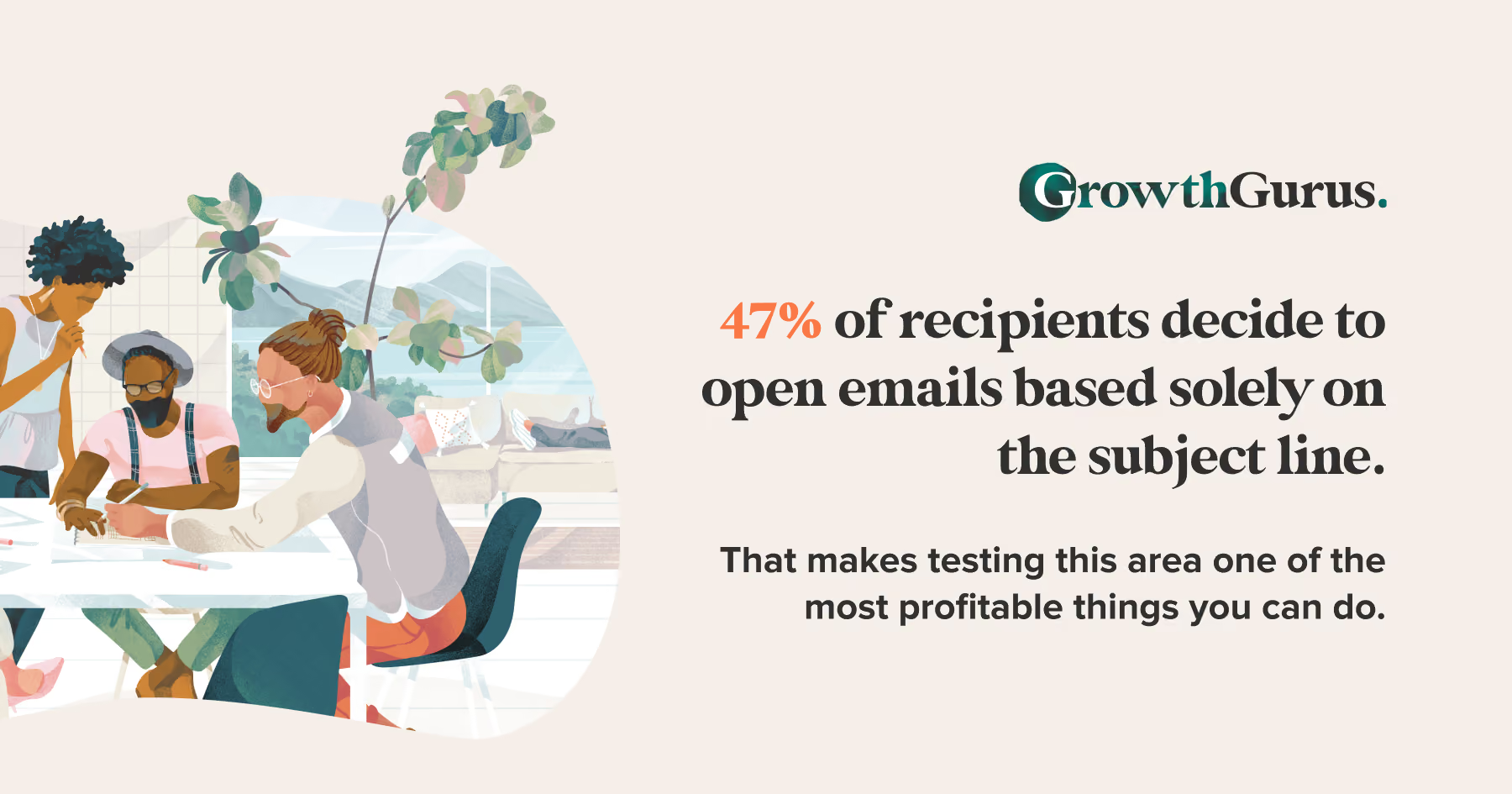
According to research, 47% of recipients decide to open emails based solely on the subject line. That makes testing this area one of the most profitable things you can do.
2. Personalization
Personalization is no longer a nice touch—it’s expected. Test different personalization strategies to see what drives the most engagement.
Try testing:
- Emails that include the recipient’s name versus those that don’t
- Product recommendations based on browsing history versus bestsellers
- Dynamic content tailored to user behavior (like recent purchases)
For example, if you run a pet supply store, sending “Treats your dog will love” to dog owners and “Healthy snacks for your cat” to cat owners feels more personal and relevant.
Small personalization tweaks can significantly increase conversion rates, especially when paired with segmented audiences.
3. Automation and timing
When your emails arrive can be just as important as what they say. Test send times and automation triggers to find the optimal delivery window.
Try:
- Morning vs. evening sends
- Weekday vs. weekend delivery
- Immediate post-purchase email vs. a 24-hour delay
For e-commerce, automation flows like welcome series, cart recovery, and win-back emails are ideal for testing timing. If customers tend to shop late at night, scheduling your emails accordingly can lead to a noticeable bump in clicks and sales.
4. Copy, imagery, and design choices
Your email’s visual and verbal elements influence how easily customers understand and act on your message.
Copy: Test tone and message framing. For instance, “Get your limited-edition set” might outperform “Shop now before it sells out” depending on your audience’s motivation.
Imagery: Try lifestyle photos versus clean product shots. Some audiences prefer seeing real people using the product, while others respond to crisp, detailed visuals.
Design: Layout, color scheme, and button placement can all impact conversions. A single change, like moving your CTA above the fold, can increase clicks by double digits.
When testing visuals, ensure your file sizes and formats are consistent so load time doesn’t skew the results.
5. Offer and pricing presentation
Your audience may respond differently to how you frame your promotions.
Examples:
- “20% off everything” vs. “Save $20 on your order”
- “Buy one, get one free” vs. “50% off when you buy two”
Each phrasing can trigger different psychological reactions. Testing these variations can help you identify which resonates best with your specific customer base.
6. Mobile optimization
Since most shoppers open emails on smartphones, test how your design performs on mobile versus desktop.
Compare:
- Single-column layouts vs. multi-column
- Large CTA buttons vs. standard size
- Minimalist design vs. image-heavy design
Even small adjustments can reduce friction and increase clicks, especially when most of your traffic comes from mobile devices.
5 common email marketing A/B testing mistakes
Even experienced marketers make missteps with A/B testing. Avoiding these common errors will help you get cleaner, more reliable insights.
1. Testing too much at one time
Testing multiple variables simultaneously confuses the results. You might see improvement, but you won’t know why. Keep your tests focused on one change at a time. If you want to experiment with multiple factors, run separate, sequential tests.
2. Running tests with too small a sample
A small audience might not provide statistically significant results. Random fluctuations can make one version appear better when it’s actually not. Use a large enough sample size to ensure confidence in your conclusions.
As a general rule, test with at least 10–20% of your total list or a few thousand recipients—whichever is larger.
3. Funky test timing
Sending test versions at different times can distort your results. For instance, sending Version A on Monday morning and Version B on Tuesday evening could make timing, not content, the deciding factor.
Always send both versions simultaneously unless the test specifically targets timing.
4. Ignoring statistical significance
Winning by a 1% margin doesn’t always mean much. Ensure the performance gap is big enough to be meaningful. Most email platforms, including Klaviyo email marketing, calculate statistical significance automatically, showing whether your result is reliable or just a random variation.
5. Forgetting about rolling out the results
Testing is pointless if you don’t apply what you learn. Once you find a winning element, roll it out across future campaigns. Keep a shared document or dashboard tracking your insights so the entire marketing team can reference them.
For example:
- If emojis in subject lines consistently boost open rates, make them part of your brand’s tone guide.
- If blue CTA buttons outperform green ones, update all templates accordingly.
Documenting and implementing results turns your experiments into long-term performance gains.
Take the guesswork out of your testing strategy with Growth Gurus
Email testing is both an art and a science. It requires creativity to craft test ideas and precision to measure results. For e-commerce brands managing multiple campaigns, products, and customer segments, doing this consistently can be overwhelming.
That’s where Growth Gurus makes a difference. We specialize in email marketing campaign management built around continuous testing and optimization. Our team uses data-driven insights to craft strategies that maximize engagement, conversions, and customer retention.
We help you identify meaningful variables to test, implement winning elements efficiently, and scale what works, so your campaigns evolve with your audience’s preferences.
With access to advanced tools, automation workflows, and deep expertise, we remove the uncertainty from your A/B testing process. From strategy setup to reporting, we handle every step, ensuring your campaigns are powered by performance data, not guesswork.
So, whether you’re exploring email testing ideas for your next product launch or looking to refine your automation sequences, Growth Gurus is ready to guide your optimization journey. Our goal is simple: help you take your campaigns from good to great with testing that drives measurable growth.
Recent Blog Post


Ready to grow your business?
If you want your business to experience more sales and faster growth, all you need to do is book a meeting with us today.