Email marketing tips to connect with sports and outdoor enthusiasts

This article is a comprehensive guide for sports and outdoor brands looking to build stronger customer relationships through email marketing. You will find actionable tips on audience segmentation, content personalization, timing strategies, crafting subject lines, automation flows, and performance measurement. Whether you are just starting or looking to refine your existing strategy, this article will help your brand speak directly to the hearts of adventure seekers and sports lovers.
.avif)
Email Marketing Strategies to Reach Fitness & Outdoor Enthusiasts
There’s something special about the sports and outdoor audience. These are people who wake up at 5 am to hit the trails, genuinely caring about the gear they use and the brands they support. Email provides a direct, personal line to customers who are already passionate about their products, turning that enthusiasm into a powerful engine for growth.
To effectively engage this audience, brands need thoughtful, data-driven email strategies tailored to their lifestyle and preferences. This includes creating high-converting flows such as a welcome series, product recommendations, and post-purchase follow-ups that align with their active routines. Many businesses choose to work with experienced e-commerce email marketing agencies to develop and optimize these campaigns, ensuring that every message resonates while maximizing long-term return on investment.
Why email marketing is effective for sports and outdoor brands
Before we get into tactics, it helps to understand why email is such a powerful channel for this specific niche. Sports and outdoor consumers are highly informed, researching gear extensively, reading reviews obsessively, and buying from brands they trust. Email lets you provide this information while building trust over time through consistent, valuable communication.
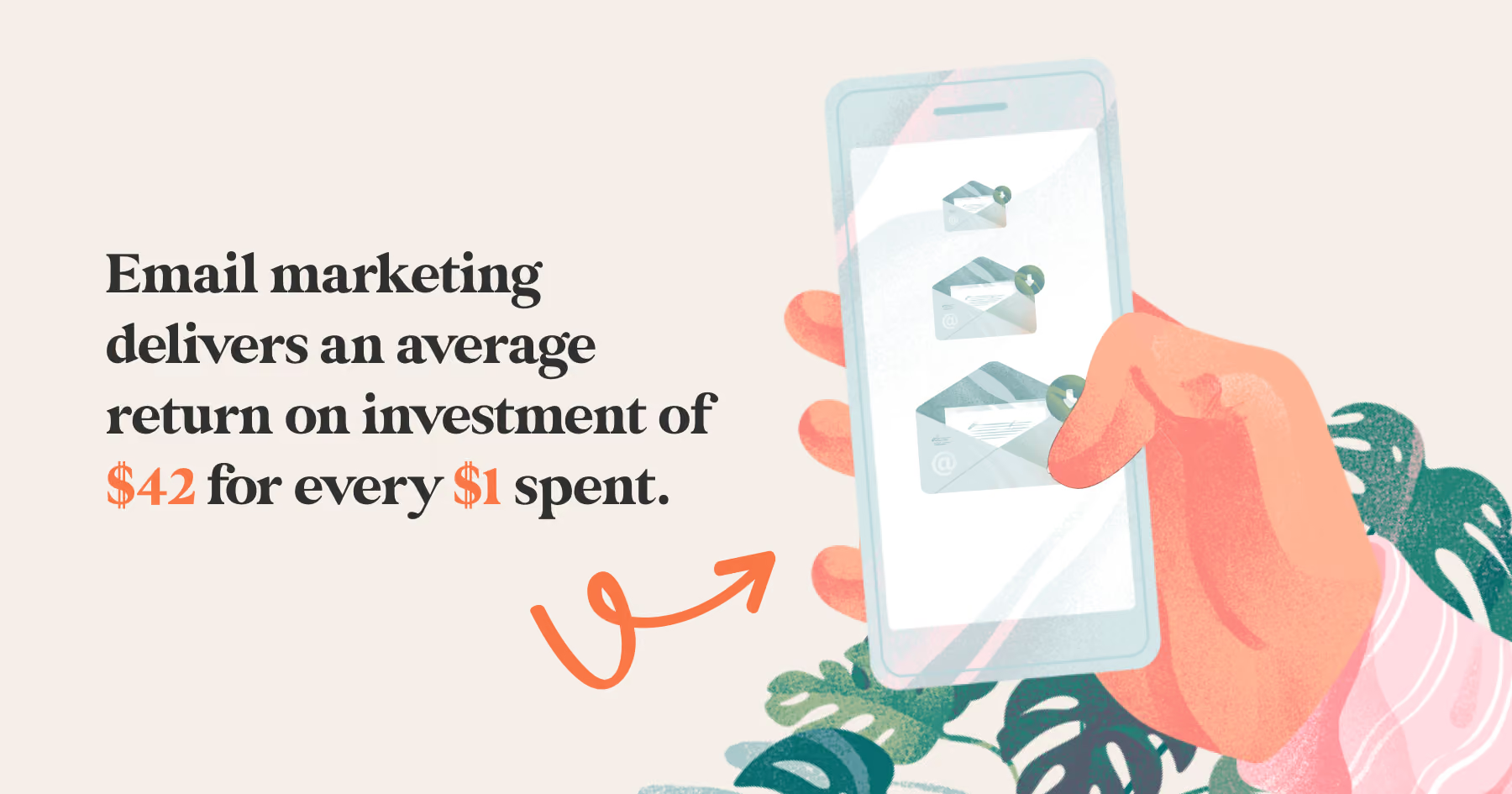
Email marketing delivers an average return on investment of $42 for every $1 spent. For sports and outdoor brands, where average order values tend to be higher, the ROI can climb even further. Email also thrives on personalization, and this audience craves personalization across communications from brands. When you get segmentation right, your emails feel like recommendations from a knowledgeable friend, rather than blasts from a faceless corporation.
How email marketing helps sports and outdoor brands grow
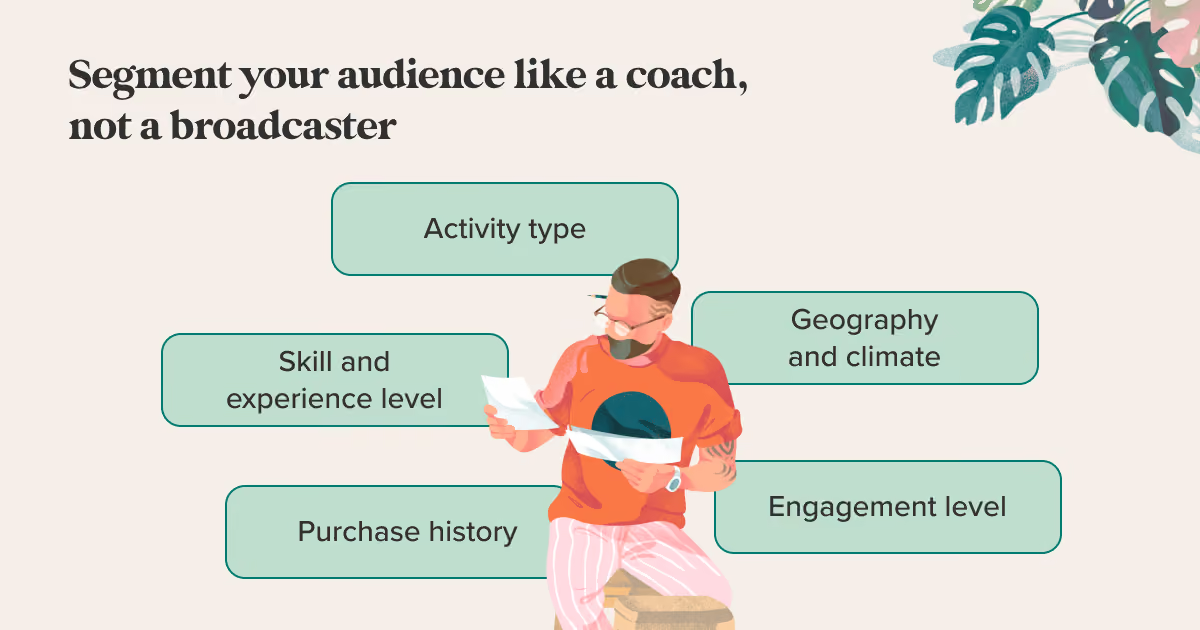
Segment your audience like a coach, not a broadcaster
Segmentation is an incredibly useful tool for outdoor brands’ email marketing strategies. The sports and outdoor market is incredibly diverse, and treating your entire list the same way is one of the fastest routes to high unsubscribe rates and low engagement.
These are the core segments that every outdoor and sports brand should build:
- Activity type: Hiking, running, cycling, climbing, skiing, fishing, surfing, yoga, and team sports. The more specific you get, the more relevant your emails become.
- Skill and experience level: A beginner hiker needs different gear recommendations than a seasoned mountaineer, so tailor product suggestions accordingly.
- Purchase history: Customers who have bought technical gear respond differently from those who have bought casual lifestyle apparel. Use past behavior as your guide.
- Geography and climate: A subscriber in Colorado has different seasonal needs than one in Florida; promote winter gear to mountain dwellers and water sports gear to coastal customers.
- Engagement level: Your most active openers and clickers deserve VIP treatment, while lapsed customers need re-engagement campaigns designed to bring them back.
Once you have these segments in place, you can send emails that feel almost custom-made for each reader. That is when engagement increases, and revenue follows.
Write subject lines that speak the language of adventure
Your subject line is your reader’s first impression of your email. If it doesn't pique curiosity or speak directly to your reader's passion, the email never gets opened. Sports and outdoor subscribers respond to language that feels energetic, authentic, and relevant to their lifestyle.
These are key principles for sports and outdoor brands’ subject line writing:
- Use action words: Phrases like “Gear up,” “Hit the trail,” or “Train harder” all tap into the mindset of an active audience.
- Reference the season or conditions: Subject lines like “Your pre-season running checklist” or “Pack list for your first winter camp” feel timely and helpful.
- Lean into exclusivity: “Early access for our trail community” or “New arrivals for serious cyclists only” create urgency without sounding pushy.
- Ask a question they care about: “Ready for your next summit?” or “What's in your kit bag this season?” invites the reader into a conversation.
- Keep it honest and specific: Vague subject lines can frustrate your audience (they want to know what the email is actually about).
A/B test your subject lines consistently. Even small wording changes can significantly impact open rates with an engaged sports audience.
Build a content calendar around the athletic calendar
One of the biggest advantages of marketing to sports and outdoor enthusiasts is that their lives follow a clear seasonal rhythm. There’s ski season, marathon season, camping season, and back-to-school sports season.
When you align your email content calendar with this athletic cycle, your messages arrive exactly when subscribers are in a buying mindset. Emails that match what your audience is already thinking about feel less like marketing and more like well-timed, helpful guidance.
Personalize your emails beyond using their first name
Many brands think personalization means dropping a subscriber's first name into the subject line. That is a start, but it barely scratches the surface of what is possible in email marketing for the sports industry. True personalization means your email content reflects who the subscriber actually is. Strategies to implement this personalisation include:
- Recommending products based on past purchases: If someone bought running shoes in March, follow up in July with breathable summer running socks or a running belt.
- Celebrating their milestones: Did a subscriber just complete their first 5K using your gear? A congratulatory email offering a discount on their next race entry fee builds strong loyalty.
- Send gear guides tailored to their activity: A mountain biker and a road cyclist are fundamentally different customers, so send them different content.
- Personalize email content based on browsing behavior: If someone spent time looking at tents on your website but did not purchase, a follow-up email showcasing your bestselling tents with customer reviews can help to close the gap.
The more specific and relevant your emails feel, the more your subscribers trust your brand as a genuine resource.
Automate the journeys that matter most
Automation is where email marketing scales without losing its personal touch. For sports and outdoor brands, several automated flows are especially powerful:
Welcome series
When someone joins your list, do not send a single generic welcome email. Build a three- to five-email welcome series that introduces your brand story, showcases your bestsellers by category, shares your community values (sustainability, adventure, performance), and ends with an irresistible offer to make a first purchase.
Post-purchase flow
After a customer buys, follow up with helpful, relevant content. Send gear tips, usage guides, or complementary product recommendations. For example, a customer who just bought a tent may benefit from a sleeping bag recommendation or a camping checklist because it feels like a natural next step, rather than a sales push.
Abandoned cart flow
Outdoor gear is not an impulse purchase, and customers often add products to their cart and then go away to think before they purchase. An abandoned cart sequence that answers common questions about fit, durability, or warranties can nudge the sale over the line.
Re-engagement flow
Lapsed subscribers who have not opened in 90 to 180 days need a dedicated win-back campaign. Use a compelling subject line, acknowledge the gap, and offer something valuable to bring them back.
Partnering with a Klaviyo email marketing agency can help you build and optimize these flows using advanced segmentation and automation logic, so each journey feels bespoke without requiring constant manual effort from your team.
Use user-generated content to build community and trust
Sports and outdoor enthusiasts are a community-oriented audience. They trust fellow athletes and adventurers, which makes user-generated content (UGC) a powerful addition to your email strategy. Real photos, reviews, and stories from your customers can significantly boost credibility and engagement.
Here are some strategies for weaving UGC into your email campaigns:
- Share a real customer’s story with photos of your products in action.
- Showcase top reviews for featured products instead of relying solely on brand copy.
- Run photo contests and highlight the best submissions in a dedicated email.
- Celebrate customer milestones, such as summit completions, race finishes, or first camping trips (with their permission).
When subscribers see people like them using your products in real conditions, their trust in your brand increases significantly. It also makes your emails more engaging and enjoyable to read, helping you retain subscribers over time.
Nail your email design for an active audience
Design choices matter in email marketing for outdoor brands. Your audience is active, visually oriented, and often checking email on mobile devices between activities. Your design should reflect their energetic lifestyle and match the visual language of the outdoor world.
When designing emails for an outdoor or sports audience, keep these design principles in mind:
- Use bold, high-quality imagery: A stunning mountain landscape or an action shot of a trail runner immediately communicates your brand's world.
- Design for mobile first: A large portion of your audience checks emails on their phones during commutes, after workouts, or between outdoor sessions. Tiny fonts and pinch-to-zoom are deal breakers.
- Keep your layout clean and scannable: Active people do not sit down and read every word, so use clear headlines, short paragraphs, and prominent calls to action.
- Use color intentionally: Earthy tones, vivid blues, and greens tap into the outdoor aesthetic, while bright accents signal energy and urgency.
- Include clear, single-focus CTAs: Every email should have one primary action you want the reader to take. Multiple competing CTAs create decision fatigue and lower click rates.
Test, measure, and optimize continuously
Email marketing is never set-and-forget. The brands that win in the long term treat their email program as a living thing that grows and improves through consistent testing and analysis.
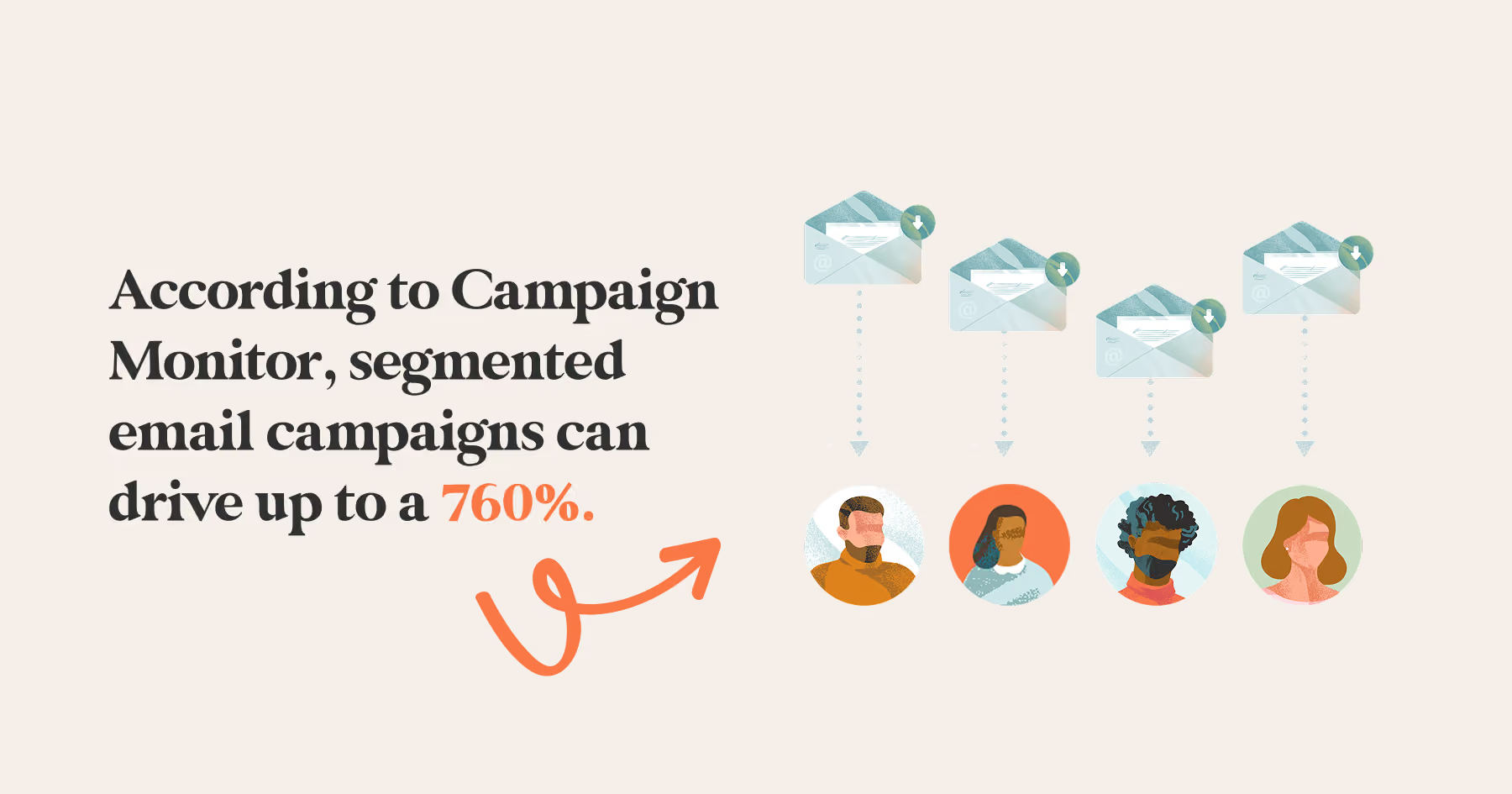
According to Campaign Monitor, segmented email campaigns can drive up to a 760% increase in revenue compared to one-size-fits-all campaigns. That statistic alone should inspire every sports and outdoor brand to get serious about their email analytics.
These are the key metrics to track every month to optimize your email marketing strategy:
- Open rate: Are your subject lines compelling enough to earn the click?
- Click-through rate (CTR): Is your content relevant, and is your CTA being followed?
- Conversion rate: Are your emails driving actual purchases?
- Revenue per email: What is each send actually worth?
- Unsubscribe rate: Are you sending too frequently or missing the mark on relevance, causing people to unsubscribe from your list?
- List growth rate: Is your audience expanding in a healthy, sustainable way?
Review these numbers at least monthly and run structured A/B tests on subject lines, send times, email layouts, and offers. Continuous optimization is what separates good email programs from great ones.
Choose the right send frequency for an active audience
There is no universal answer to how often you should email your sports and outdoor subscribers. Send too frequently, and unsubscribes will rise. Send too infrequently, and you risk losing top-of-mind awareness. The sweet spot depends on your content quality, your audience's engagement patterns, and your business cycle, but as a general guide, refer to the following:
- Weekly emails work well for brands with lots of content, new arrivals, or strong community engagement.
- Bi-weekly emails strike a good balance for most e-commerce brands during non-peak seasons.
- Daily emails during major sale events (Black Friday, Cyber Monday, end-of-season clearance) are acceptable and expected by subscribers.
- Trigger-based emails (welcome flows, post-purchase, abandoned cart) should be sent as needed based on behavior, ensuring the delivery of other communications are adjusted, to not overwhelm the customer with emails
Always give subscribers the option to choose their preferred frequency in your preference center, or when they first opt-in to your mailing list. This small step reduces unsubscribes and keeps your most engaged audience happy.
Final Thoughts
Email marketing for sports and outdoor enthusiasts is most effective when it is built on relevance, timing, personalization, and genuine value. These customers are highly engaged, research-driven, and deeply connected to the products they choose, which means generic messaging simply does not work. Brands that succeed in this space focus on smart segmentation, seasonally aligned campaigns, compelling subject lines, automation workflows, and continuous optimization. By treating email as a long-term relationship-building channel, outdoor and sports brands can create stronger loyalty, higher engagement, and consistent revenue growth.
To truly maximize your results, partnering with a specialized e-commerce email marketing agency like Growth Gurus can help elevate your strategy. With a deep understanding of performance-driven email campaigns, we focus on creating personalized, conversion-focused workflows that speak directly to your audience’s interests. Our expertise helps outdoor and sports brands build stronger customer relationships, improve retention, and ultimately drive more revenue through smarter email marketing systems.
Frequently asked questions
Why is email marketing essential for an outdoor brand?

Email marketing is essential for an outdoor brand because it provides a direct and reliable way to connect with highly engaged, research-driven customers who value trust and relevance. It also supports every stage of the customer journey from discovery to purchase to repeat buying, while driving strong retention loyalty and consistent revenue growth.
What is the best email marketing platform for sports and outdoor brands?
Several platforms work well. Klaviyo is particularly popular with e-commerce brands because of its powerful segmentation, automation capabilities, and direct integrations with Shopify and other platforms. The right choice depends on your tech stack, budget, and the complexity of the flows you want to build.
How to grow an email list as an outdoor brand?
The most effective list-building tactics for sports and outdoor brands include gated content such as free trail guides, gear checklists, or training plans in exchange for an email address. Pop-ups offering a first-purchase discount work well online, while in-store and event sign-ups, such as at races, can help grow your list offline.
How to reduce unsubscribes in an email list?
Reducing unsubscribes starts with better segmentation and relevance. Make sure you are not sending every email to your entire list. Also, review your send frequency, improve your subject lines, and offer a preference center where subscribers can choose what kind of content they receive and how often they want to receive it. Sometimes people do not want to unsubscribe entirely, they just want fewer emails or more targeted content.
What kind of content works best in sports and outdoor email marketing?
Content that educates, inspires, and serves the subscriber's lifestyle performs best. Gear guides, training tips, user stories, seasonal packing lists, product comparisons, and community spotlights all tend to drive strong engagement. Promotional emails work well when balanced with value-driven content.
How important is mobile optimization for outdoor brand emails?
Extremely important, because sports and outdoor enthusiasts are frequently on the move and check their emails on their phones. If your emails are not mobile-optimized with readable fonts, responsive layouts, and thumb-friendly buttons, you are losing a significant portion of your potential clicks and conversions.
Recent Blog Post



Ready to grow your business?
If you want your business to experience more sales and faster growth, all you need to do is book a meeting with us today.