
Please provide your information below to download our PDF on CDP Readiness Framework
Success! Please click here to open your copy of CDP Readiness Framework
Oops! Something went wrong while submitting the form.
Close icon

How SMS marketing accelerates small business growth in 2026

Author Profile Picture
Authr Name
Author Bio
Published Date:
June 3, 2026
Modified Date:
June 3, 2026

SMS marketing is emerging as a powerful growth tool for small businesses in 2026. This blog explores why text messaging outperforms many traditional and digital marketing channels, along with its key benefits, proven strategies, and practical tips for strengthening customer relationships and driving revenue. It also provides a clear understanding of how to build effective campaigns and make the most of SMS as a high-impact marketing channel.

How SMS marketing boosts small business growth in 2026 

When instant communication matters, SMS marketing remains one of the most direct and effective ways to reach customers. Text messages are delivered and read almost immediately, and in 2026, small businesses that embrace this channel are experiencing faster growth. By putting your message in front of your audience at the right moment, SMS helps you connect when it matters most.

For small businesses, every marketing dollar counts. That’s why SMS marketing for small businesses has evolved from a simple communication tool into a powerful growth engine. Partnering with an experienced e-commerce text marketing company can further strengthen your strategy and help you get the most out of every message.

Why SMS marketing deserves a central place in your strategy

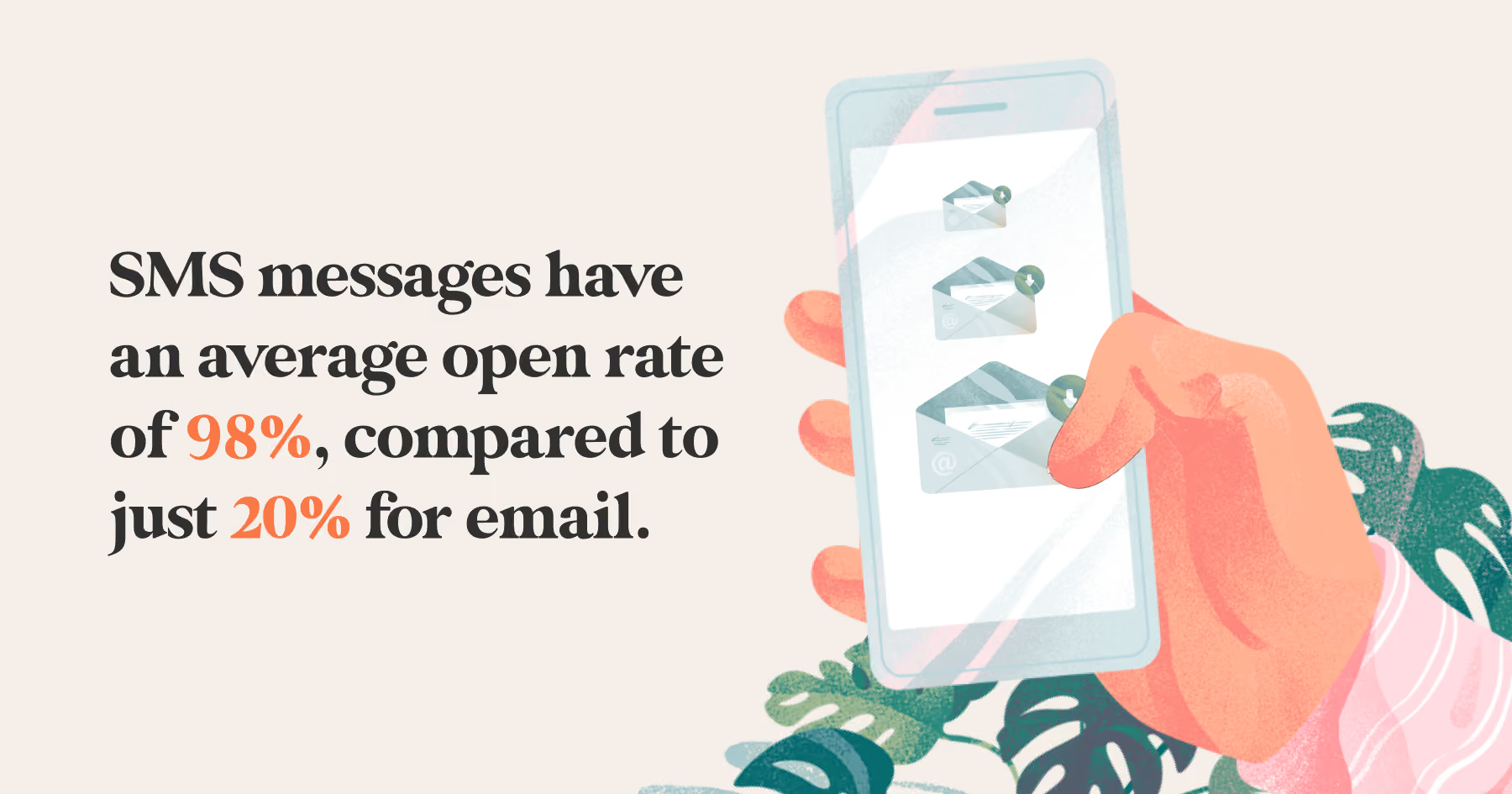
According to recent research, SMS messages have an average open rate of 98%, compared to just 20% for email. These statistics tell a clear story: your customers are on their phones. The question is whether your business is showing up in that space. 

For small businesses, SMS is especially appealing because it’s easy to get started. You don’t need a large creative team or a six-figure ad budget; you only need a reliable platform, a solid list of opted-in subscribers, and a thoughtful approach to your messaging.
Here is what SMS marketing brings to the table:

  • Instant reach: Messages are typically read within three minutes of delivery, making SMS ideal for time-sensitive promotions, flash sales, and urgent announcements.
  • High engagement: Customers who have opted in to receive texts from you are already warm. They’ve chosen to hear from you, so your messages land with a more receptive audience.
  • Direct communication: No algorithm decides whether your message gets seen. You send it, they receive it.
  • Measurable results: Delivery rates, click-through rates, and conversions are all trackable, giving you clear data to optimise your strategy.

Building your SMS list the right way

Before sending any messages, it is important to build a strong SMS subscriber list. This means connecting with people who have agreed to receive messages, while also maintaining trust. A well-built list helps protect your brand reputation and leads to better engagement and results. With the right approach, growing an SMS list can be simple and effective, helping create a solid foundation for successful campaigns.

In 2026, the focus has shifted from quantity to quality. A list of 500 highly engaged customers is far more valuable than a list of 5,000 who never click. 

Opt-in methods that work for small businesses:

  • Website pop-ups with an incentive: Offer a discount or a gift in exchange. A well-timed pop-up can effectively turn visitors into subscribers.
  • Opt-in at checkout: Ask customers during the purchase process if they would like to receive updates or offers via text. 
  • Keyword campaigns: Use a simple keyword that people can text to subscribe and join your SMS list.
  • Email promotion: Invite existing contacts to sign up for SMS to receive updates and special offers.

When someone joins your list, the first text they receive will set the tone for the entire relationship. Make it warm, make it valuable, and make sure that it is clear what they signed up for.

SMS marketing tips for small businesses that actually work

Knowing the theory is one thing, but putting it into practice is another. These SMS marketing tips for small businesses are the most effective strategies for creating successful SMS campaigns. 

  • Keep it short and purposeful: The best SMS campaigns say what they need to say, and nothing more. Every word should earn its place; if your message requires scrolling, it probably needs editing.
  • Lead with the value: The deal or incentive is the most valuable content in your message; do not bury it at the bottom. Open with the offer, then provide the context. 
  • Personalise wherever possible: Using a customer's name or referencing their past purchases makes a text feel like a message from a friend rather than a blast from a brand. 
  • Time your send thoughtfully: Mid-morning on weekdays tends to perform well, but your specific audience may respond differently. Test different send times and let the data guide you. 
  • Always include a clear call to action: Tell customers exactly what you want them to do.
  • Create urgency (without being pushy): Deadlines and limited quantities drive action, but only when they are genuine. If you are always claiming something, customers stop believing you. 
  • Test, learn, and refine: Run A/B tests on your subject lines, send times, and offers. Small improvements compound over time into significant gains.

SMS marketing strategies for small business growth

Welcome series automation 

The moment someone subscribes to your SMS list marks the peak of their initial interest. A well-crafted welcome series capitalises on that momentum. 

Consider a three-message sequence for the first week. The first text confirms their subscription and delivers any promised incentive. The second text introduces your brand story and what makes you different. The third highlights your best-selling products or services, with a secondary incentive to make a purchase. 

This automated nurture sequence ensures that no lead goes cold, even when you are busy running the day-to-day of your business. 

Abandoned cart recovery 

For e-commerce businesses, abandoned cart texts are among the highest-ROI campaigns you can run. When a customer adds items to their cart, but does not complete the purchase, a timely text reminder can bring them back. These messages work best when sent within one to two hours of abandonment and include a direct link back to their cart.

VIP and loyalty programs 

Reward your most engaged customers with an SMS-exclusive VIP tier. Early access to sales, birthday discounts, and loyalty rewards delivered via text make customers feel genuinely appreciated. This kind of relationship-building drives repeat purchases and word-of-mouth referrals, both of which are invaluable for small businesses.

Back-in-stock and new arrival alerts 

Customers who express interest in out-of-stock items are highly motivated buyers. Letting them know via text the moment the product is back in stock is a fast and reliable way to convert that latent interest into a sale. This strategy is particularly effective for small businesses with limited inventory, as it creates a first-come, first-served excitement. 

Post-purchase follow-up 

The sale is not the end of the customer journey. A post-purchase text to check in on their experience, request a review, or recommend complementary products extends the relationship and increases lifetime value. These touches feel personal and keep your brand top of mind.

Event and appointment reminders 

For service-based small businesses, SMS reminders for upcoming appointments or events dramatically reduce no-shows. A reminder text sent 24 hours before, followed by another sent 1 hour before, is a simple system that pays for itself quickly.

Seasonal campaigns 

Plan your SMS calendar around key retail moments: holidays, back-to-school season, summer sales, and other relevant dates for your industry. Customers expect these offers, and being ready with timely, relevant messaging keeps you competitive.

The role of the right platform: Why Klaviyo leads the pack

The platform you choose plays a key role in the effectiveness of your SMS marketing efforts. A strong platform supports compliance, automation, segmentation, and analytics, allowing you to focus more on strategy and messaging.

Klaviyo has become a popular choice for e-commerce businesses looking to manage SMS and email in one place. Working with a Klaviyo agency can help brands make the most of its features and build more effective, connected customer journeys across multiple channels. This allows businesses to send messages more strategically, improving engagement while reducing unsubscribes. 

Measuring what matters: SMS marketing metrics to track

You cannot improve what you do not measure. Tracking the right metrics ensures your SMS strategy is working and tells you exactly where to optimise.

  • Delivery rate: The percentage of messages successfully delivered. A low delivery rate often indicates bad phone numbers on your list. 
  • Open rate: While SMS open rates are inherently high, you can still track engagement signals like link clicks as an indication of how compelling your message was. 
  • Click-through rate (CTR): This tells you how many recipients clicked through to your website or landing page. A strong CTR for SMS typically falls between 20% and 35%
  • Conversion rate: Ultimately, the most important number. What percentage of people who received your text completed the desired action, whether that was making a purchase or booking an appointment?
  • Revenue per recipient (RPR): Total revenue generated by a campaign divided by the number of people it was sent to. This is the clearest way to evaluate a campaign's financial impact. 
  • Opt-out rate: If too many people are unsubscribing, it signals that your content is not delivering value, or that you are texting too frequently. A healthy opt-out rate is typically below 0.5%.  

Common mistakes small businesses make with SMS marketing

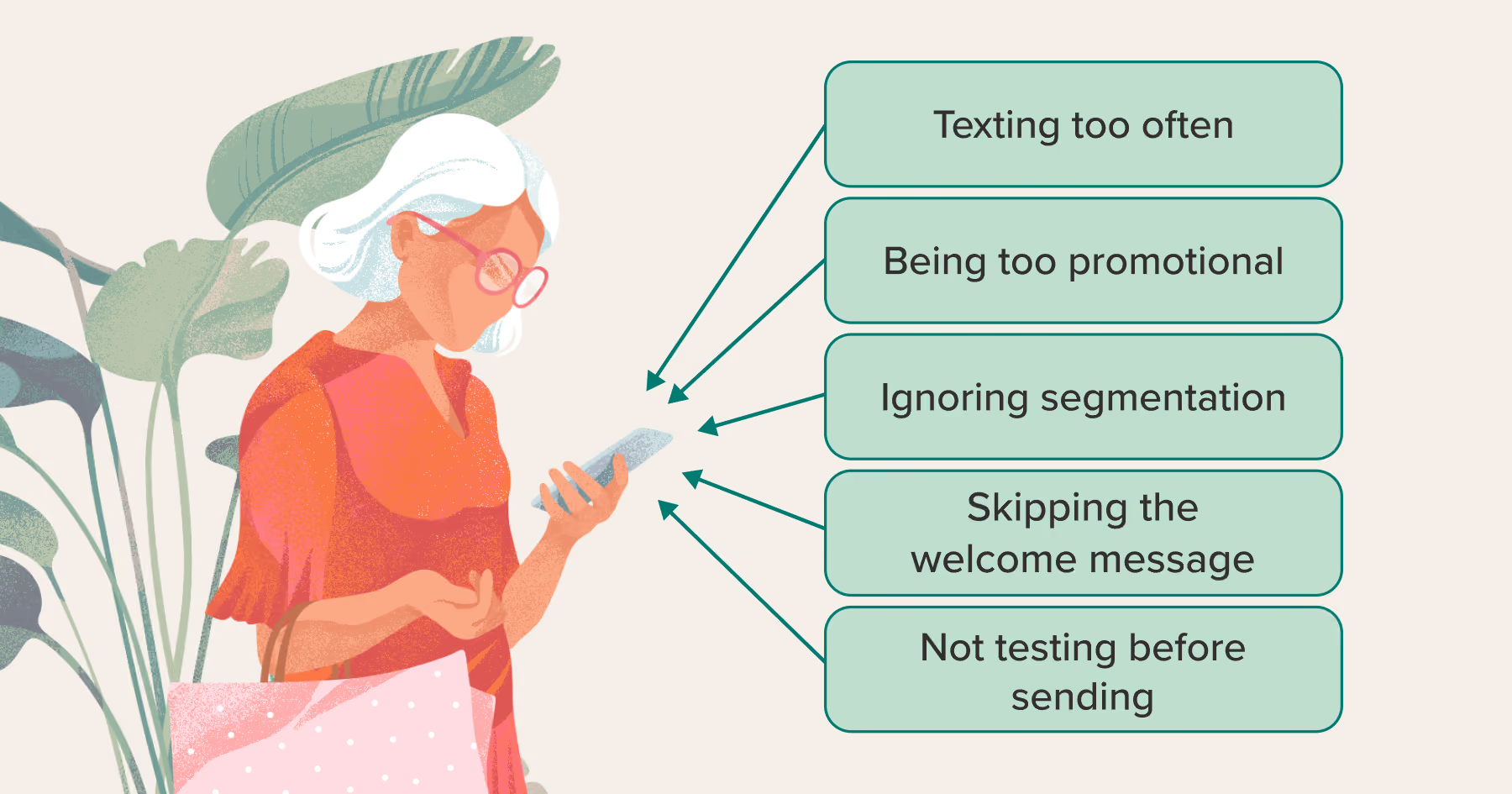
Texting too often 

More messages do not equal more revenue. If you are sending texts multiple times a week without clear value in each one, subscribers will tune out or opt out. Two to four messages per month is a sensible starting point for most businesses. In 2026, focusing on quality over quantity is essential, as better targeted efforts deliver stronger engagement and more meaningful results than a high volume of large, unfocused messages. 

Being too promotional 

Not every text should be a sales pitch. Mix in value-driven content like tips, behind-the-scenes updates, and educational content to keep subscribers engaged between promotions. 

Ignoring segmentation 

Sending the same message to everyone on your list leaves a lot of money on the table. Segment by purchase history, location, engagement level, and other factors to send more relevant messages that convert at higher rates. 

Skipping the welcome message 

The first text you send sets the tone for your relationship with subscribers. If it is not engaging, or does not welcome them into your brand community, it can reduce interest and weaken early engagement with your SMS campaigns. 

Not testing before sending 

Always send a test message to yourself before deploying to your full list. Links, formatting, and personalisation tags can all go wrong in ways that are immediately obvious once you see the message on your own phone. 
How SMS and email marketing work together 

The most effective small business marketing strategies in 2026 treat SMS and email as complementary channels, not competing ones. Each has its strengths, and together they create a more resilient, higher-performing marketing engine. 

When these two channels are coordinated through a platform like Klaviyo, you can build flows that use each channel at the right moment. For example, a customer who opens your email, but does not click, might receive a follow-up SMS later that day. A customer who ignores three emails in a row might be re-engaged via text with a compelling offer. This kind of organised approach lifts overall performance across both channels. 

Email is effective for long-form storytelling, newsletters, and detailed product education, where more context and information are needed. SMS works as a quick, direct communication channel that delivers timely reminders and prompts customers to take action, often supporting the final step in the purchase decision process.

Conclusion 

SMS marketing is becoming one of the most effective ways for small businesses to connect with customers in 2026. Its unique ability to deliver messages instantly and directly to your customers’ phones helps improve engagement, strengthen relationships, and drive more consistent results. With higher visibility and faster response rates, SMS has become an important part of modern marketing strategies for small businesses looking to stay competitive. The future of small business growth lies in these personalised and direct conversations that respect the customer's time while providing undeniable value. 

To use SMS marketing effectively, businesses need a clear strategy that includes audience segmentation, timely messaging, and relevant content. Working with experts like Growth Gurus can help businesses structure and optimise their SMS campaigns. Growth Gurus focuses on creating performance-driven SMS strategies that improve engagement and enable businesses to use SMS as a consistent, scalable marketing channel.
Frequently asked questions

What are the best practices for SMS marketing?

Best practices for SMS marketing include getting clear opt-in consent, keeping messages short and relevant, and sending them at appropriate times. Consistency and respect for customer preferences help maintain trust and engagement.

What are the most effective SMS marketing strategies for small businesses?

The most effective SMS strategies for small businesses focus on personalisation, timely communication, and audience segmentation. Combining SMS with a clear content plan ensures messages stay useful and not overwhelming.

How often should SMS messages be sent?

Most small businesses start with a few messages per month. The focus should always be on value, ensuring each message is relevant and useful to the recipient, rather than sending lots of messages.

Can SMS marketing work for service-based businesses?

Yes, SMS is effective for service-based industries. It can be used for appointment reminders, follow-ups, updates, promotions, and customer feedback requests across businesses.

Can SMS and email be managed together?

Yes, many platforms allow both channels to be managed in one system. This makes it easier to coordinate messaging and maintain consistency across campaigns. Using a unified platform also gives you a single view of the customer, allowing you to see their total engagement history across all touchpoints.

How SMS marketing boosts small business growth in 2026 

When instant communication matters, SMS marketing remains one of the most direct and effective ways to reach customers. Text messages are delivered and read almost immediately, and in 2026, small businesses that embrace this channel are experiencing faster growth. By putting your message in front of your audience at the right moment, SMS helps you connect when it matters most.

For small businesses, every marketing dollar counts. That’s why SMS marketing for small businesses has evolved from a simple communication tool into a powerful growth engine. Partnering with an experienced e-commerce text marketing company can further strengthen your strategy and help you get the most out of every message.

Why SMS marketing deserves a central place in your strategy

According to recent research, SMS messages have an average open rate of 98%, compared to just 20% for email. These statistics tell a clear story: your customers are on their phones. The question is whether your business is showing up in that space. 

For small businesses, SMS is especially appealing because it’s easy to get started. You don’t need a large creative team or a six-figure ad budget; you only need a reliable platform, a solid list of opted-in subscribers, and a thoughtful approach to your messaging.

Here is what SMS marketing brings to the table:

  • Instant reach: Messages are typically read within three minutes of delivery, making SMS ideal for time-sensitive promotions, flash sales, and urgent announcements.
  • High engagement: Customers who have opted in to receive texts from you are already warm. They’ve chosen to hear from you, so your messages land with a more receptive audience.
  • Direct communication: No algorithm decides whether your message gets seen. You send it, they receive it.
  • Measurable results: Delivery rates, click-through rates, and conversions are all trackable, giving you clear data to optimise your strategy.

Building your SMS list the right way

Before sending any messages, it is important to build a strong SMS subscriber list. This means connecting with people who have agreed to receive messages, while also maintaining trust. A well-built list helps protect your brand reputation and leads to better engagement and results. With the right approach, growing an SMS list can be simple and effective, helping create a solid foundation for successful campaigns.

In 2026, the focus has shifted from quantity to quality. A list of 500 highly engaged customers is far more valuable than a list of 5,000 who never click. 

Opt-in methods that work for small businesses:

  • Website pop-ups with an incentive: Offer a discount or a gift in exchange. A well-timed pop-up can effectively turn visitors into subscribers.
  • Opt-in at checkout: Ask customers during the purchase process if they would like to receive updates or offers via text. 
  • Keyword campaigns: Use a simple keyword that people can text to subscribe and join your SMS list.
  • Email promotion: Invite existing contacts to sign up for SMS to receive updates and special offers.

When someone joins your list, the first text they receive will set the tone for the entire relationship. Make it warm, make it valuable, and make sure that it is clear what they signed up for.

SMS marketing tips for small businesses that actually work

Knowing the theory is one thing, but putting it into practice is another. These SMS marketing tips for small businesses are the most effective strategies for creating successful SMS campaigns. 

  • Keep it short and purposeful: The best SMS campaigns say what they need to say, and nothing more. Every word should earn its place; if your message requires scrolling, it probably needs editing.
  • Lead with the value: The deal or incentive is the most valuable content in your message; do not bury it at the bottom. Open with the offer, then provide the context. 
  • Personalise wherever possible: Using a customer's name or referencing their past purchases makes a text feel like a message from a friend rather than a blast from a brand. 
  • Time your send thoughtfully: Mid-morning on weekdays tends to perform well, but your specific audience may respond differently. Test different send times and let the data guide you. 
  • Always include a clear call to action: Tell customers exactly what you want them to do.
  • Create urgency (without being pushy): Deadlines and limited quantities drive action, but only when they are genuine. If you are always claiming something, customers stop believing you. 
  • Test, learn, and refine: Run A/B tests on your subject lines, send times, and offers. Small improvements compound over time into significant gains.

SMS marketing strategies for small business growth

Welcome series automation 

The moment someone subscribes to your SMS list marks the peak of their initial interest. A well-crafted welcome series capitalises on that momentum. 

Consider a three-message sequence for the first week. The first text confirms their subscription and delivers any promised incentive. The second text introduces your brand story and what makes you different. The third highlights your best-selling products or services, with a secondary incentive to make a purchase. 

This automated nurture sequence ensures that no lead goes cold, even when you are busy running the day-to-day of your business. 

Abandoned cart recovery 

For e-commerce businesses, abandoned cart texts are among the highest-ROI campaigns you can run. When a customer adds items to their cart, but does not complete the purchase, a timely text reminder can bring them back. These messages work best when sent within one to two hours of abandonment and include a direct link back to their cart.

VIP and loyalty programs 

Reward your most engaged customers with an SMS-exclusive VIP tier. Early access to sales, birthday discounts, and loyalty rewards delivered via text make customers feel genuinely appreciated. This kind of relationship-building drives repeat purchases and word-of-mouth referrals, both of which are invaluable for small businesses.

Back-in-stock and new arrival alerts 

Customers who express interest in out-of-stock items are highly motivated buyers. Letting them know via text the moment the product is back in stock is a fast and reliable way to convert that latent interest into a sale. This strategy is particularly effective for small businesses with limited inventory, as it creates a first-come, first-served excitement. 

Post-purchase follow-up 

The sale is not the end of the customer journey. A post-purchase text to check in on their experience, request a review, or recommend complementary products extends the relationship and increases lifetime value. These touches feel personal and keep your brand top of mind.

Event and appointment reminders 

For service-based small businesses, SMS reminders for upcoming appointments or events dramatically reduce no-shows. A reminder text sent 24 hours before, followed by another sent 1 hour before, is a simple system that pays for itself quickly.

Seasonal campaigns 

Plan your SMS calendar around key retail moments: holidays, back-to-school season, summer sales, and other relevant dates for your industry. Customers expect these offers, and being ready with timely, relevant messaging keeps you competitive.

The role of the right platform: Why Klaviyo leads the pack

The platform you choose plays a key role in the effectiveness of your SMS marketing efforts. A strong platform supports compliance, automation, segmentation, and analytics, allowing you to focus more on strategy and messaging.

Klaviyo has become a popular choice for e-commerce businesses looking to manage SMS and email in one place. Working with a Klaviyo agency can help brands make the most of its features and build more effective, connected customer journeys across multiple channels. This allows businesses to send messages more strategically, improving engagement while reducing unsubscribes. 

Measuring what matters: SMS marketing metrics to track

You cannot improve what you do not measure. Tracking the right metrics ensures your SMS strategy is working and tells you exactly where to optimise.

  • Delivery rate: The percentage of messages successfully delivered. A low delivery rate often indicates bad phone numbers on your list. 
  • Open rate: While SMS open rates are inherently high, you can still track engagement signals like link clicks as an indication of how compelling your message was. 
  • Click-through rate (CTR): This tells you how many recipients clicked through to your website or landing page. A strong CTR for SMS typically falls between 20% and 35%
  • Conversion rate: Ultimately, the most important number. What percentage of people who received your text completed the desired action, whether that was making a purchase or booking an appointment?
  • Revenue per recipient (RPR): Total revenue generated by a campaign divided by the number of people it was sent to. This is the clearest way to evaluate a campaign's financial impact. 
  • Opt-out rate: If too many people are unsubscribing, it signals that your content is not delivering value, or that you are texting too frequently. A healthy opt-out rate is typically below 0.5%.  

Common mistakes small businesses make with SMS marketing

Texting too often 

More messages do not equal more revenue. If you are sending texts multiple times a week without clear value in each one, subscribers will tune out or opt out. Two to four messages per month is a sensible starting point for most businesses. In 2026, focusing on quality over quantity is essential, as better targeted efforts deliver stronger engagement and more meaningful results than a high volume of large, unfocused messages. 

Being too promotional 

Not every text should be a sales pitch. Mix in value-driven content like tips, behind-the-scenes updates, and educational content to keep subscribers engaged between promotions. 

Ignoring segmentation 

Sending the same message to everyone on your list leaves a lot of money on the table. Segment by purchase history, location, engagement level, and other factors to send more relevant messages that convert at higher rates. 

Skipping the welcome message 

The first text you send sets the tone for your relationship with subscribers. If it is not engaging, or does not welcome them into your brand community, it can reduce interest and weaken early engagement with your SMS campaigns. 

Not testing before sending 

Always send a test message to yourself before deploying to your full list. Links, formatting, and personalisation tags can all go wrong in ways that are immediately obvious once you see the message on your own phone. 

How SMS and email marketing work together 

The most effective small business marketing strategies in 2026 treat SMS and email as complementary channels, not competing ones. Each has its strengths, and together they create a more resilient, higher-performing marketing engine. 

When these two channels are coordinated through a platform like Klaviyo, you can build flows that use each channel at the right moment. For example, a customer who opens your email, but does not click, might receive a follow-up SMS later that day. A customer who ignores three emails in a row might be re-engaged via text with a compelling offer. This kind of organised approach lifts overall performance across both channels. 

Email is effective for long-form storytelling, newsletters, and detailed product education, where more context and information are needed. SMS works as a quick, direct communication channel that delivers timely reminders and prompts customers to take action, often supporting the final step in the purchase decision process.

Conclusion 

SMS marketing is becoming one of the most effective ways for small businesses to connect with customers in 2026. Its unique ability to deliver messages instantly and directly to your customers’ phones helps improve engagement, strengthen relationships, and drive more consistent results. With higher visibility and faster response rates, SMS has become an important part of modern marketing strategies for small businesses looking to stay competitive. The future of small business growth lies in these personalised and direct conversations that respect the customer's time while providing undeniable value. 

To use SMS marketing effectively, businesses need a clear strategy that includes audience segmentation, timely messaging, and relevant content. Working with experts like Growth Gurus can help businesses structure and optimise their SMS campaigns. Growth Gurus focuses on creating performance-driven SMS strategies that improve engagement and enable businesses to use SMS as a consistent, scalable marketing channel.

Frequently asked questions

What are the best practices for SMS marketing?

Best practices for SMS marketing include getting clear opt-in consent, keeping messages short and relevant, and sending them at appropriate times. Consistency and respect for customer preferences help maintain trust and engagement.

What are the most effective SMS marketing strategies for small businesses?

The most effective SMS strategies for small businesses focus on personalisation, timely communication, and audience segmentation. Combining SMS with a clear content plan ensures messages stay useful and not overwhelming.

How often should SMS messages be sent?

Most small businesses start with a few messages per month. The focus should always be on value, ensuring each message is relevant and useful to the recipient, rather than sending lots of messages.

Can SMS marketing work for service-based businesses?

Yes, SMS is effective for service-based industries. It can be used for appointment reminders, follow-ups, updates, promotions, and customer feedback requests across businesses.

Can SMS and email be managed together?

Yes, many platforms allow both channels to be managed in one system. This makes it easier to coordinate messaging and maintain consistency across campaigns. Using a unified platform also gives you a single view of the customer, allowing you to see their total engagement history across all touchpoints.

Discover the key advantages of CDP
Download our CDP Readiness Framework!
Download Now

Recent Blog Post

Ready to grow your business?

If you want your business to experience more sales and faster growth, all you need to do is book a meeting with us today.


Schedule a call to grow your e-commerce business?