The most important email marketing metrics and ways to grow them

Email marketing delivers exceptional returns when measured correctly. This comprehensive guide explores five key metrics that significantly impact campaign success. Each metric reveals different aspects of your email program's health, from whether messages reach inboxes to how subscribers engage with content. Beyond simply defining these metrics, this article provides actionable strategies mid-sized companies can implement immediately to improve performance.

Whether you manage campaigns internally or partner with an e-commerce email marketing agency, understanding these metrics transforms raw data into growth opportunities. Learn how to optimize each metric systematically, avoid common pitfalls, and build an email program that consistently drives revenue.
What are the most important email marketing metrics and how to improve each one
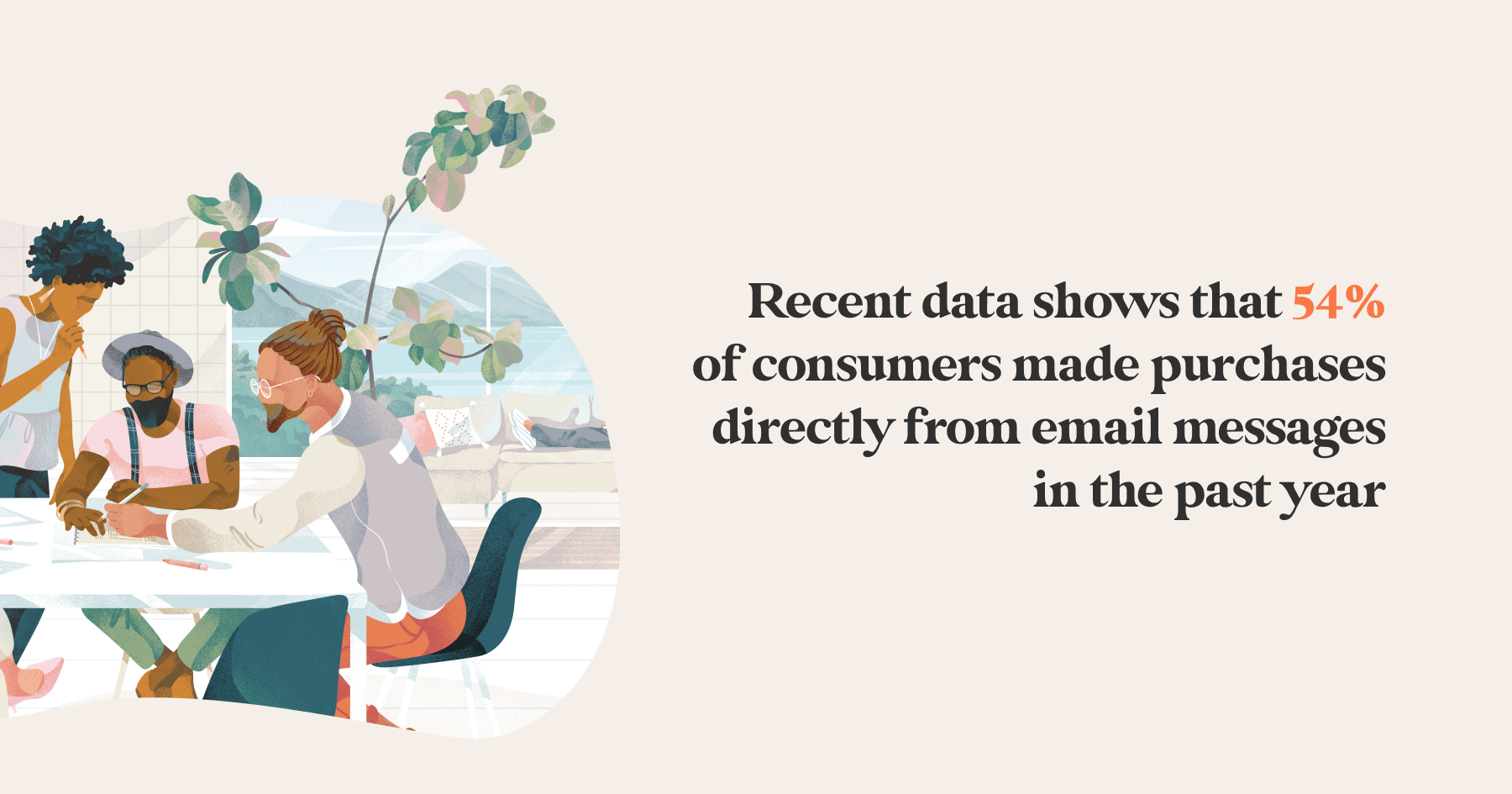
Email remains one of the most powerful channels in digital marketing. Recent data shows that 54% of consumers made purchases directly from email messages in the past year, outperforming every other marketing channel. With an impressive average ROI of 36:1 and 72% of people preferring promotional content through email, this channel deserves your strategic attention.
As inboxes grow crowded and subscriber expectations continue rising, mid-sized companies need a disciplined approach to measurement and optimization. The difference between mediocre and exceptional email marketing performance comes down to tracking the right metrics and knowing how to improve them.
This guide explores five key email marketing performance metrics that drive tangible business outcomes. Whether you're managing campaigns in-house or working with an e-commerce email marketing agency, these indicators will help you assess program health, identify opportunities, and confidently make data-driven decisions.
Why email marketing metrics matter for mid-sized companies
Email marketing delivers measurable results when you understand what to track. These metrics indicate whether your messages reach inboxes, resonate with subscribers, and drive the desired actions. They reveal problems before they escalate and highlight what's working so you can replicate success.
For mid-sized companies, strategic email measurement becomes even more critical. You're competing with enterprises that have larger budgets and smaller startups that move faster. Your advantage lies in being agile enough to optimize quickly while having sufficient resources to test systematically.
The metrics we'll explore provide that competitive edge. They form the foundation of an effective email marketing campaign management, helping you allocate resources wisely and prove ROI to stakeholders.
Five essential email marketing metrics that drive better campaign performance
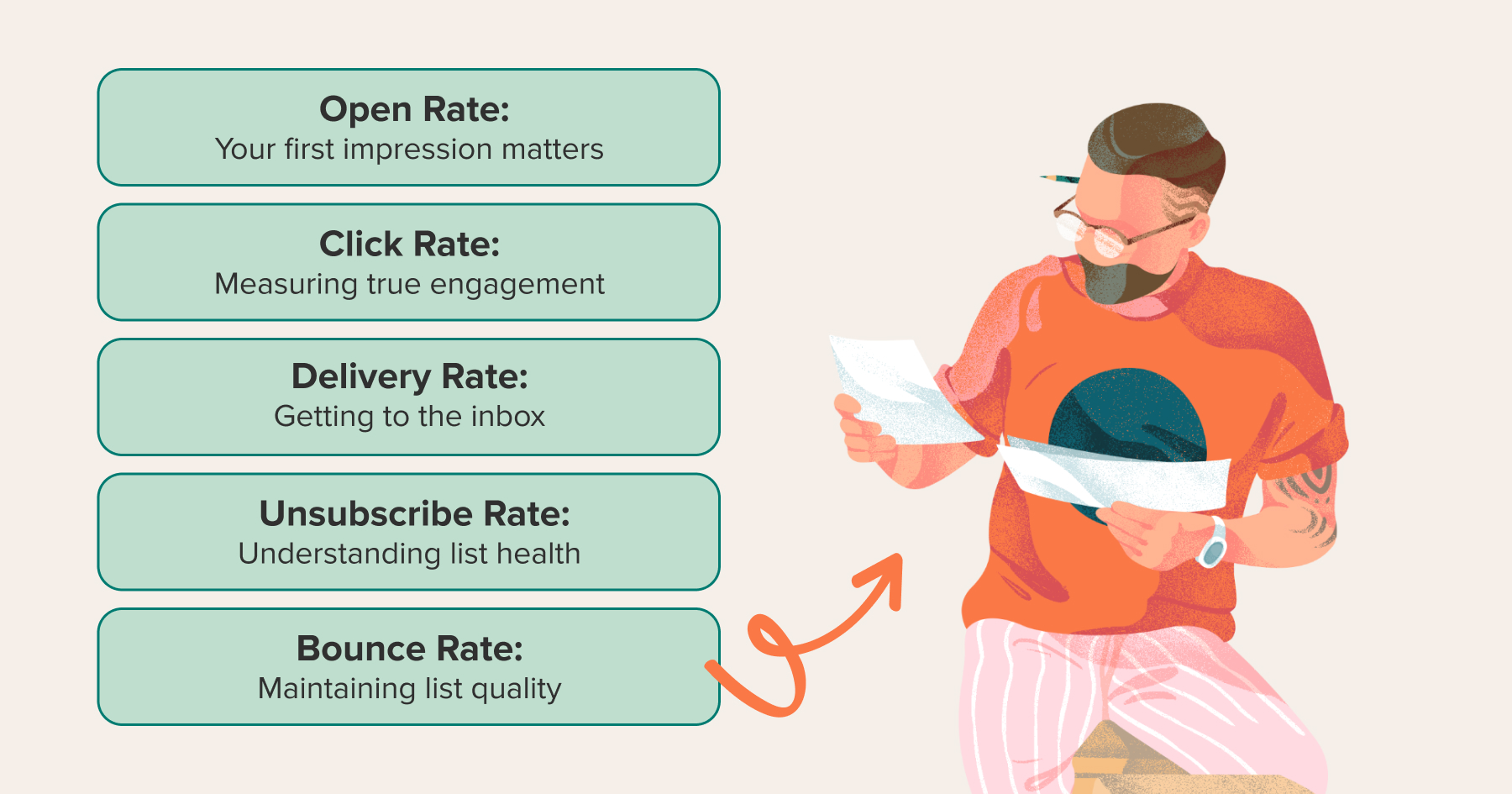
1. Open Rate: Your first impression matters
Open rate measures the percentage of subscribers who open your emails. While Apple's Mail Privacy Protection has impacted tracking accuracy, this metric still offers valuable directional insights into subject line effectiveness and sender reputation.
Typical open rates range from 15% to 25%, though this varies by industry and audience. Several factors influence whether someone opens your message, including the timing of the send, sender name recognition, and the appeal of the subject line.
How to improve open rate:
- Craft personalized subject lines: Generic subject lines get ignored. Personalization makes your email feel relevant. Including the recipient's first name or referencing their location creates a connection.
- Keep subject lines concise: Mobile devices dominate email consumption. Subject lines exceeding 40 characters are often cut off, losing their impact. Aim for brevity that creates curiosity without sacrificing clarity.
- Test systematically: Your audience is unique. What works for one brand might fail for another. A/B testing different subject line approaches reveals what resonates with the audience.
- Consider timing: When you send matters. Tuesday typically sees strong open rates, though your specific audience may differ. Analyze your historical data to identify optimal send windows and to conduct A/B tests to see which messaging resonates best.
2. Click Rate: Measuring true engagement
The click-through rate (CTR) indicates the percentage of recipients who clicked on links in your email. This metric reveals whether your content drives action once someone opens your message.
Understanding the difference between CTR and click-to-open rate (CTOR) matters:
- CTR = Clicks ÷ Emails Delivered (measures overall campaign effectiveness)
- CTOR = Clicks ÷ Opens (shows content quality after someone opens)
A CTR between 2% and 3% typically indicates solid performance, demonstrating that subscribers find your content compelling enough to take the next step.
How to improve click rate:
- Create strong calls-to-action (CTA): Vague CTAs confuse subscribers. Clear, action-oriented language drives clicks. "Download Now," "Shop the Sale," and "Reserve Your Spot" clearly indicate what happens when users click on them. Place CTAs prominently, ensure they align with your email content, and make buttons visually distinct.
- Ensure content is personalized, compelling, and relevant: Relevance drives clicks. Research shows 40% of recipients feel frustrated by irrelevant content. Segment your audience by behavior, purchase history, demographics, and preferences to understand their needs better and tailor your messaging accordingly. Dynamic content ensures that each subscriber sees offers and information tailored to their interests. When someone receives emails tailored to their needs, clicking becomes a natural response.
- Add visual elements: Text-heavy emails get skimmed or ignored. Strategic visuals break up content, reinforce messages, and guide the eye toward CTAs. Images, illustrations, GIFs, and videos make emails scannable and engaging. Including visuals can boost click-through rates by up to 300%. Every graphic should support your message rather than distract from it.
- Optimize for mobile: Most emails get opened on mobile devices. Ensure your layout, images, and CTAs render correctly on smaller screens. Tap targets should be finger-friendly, and content should flow naturally on narrow viewports.
3. Delivery Rate: Getting to the inbox
Delivery rate measures the percentage of emails successfully accepted by receiving servers. High delivery rates indicate clean lists with valid, active addresses. Without strong delivery, every other metric becomes irrelevant.
Top-performing email service providers consistently maintain delivery rates of 99%.
How to improve the delivery rate:
- Authenticate your domain: Email authentication is now mandatory for bulk senders. Gmail requires proper SPF, DKIM, and DMARC configuration. These protocols verify you as a legitimate sender, reducing spam flags and improving inbox placement. Authentication builds trust with mailbox providers, protects your brand from spoofing attempts, and directly impacts whether your emails reach subscribers.
- Clean your list regularly: Regularly maintain your subscriber lists by removing inactive and invalid email addresses to avoid high bounce rates.
- Maintain consistent sending patterns: Erratic sending schedules confuse both inbox providers and subscribers. Establish a predictable cadence that matches subscriber expectations. Whether you send weekly, bi-weekly, or monthly, consistency signals reliability to mailbox filters while keeping your brand top-of-mind with subscribers.
- Monitor bounce and spam rates: High bounce rates can harm a sender's reputation. Track both hard bounces (permanent delivery failures) and soft bounces (temporary issues). Similarly, spam complaints damage deliverability. If recipients mark your emails as spam, inbox providers take notice.
4. Unsubscribe Rate: Understanding list health
Unsubscribe rate tracks how many recipients opt out after receiving your email. Some churn naturally occurs in every email program. People's circumstances change, interests evolve, or they receive too many emails.
Unsubscribe rates under 2% fall within normal industry parameters. However, rising or elevated unsubscribe rates signal problems with content relevance, send frequency, or audience targeting.
How to reduce unsubscribe rate:
- Segment your audience: Treating all subscribers the same guarantees irrelevance for many. Segment by interests, behaviors, demographics, and engagement levels. Tailored messages resonate because they acknowledge differences in what subscribers care about.
- Personalize meaningfully: Show subscribers you understand them through relevant product recommendations, content that matches their interests, and offers aligned with their purchase history. Small touches demonstrate you see them as individuals rather than email addresses.
- Offer preference centers: Before someone unsubscribes entirely, give them control over their preferences. Preference centers allow subscribers to choose their preferred email types and frequency. Someone overwhelmed by daily emails might appreciate weekly digests. Another subscriber might want product updates without promotional content. This "opt-down" approach preserves relationships while respecting preferences.
- Run re-engagement campaigns: Inactive subscribers pose a risk. After six months without engagement, send targeted re-engagement messages. Remind them why they subscribed, showcase recent content or offers, and ask if they still want to hear from you. This proactive approach identifies disengaged subscribers before they mark you as spam.
5. Bounce Rate: Maintaining list quality
Bounce rate measures emails that couldn't reach the recipients' inboxes. Two types exist:
- Soft bounces: Temporary delivery failures like full inboxes or server issues
- Hard bounces: Permanent failures from invalid or non-existent addresses
As your list grows, bounce rates naturally increase without proper maintenance. Aim for bounce rates below 2% to maintain a good sender reputation and ensure the effectiveness of your campaigns.
How to minimize bounce rate:
- Remove hard bounces automatically: Some email platforms remove hard bounces without manual intervention. However, if you manage contacts in external CRMs, regularly sync with your suppression list to ensure accurate data. This list includes hard bounces, unsubscribes, and spam complaints.
- Implement double opt-in: Single opt-in invites typos, spam traps, and invalid addresses. Double opt-in requires subscribers to confirm their email address, ensuring higher data quality and accuracy. This simple step significantly reduces bounce rates while building a more engaged list.
- Segment to identify issues: As you organize subscribers into segments, address quality issues that emerge. Segmentation helps spot problematic address patterns before they damage broader deliverability.
- Secure signup forms: Protect forms from bots and invalid submissions using tools like reCAPTCHA. Automated signups from spambots pollute lists with invalid addresses that inflate bounce rates.
Measuring success with Growth Gurus
Tracking these five email marketing engagement metrics provides the foundation for program optimization. Open rate, click rate, delivery rate, unsubscribe rate, and bounce rate together paint a complete picture of email health and performance.
However, measurement alone doesn't drive improvement. Understanding what numbers mean and knowing how to respond separates average programs from exceptional ones.

At Growth Gurus, we specialize in turning email data into growth strategies. As an e-commerce email marketing agency, we combine marketing automation expertise with deep platform knowledge to help brands connect meaningfully with customers.
Our approach centers on Klaviyo email marketing, leveraging its sophisticated segmentation, personalization, and automation capabilities. We build email programs that scale with your business while maintaining the personal touch that drives customer loyalty.
Whether you need strategic guidance, hands-on email marketing campaign management, or a complete program overhaul, Growth Gurus brings the expertise and technology to accelerate your results.
Contact us to discover how Growth Gurus can elevate your email program and drive the results that matter to your business.
Recent Blog Post


Ready to grow your business?
If you want your business to experience more sales and faster growth, all you need to do is book a meeting with us today.