10 key ecommerce email marketing metrics to optimize for better sales

Email marketing is one of the most powerful channels for e-commerce businesses. However, success depends heavily on understanding and optimizing the right metrics. Without proper measurement, even the most creative campaigns can fall flat, leaving revenue on the table. The key lies in tracking specific performance indicators that directly correlate with sales growth and customer engagement. Smart e-commerce brands recognize that email marketing performance metrics serve as the compass guiding their strategy toward profitable outcomes.

10 essential ecommerce email metrics to boost your sales
The world of e-commerce moves fast, and your email marketing strategy needs to keep pace. While many businesses send emails hoping for the best, successful brands take a data-driven approach to their campaigns. They understand that each metric tells a story about customer behavior, campaign effectiveness, and revenue potential.
At Growth Gurus, we help e-commerce brands turn these insights into real-world results through strategic email marketing campaign management. This comprehensive guide explores the ten most critical email marketing metrics that can make or break your sales performance.
What are email marketing metrics?
Email marketing metrics are quantifiable measurements that reveal how your email campaigns perform across different dimensions of customer engagement and business impact. These data points encompass everything from delivery success to revenue generation. Think of them as vital signs for your email marketing health; they indicate what's working, what needs attention, and where opportunities for improvement exist.
Modern email marketing platforms collect thousands of data points from every campaign, but the challenge is identifying which metrics matter for your business goals. Smart businesses focus on metrics that directly correlate with sales performance, customer lifetime value, and overall business growth. Understanding these measurements helps you make informed decisions about subject lines, send times, content strategy, and audience segmentation.
Why does tracking email marketing metrics matter?
Tracking email marketing engagement metrics transforms guesswork into strategic decision-making. Without measurement, you're essentially flying blind, unable to distinguish between campaigns that drive revenue and those that waste resources. The data reveals patterns in customer behavior that can inform broader marketing strategies and product development decisions.
Consider this: Businesses that actively track and optimize their email metrics see 760% higher revenue than those that don't. This difference identifies what resonates with your audience and doubles down on successful strategies. Metrics also help you spot problems early, like declining deliverability or rising unsubscribe rates, before they significantly impact your bottom line.
Furthermore, tracked metrics enable personalization at scale. When you understand how different segments respond to various types of content, you can create highly targeted campaigns that feel personal to each recipient. This level of sophistication separates successful e-commerce brands from those struggling to compete in crowded marketplaces.

What are the important email marketing metrics to track and benchmark?
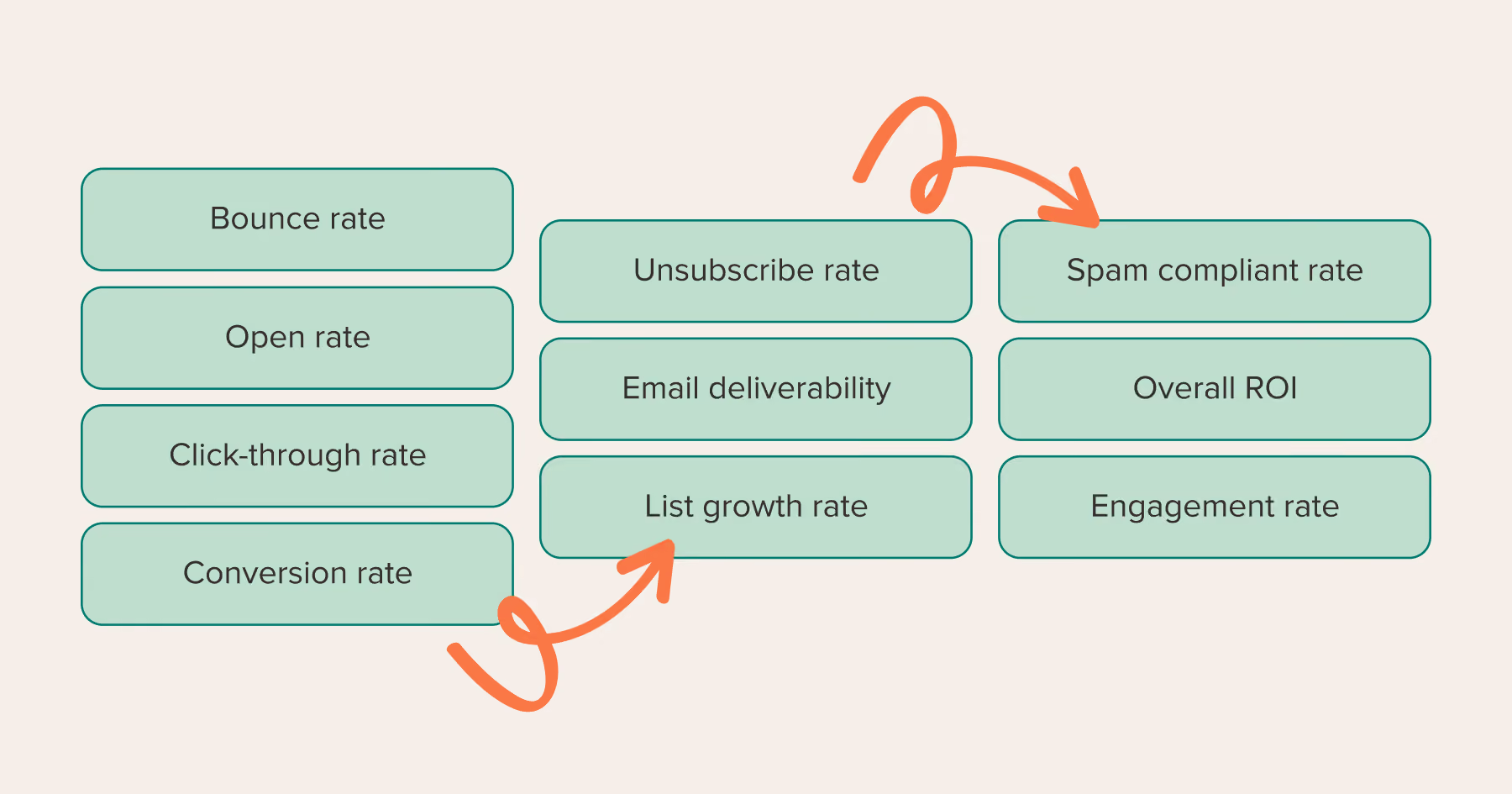
Understanding email marketing metrics and KPIs can feel overwhelming, but focusing on these ten essential measurements will give you a comprehensive view of your campaign performance and sales potential.
Open rate
Open rate measures the percentage of recipients who opened your email out of the total number delivered. Industry averages hover around 21.5% for e-commerce businesses, though this varies significantly by sector and audience quality. Strong open rates typically indicate compelling subject lines, optimal send times, and good sender reputation. However, don't get too caught up in this metric alone – an email with a lower open rate but higher conversion rate often delivers better business results. Focus on testing different subject line approaches, personalizing sender names, and segmenting your audience for more relevant messaging.
Click-through rate
Click-through rate (CTR) reveals the percentage of email recipients who clicked on at least one link within your message. This metric directly correlates with engagement quality and content relevance. The average CTR for e-commerce emails sits around 2.62%, making any performance above 3% quite strong.
CTR indicates how well your email content resonates with your audience and motivates action. Low click-through rates often signal misaligned content, weak calls-to-action, or poor email design. Successful campaigns typically feature clear value propositions, compelling visuals, and strategically placed buttons that guide readers toward desired actions.
Conversion rate
Conversion rate measures the percentage of email recipients who completed a desired action after clicking through to your website. This could be making a purchase or signing up for a service. Email conversion rates for e-commerce typically range from 2-5%, with top performers achieving even higher numbers.
This metric directly ties email performance to business outcomes, making it one of the most important measurements for e-commerce success. A campaign with modest open and click rates but strong conversion performance often delivers better ROI than one with impressive engagement but poor conversion results. Optimizing for conversions requires alignment between email messaging and landing page experience.
Bounce rate
Bounce rate represents the percentage of emails that couldn't be delivered to recipients' inboxes. Hard bounces indicate permanent delivery failures (invalid email addresses), while soft bounces represent temporary issues (full inboxes, server problems). Maintaining bounce rates below 2% is crucial for sender reputation and deliverability.
High bounce rates damage your sender reputation with internet service providers, potentially landing future emails in spam folders. Regular list cleaning, double opt-in processes, and removing inactive subscribers help maintain healthy bounce rates. This seemingly technical metric has direct implications for campaign reach and overall program effectiveness.
Unsubscribe rate
Unsubscribe rate tracks the percentage of recipients who opt out of your email list after receiving a campaign. While some unsubscribes are natural and even healthy (removing unengaged subscribers), rates above 0.5% not acceptable. This metric often reflects content relevance, send frequency, and overall subscriber satisfaction.
Monitoring unsubscribe patterns helps identify content or frequency issues before they become major problems. Sudden spikes might indicate messaging misalignment, while gradual increases could suggest audience fatigue. Smart businesses use preference centers and frequency options to reduce unsubscribes while respecting subscriber preferences.
Email deliverability
Email deliverability measures the percentage of sent emails that reach recipients' inboxes, rather than being filtered to spam folders or blocked entirely. Industry benchmarks suggest deliverability rates above 95% are excellent, while anything below 90% indicates serious issues requiring immediate attention.
Deliverability depends on multiple factors, including sender reputation, authentication protocols, content quality, and recipient engagement history. Poor deliverability weakens the impact of all other metrics by preventing your messages from being seen. Regular monitoring helps identify issues early and maintain strong inbox placement rates.
List growth rate
List growth rate calculates how quickly your email subscriber base expands over time, accounting for both new signups and unsubscribes. Healthy e-commerce lists typically grow 2.5% monthly, though this varies based on industry and acquisition strategies. Sustainable growth requires balancing acquisition efforts with list hygiene practices.
Tracking growth patterns helps identify successful acquisition channels and seasonal trends. Rapid growth without corresponding engagement often indicates quality issues, while slow growth might suggest insufficient lead magnets or signup incentives. Focus on attracting subscribers genuinely interested in your products and messaging.
Engagement rate
Engagement rate combines multiple interaction metrics to provide a holistic view of how actively subscribers interact with your emails. This includes opens, clicks, forwards, and time spent reading messages. High engagement rates typically correlate with strong deliverability and better overall campaign performance.
This comprehensive metric helps identify your most valuable subscribers and content types that drive meaningful interactions. Engaged subscribers are more likely to make purchases, refer friends, and remain loyal customers. Segmenting based on engagement levels allows for more targeted messaging and improved overall results.
Spam compliant rate
Spam complaint rate measures the percentage of recipients who mark your emails as spam or junk. Rates above 0.1% can trigger deliverability issues, while anything above 0.5% represents a serious problem requiring immediate attention. This metric directly impacts your sender reputation and future campaign success.
High complaint rates often indicate misaligned expectations, purchased email lists, or inadequate permission processes. Implementing clear opt-in procedures, setting proper expectations, and helping easy unsubscribe options minimize complaints. Regular monitoring helps catch issues before they severely impact deliverability.
Overall ROI
Return on investment measures the revenue generated from email marketing compared to campaign costs. Email marketing typically delivers exceptional ROI, with many e-commerce businesses seeing returns of 3600-4200%. This metric ultimately determines whether your email program contributes meaningfully to business growth.
Calculating accurate ROI requires tracking revenue attribution, factoring in platform costs, creative development time, and staff resources. While challenging to measure precisely, ROI provides the clearest picture of email marketing's business impact. Focus on campaigns and segments that deliver the strongest returns while identifying areas for improvement.
How to measure email marketing performance metrics
Measuring key email marketing metrics effectively requires the right tools and systematic approaches. Most successful e-commerce brands rely on specialized platforms that provide comprehensive analytics and automation capabilities.
Klaviyo email marketing platform specifically designed for e-commerce businesses. It offers advanced segmentation, behavioral tracking, and revenue attribution features that make measuring complex metrics straightforward. The platform integrates seamlessly with major eCommerce platforms, providing detailed insights into customer behavior and campaign performance.
Justuno provides powerful lead capture and conversion optimization tools that complement email marketing efforts. Their analytics help track how email subscribers convert compared to other traffic sources, providing valuable insights into email marketing effectiveness. The platform's A/B testing capabilities also support metric optimization efforts.
Yotpo focuses on customer review and loyalty program management, but their analytics provide valuable insights into how email marketing supports customer retention and lifetime value. Their integration capabilities help connect email performance with broader customer experience metrics.
The key to effective measurement lies in establishing clear baselines, setting realistic benchmarks, and consistently tracking performance over time. Regular reporting and analysis help identify trends and opportunities for improvement.

How to improve email marketing metrics
Improving email marketing campaign metrics requires a systematic approach combining testing, optimization, and strategic refinement. Start by identifying your weakest-performing metrics and implementing targeted improvements.
For open rates, focus on subject line testing, sender name optimization, and send time analysis. Personalization often significantly improves open rates, as does creating urgency or curiosity in subject lines. Testing different send times for various audience segments can also yield substantial improvements.
Click-through rate improvements typically come from better content alignment, clearer calls-to-action, and improved email design. Mobile optimization is crucial since most emails are opened on mobile devices. Segmentation based on purchase history, browsing behavior, or engagement levels often dramatically improves CTR.
Conversion rate optimization requires alignment between email messaging and landing page experience. Ensure your email promises match what recipients find after clicking through. Streamlined checkout processes, compelling offers, and clear value propositions all contribute to better conversion performance.
Deliverability improvements focus on list hygiene, authentication setup, and engagement-based sending strategies. Regular list cleaning, proper SPF/DKIM configuration, and sending to engaged segments help maintain strong inbox placement rates.
Working with an experienced ecommerce email marketing agency can accelerate improvement efforts by bringing specialized expertise and proven strategies to your campaigns. Professional guidance helps avoid common pitfalls while implementing advanced tactics that drive measurable results.
Conclusion
Email marketing success in e-commerce depends heavily on understanding and optimizing the right metrics. These ten key measurements provide a comprehensive framework for evaluating campaign performance and identifying improvement opportunities. From basic engagement metrics like open and click rates to sophisticated measurements like ROI and deliverability, each indicator offers valuable insights into customer behavior and business impact.
The most successful e-commerce brands take a holistic approach to email marketing measurement, focusing on metrics that directly correlate with sales growth and customer lifetime value. They understand that optimization is an ongoing process requiring consistent testing, analysis, and refinement.
Growth Gurus specializes in helping e-commerce businesses harness the power of email marketing through strategic measurement and optimization. Our team combines deep analytical expertise with practical implementation experience to help brands achieve meaningful growth through email marketing. Whether you're looking to improve specific metrics or develop a comprehensive email marketing strategy, the right measurement approach can transform your results and drive sustainable business growth.
Recent Blog Post


Ready to grow your business?
If you want your business to experience more sales and faster growth, all you need to do is book a meeting with us today.