How back-in-stock text messages turn waitlists into revenue

Back-in-stock text messages are one of the most practical ways to convert missed demand into real revenue. When a product sells out, interest does not disappear. It simply waits for the right moment. This article explains how brands can capture that demand through waitlists and turn it into immediate sales using timely SMS alerts. Whether you’re just getting started or looking to sharpen your existing strategy, you’ll find practical, actionable guidance throughout this article.
.avif)
Back-in-stock SMS marketing: Turn waitlists into revenue
A customer finds a product they love on your website, but it is sold out. They sign up for the waitlist, they move on, and then weeks later, a text message lands on their phone: The item is back. They click and place an order quickly and easily; that is back-in-stock SMS marketing at its best.
With restock-alert SMS marketing, you can reach customers at the moment the product they are interested in is restocked. They already want the product, so all you have to do is show up at the right time with the right message. That sounds simple, but there is a real strategy behind making it work consistently.
At Growth Gurus, we help e-commerce brands set up and optimize these flows every day. When done right, back-in-stock texts can become an integral revenue stream that provides your customers with a unified and connected shopping experience.
Why SMS is the right channel for restock alerts
When a product comes back in stock, speed matters. Inventory can move fast, especially for popular items. Email has its place, but SMS wins on urgency because text messages can be read within minutes.
According to research, SMS messages have an open rate of around 98%, compared to roughly 20% for email. That gap becomes critically important when the stock available is limited.

There is also something inherently personal about a text message, because it lands in the same place where people hear from their friends and family. A well-crafted ‘new stock available’ SMS marketing message feels timely, rather than promotional, and that sense of trust often translates into higher click-through rates and faster conversions.
This is what makes SMS stand out for restock campaigns specifically:
- Texts are delivered and read almost instantly, making them ideal for time-sensitive restocks
- Mobile shoppers can go from notification to purchase in seconds
- SMS is less likely to get buried in a cluttered inbox the way emails do
- Opt-in audiences are already warm and interested in specific products
- Short, punchy messages match the urgency of a limited restock perfectly
How to build a waitlist that actually converts
When a product is out of stock, many sites default to a greyed-out button or a vague message. Replacing that with a clear, compelling opt-in tells customers exactly what they’re signing up for. Something like “Get a text the moment this is back in stock” sets clear expectations and gives people a strong reason to share their number.
Make the sign-up easy and visible
When a product is out of stock, the default experience on many sites is a grey-out button or a vague message. Replace that with a clear, compelling opt-in that tells customers exactly what they are signing up for: 'Get a text the moment this drops back in' sets clear expectations and gives people a reason to share their number.
Collect the right data
Beyond their phone number, consider capturing which product or variant the customer wants, as this will become important later when you segment your alerts and personalize your messages. A customer waiting for a size medium in navy does not want a text about a size large in white.
Set expectations upfront
Let customers know how you’ll contact them, what they can expect, and how they can opt out. This is good practice from both a customer-experience and a compliance standpoint.
Writing back-in-stock text messages that drive action
The message itself is where a lot of brands drop the ball. Back-in-stock SMS marketing works best when the message is clear, direct, and creates just enough urgency to prompt immediate action.
The core elements to keep in mind when crafting messages that will convert include:
Lead with the product name
Don’t make the customer guess what you’re talking about. Open with the product name or a clear description. They signed up for something specific, so remind them exactly what that is.
Create urgency without being pushy
Phrases like “just restocked” or “limited quantities available” are honest and effective because they don’t manufacture fake urgency. If inventory is genuinely limited, make this clear in your message. Customers appreciate transparency, and it gives them a real reason to act now.
Make the link obvious
Your call to action should be a single, clean link that goes directly to the product page, not the homepage or a category page. Reduce every possible step between the text and the checkout.
Keep the copy short
SMS is not the place for lengthy copy, so aim for two to three sentences maximum. Customers will appreciate that you respect their time, and will be more likely to click the CTA you provided.
Timing and segmentation: The details that make the difference
Sending the right message is only half of the equation. Timing and targeting determine whether that message lands at the right moment and with the right person.
Keep the following timing and segmentation tips in mind to build an effective back-in-stock SMS:
Send the alert as soon as the inventory is confirmed
If your platform syncs inventory in real time, set your automation to trigger immediately. If there is a lag, communicate that internally and reduce it as much as possible.
Segment by product interest
This is where platforms like Klaviyo work well. As a Klaviyo agency, Growth Gurus configures these flows to match customers with the exact product they opted in for. A blanket restock blast to your full SMS list is more expensive and far less effective than a targeted alert to the 200 people who specifically wanted that item.
Consider the time of day
SMS works best when it arrives during active hours, typically mid-morning to early evening. Avoid early mornings and late nights, which can feel intrusive and damage trust.
Send a follow-up if the stock allows
If inventory holds for a day or two, sending a gentle reminder to anyone who opened but did not purchase can recover additional conversions. Keep it light and friendly (not aggressive).
Compliance and best practices you cannot skip for back-in-stock SMS marketing
SMS marketing comes with real legal responsibilities. Getting this wrong can result in fines, complaints, and damaged brand trust.
Here is what every brand needs to keep in mind so they are compliant with their SMS marketing:
- Always obtain explicit opt-in consent before sending any SMS marketing messages
- Provide a clear opt-out method in every message, usually “Reply STOP to unsubscribe”
- Follow TCPA regulations in the US and equivalent laws in other markets
- Do not send messages at odd times or outside reasonable business hours
- Keep records of consent in case of disputes
The best back-in-stock SMS marketing program is one that customers trust, and compliance is part of delivering that trust. When people know they can opt out easily, and that you respect their time, they are far more likely to stay engaged and act when the next restock alert arrives.
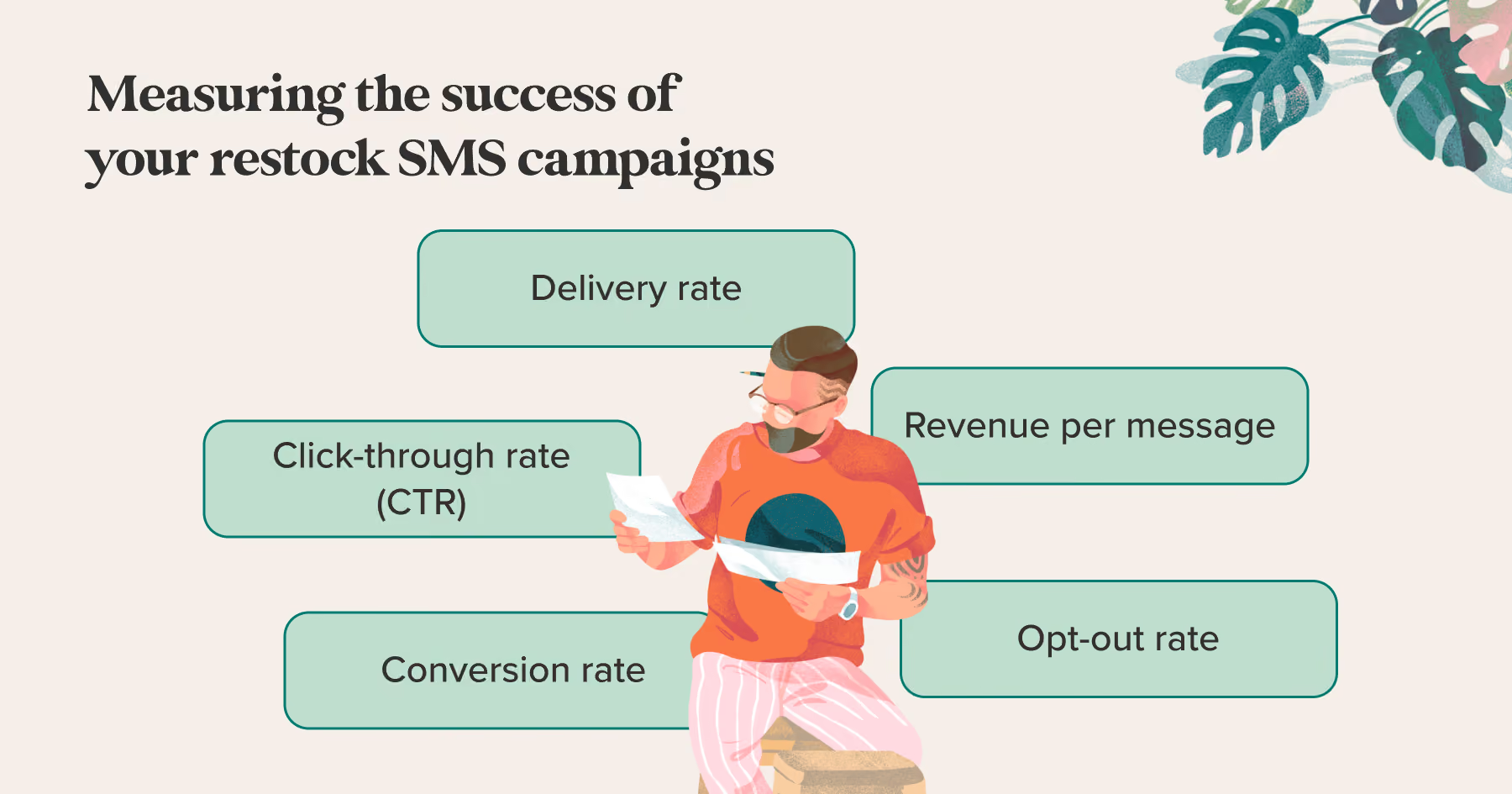
Measuring the success of your restock SMS campaigns
You cannot improve what you do not measure. Back-in-stock SMS campaigns are measurable in very specific ways, and tracking the right metrics helps you refine your approach over time.
The key numbers to watch to identify areas for improvement in your SMS marketing include:
- Delivery rate: Are your messages reaching subscribers successfully?
- Click-through rate (CTR): What percentage of recipients are clicking the product link?
- Conversion rate: Of those who click, how many complete a purchase?
- Revenue per message: The metric that ties everything together and reflects the true ROI of your campaign
- Opt-out rate: A spike here can signal that messages are too frequent, poorly timed, or not relevant enough
Working with an experienced SMS marketing company gives you access to better benchmarks and a faster path to improvement. With Growth Gurus, you don't have to figure it all out from scratch.
Integrating back-in-stock SMS with your broader marketing strategy
Back-in-stock SMS works well on its own, but it performs even better as part of a connected, multi-channel marketing strategy. When you integrate SMS with your email flows, you can achieve significant gains in customer engagement and improve purchasing behavior. According to research, people who receive both SMS and email are 47.7% more likely to buy than those who receive just one channel’s messages.
For example, a customer who opens a back-in-stock email, but doesn’t click, may be an ideal candidate for a follow-up SMS. Similarly, a customer who clicks the SMS link but abandons the cart might respond best to a retargeting email. These multi-channel approaches close gaps in the funnel and help ensure no interested customer slips through.
Brands that see the strongest results from back-in-stock SMS marketing treat it as one layer of a well-connected system, rather than a stand-alone tactic.
Final thoughts on back-in-stock SMS marketing
Back-in-stock text messages are one of the most direct paths from a customer signal to a sale. When someone joins a waitlist, they are telling you exactly what they want; all you have to do is reach out at the right time with the right message. The brands winning at this are showing up fast, communicating clearly, and making it easy to buy. With the right platform, the right flows, and a thoughtful approach to compliance and personalization, a back-in-stock SMS strategy can become one of the most reliable revenue channels in your e-commerce toolkit.
If you are ready to build or improve your restock alert SMS marketing strategy, Growth Gurus is here to help. We work with brands across every industry to set up powerful SMS and email flows that connect with customers and drive real, measurable growth.

Frequently asked questions
What is back-in-stock SMS marketing?

Back-in-stock SMS marketing is the practice of sending automated text messages to customers who have opted in to be notified when an out-of-stock product becomes available again. It targets warm, interested buyers at the exact moment they can act on their previously confirmed desire for a product.
Why is SMS better than email for restock alerts?
SMS has significantly higher open and read rates than email, and messages are typically seen within minutes of delivery. For time-sensitive restock situations where inventory can sell out quickly, that speed advantage makes a meaningful difference in conversion rates.
What should a back-in-stock text message include?
A strong back-in-stock SMS should include the product name, a brief statement that the item is available again, a direct link to the product page, and an opt-out option. Keep the message short, friendly, and action-oriented.
How do I stay compliant with SMS marketing laws?
Always collect explicit consent before sending texts, include an opt-out mechanism in every message, follow TCPA regulations in the US, and keep records of subscriber consent. Working with an experienced SMS marketing company can help ensure your SMS strategy meets all legal requirements.
Can I use Klaviyo for back-in-stock SMS flows?
Yes, Klaviyo supports automated back-in-stock flows that can trigger SMS messages when product inventory is restored. As a Klaviyo agency, Growth Gurus regularly builds and optimizes these flows for e-commerce clients to maximize conversions and maintain compliance.
How do I measure whether my restock SMS campaign is working?
Focus on click-through rate, conversion rate, revenue per message, and opt-out rate. These four metrics give you a clear picture of message quality, audience relevance, and overall campaign ROI. A well-performing restock SMS campaign should consistently outperform your average email flow on a per-message revenue basis.
Recent Blog Post


Ready to grow your business?
If you want your business to experience more sales and faster growth, all you need to do is book a meeting with us today.