How to write price drop emails that boost e-commerce sales & engagement

Price drop emails represent one of the most effective strategies in ecommerce marketing, delivering exceptional results when created thoughtfully. These targeted messages capitalize on customer psychology, transforming hesitant browsers into committed buyers by presenting timely opportunities they can't ignore. The key is to understand your audience's purchasing behaviour and create compelling messages that align with their interests. When done right, price drop campaigns can be powerful revenue drivers, strengthening customer relationships while efficiently clearing inventory.

How to create price drop emails that boost sales and engage shoppers
Creating effective price drop campaigns requires a strategic approach that combines customer insights with compelling messaging. The modern consumer receives countless promotional emails daily, making it essential to create messages that stand out from the noise while delivering genuine value. Price reduction notifications offer unique advantages because they target customers who have already expressed interest in specific products, creating natural buying intent.
At Growth Gurus, we understand how well-executed price drop campaigns can significantly boost e-commerce performance. Our experience working with diverse brands has revealed that successful price drop strategies require careful attention to timing, messaging, and customer segmentation to achieve maximum impact.
What is a price drop email?
A price drop email is a targeted marketing message sent to customers when the price of a previously viewed, wishlisted, or abandoned product decreases. These emails serve as automated notifications using Klaviyo email marketing that alert subscribers about reduced prices on items they've shown interest in, creating timely opportunities to complete purchases they may have postponed due to cost considerations.
Unlike generic promotional emails, price drop messages are highly personalized and contextual. They reference specific products customers have interacted with, making the communication feel relevant and valuable rather than intrusive. This personalization creates a natural connection between the customer's previous browsing behavior and the current opportunity.
The effectiveness of price drop campaigns stems from their ability to address the primary objection that prevented initial purchases: price. By notifying customers when their desired items become more affordable, brands can overcome price sensitivity while demonstrating attentiveness to customer preferences.
The benefits of including price drop emails in your marketing strategy
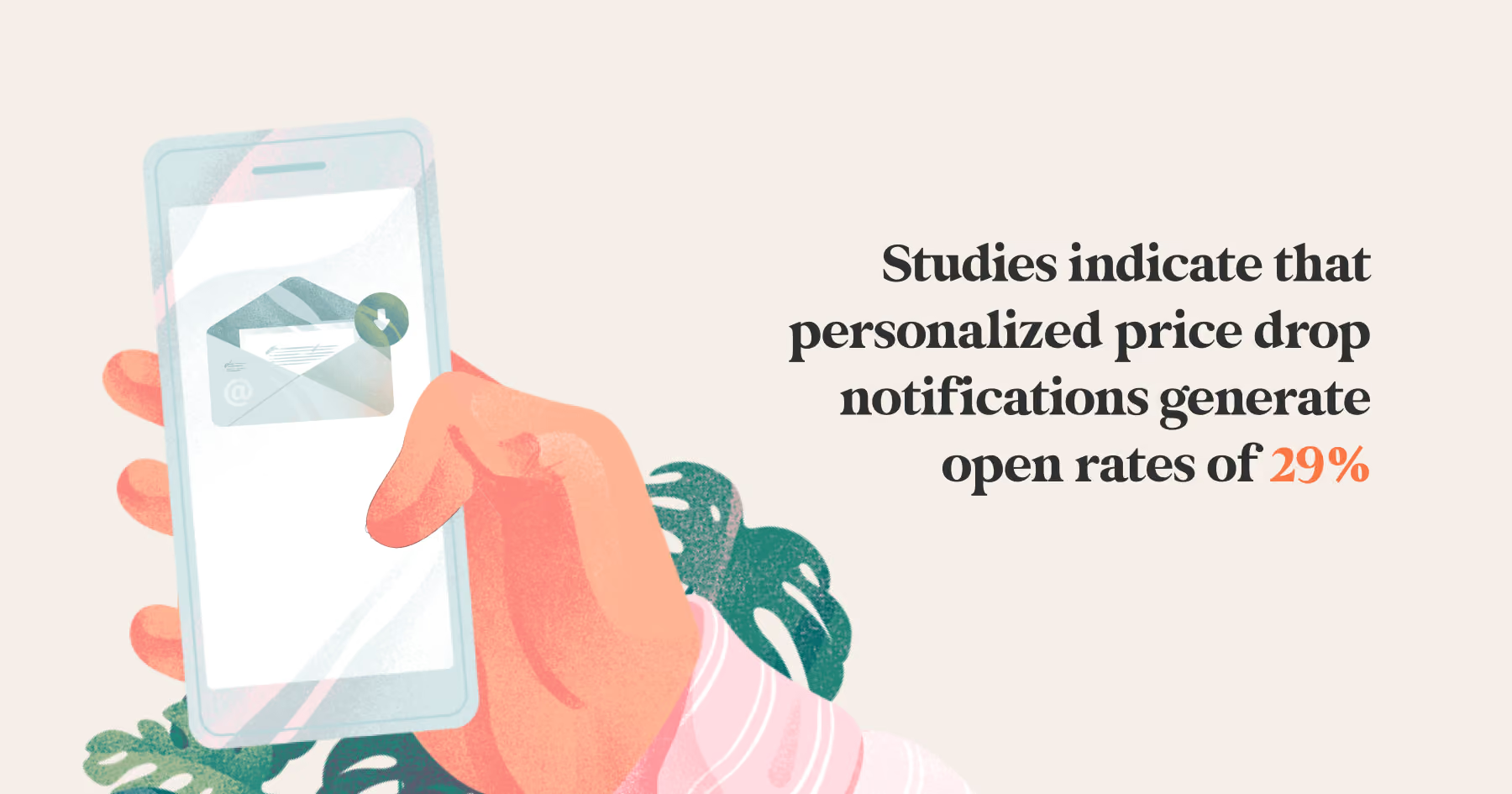
Price drop emails deliver multiple advantages that make them essential components of comprehensive email marketing strategies. Studies indicate that personalized price drop notifications generate open rates of 29%, significantly higher than industry-average promotional emails, because recipients perceive immediate personal value in the message content. These communications demonstrate that your brand pays attention to customer preferences and actively works to provide value, fostering deeper trust and engagement. Moreover, customers who engage with price drop emails also show higher lifetime value compared to those who interact with standard promotional content, indicating that these messages create lasting relationships rather than one-time transactions.
Essential components of a high-converting price drop email
Clear subject line
The subject line serves as the gateway to your entire email campaign, determining whether customers will engage with your message or scroll past it in their crowded inboxes. Effective price drop email subject lines immediately communicate the value proposition while creating urgency without appearing pushy or manipulative. Successful subject lines often include specific discount percentages, the product name, and action-oriented language that encourages immediate opening. Price drop email subject lines like "Your Wishlist Item Just Dropped 30%" or "Alert: [Product Name] Now $XX Less" perform consistently well because they provide clear, actionable information. The key lies in balancing transparency with excitement, ensuring customers understand exactly what awaits them while feeling motivated to discover the details inside.
Personalized product details
Personalization transforms generic price drop notifications into relevant, compelling communications that speak directly to individual customer interests and preferences. The email should prominently feature the specific product the customer previously engaged with, including high-quality images, detailed descriptions, and the exact price reduction amount. Dynamic content allows you to showcase the customer's preferred size, color, or variant, eliminating friction and making the purchase process as seamless as possible. Advanced personalization includes showing how long the customer has been waiting for this price drop, their previous interaction history with the product, and even similar items they might also find appealing. This level of customization requires robust email marketing campaign management systems that can track customer behavior and trigger appropriate responses based on specific actions and preferences.
Visually engaging layout
Visual presentation plays a crucial role in converting email opens into actual purchases, with studies showing that emails with compelling visual elements generate 94% more clicks than text messages. The layout should immediately draw attention to the price reduction through strategic use of color, typography, and white space that guides the eye toward the most important information. Before-and-after pricing should be prominently displayed with the original price crossed out and the new price highlighted in an attention-grabbing color. Product images must be high-quality and showcase the item from multiple angles when possible, helping customers visualize their purchase decision. Mobile optimization becomes essential since 68% of email opens occur on mobile devices, requiring layouts that render perfectly across all screen sizes and email clients.
Strong CTA (Call-to-Action)
The call-to-action button represents the critical conversion moment where interest transforms into actual sales, making its design and positioning vital to campaign success. Effective CTAs use action-oriented language that creates urgency while clearly stating what will happen when clicked, such as "Claim Your Discount Now" or "Get This Price Before It Changes." Button placement should be strategic and repeated throughout the email, appearing both above and below the fold to accommodate different reading patterns. Color psychology plays a significant role, with high-contrast buttons that stand out from the email background generating higher click-through rates. Testing different CTA variations helps identify what resonates best with your specific audience, with successful buttons often incorporating countdown timers or stock level indicators to reinforce scarcity.

Tips for writing high-impact price drop emails
Add a sense of urgency with authenticity
Creating urgency requires a careful balance between motivating action and maintaining customer trust, as artificial scarcity tactics can damage long-term relationships. Authentic urgency, such as limited inventory levels, genuine sale end dates, or seasonal availability constraints that customers can verify. The messaging should clearly explain why the urgency exists, whether due to supplier pricing changes, inventory management, or promotional periods with definite end dates. Countdown timers become powerful tools when they reflect actual deadlines, creating visual reinforcement of the time-sensitive nature of the offer. However, the urgency must feel reasonable and believable, avoiding aggressive language that might trigger skepticism or buyer's remorse after purchase.
Segmenting your list for better targeting
Email list segmentation allows you to deliver highly relevant price drop notifications to customers most likely to convert, improving both engagement rates and revenue per email sent. Effective segmentation considers factors such as previous purchase history, product category preferences, price sensitivity levels, and engagement patterns with similar offers. Customers who frequently purchase during sales should receive different messaging than those who typically buy at full price, with each segment receiving tailored content that speaks to their shopping behavior. Geographic segmentation becomes important for international brands, as purchasing power and cultural attitudes toward discounts vary significantly across different markets. Advanced segmentation might include customer lifecycle stages, with new customers receiving different price drop messaging than loyal repeat purchasers who might respond better to exclusive early access offers.
Using dynamic pricing or real-time stock alerts
Dynamic pricing capabilities enable you to send price drop alerts the moment reductions occur, maximizing the impact of time-sensitive opportunities. Real-time inventory integration allows you to include current stock levels in your emails, adding genuine scarcity when items are running low. This approach requires integration between your email platform and inventory management systems, ensuring accuracy and preventing the frustration of promoting unavailable items. Klaviyo email marketing platforms excel at these integrations, providing the technical infrastructure needed to automate complex, data-driven campaigns. The combination of real-time pricing and inventory data creates emails that feel immediate and relevant, encouraging customers to act quickly on legitimate opportunities.
Offer close alternatives
When the original product isn't available or doesn't meet the customer's current needs, suggesting similar alternatives keeps them engaged with your brand rather than seeking solutions elsewhere. Alternative recommendations should be genuinely similar in function, style, or price point, demonstrating that you understand the customer's original intent. The suggestions might include items from the same category, complementary products, or newer versions of the original item with enhanced features. This strategy works particularly well when combined with bundle offers or package deals that provide additional value. Price drop alert email campaigns perform best when they provide multiple pathways to purchase, accommodating different customer preferences and budget considerations while maintaining focus on the primary offer.
Effective price drop email strategies that capture attention
Highlight the savings clearly
The savings amount should be the hero element of your price drop email, presented in a way that immediately communicates value and motivates action. Dollar amounts tend to perform better than percentages for higher-priced items, while percentage savings work well for lower-cost products where the specific dollar amount might seem insignificant. Visual elements such as badges, banners, or highlighted text help draw attention to the savings, making it impossible for customers to miss the value proposition. Comparison charts showing the original price versus the new price create a clear visual impact, especially when accompanied by calculations showing total savings or equivalent value. The presentation should make customers feel smart about their potential purchase decision, positioning the price drop as a savvy shopping opportunity rather than a desperate sales tactic.
Provide assurance to build trust
Customer trust becomes paramount when dealing with significant price reductions, as customers might question product quality or wonder about hidden catches. Reassurance elements should include clear return policies, quality guarantees, and customer testimonials that validate the product's value at any price point. Trust signals such as security badges, shipping guarantees, and customer service contact information help reduce purchase anxiety. Social proof through recent customer reviews or purchase notifications creates confidence that others have successfully bought and enjoyed the product. Transparency about why the price dropped, whether due to overstock, seasonal clearance, or promotional partnerships, helps customers understand they're receiving legitimate value rather than damaged or inferior merchandise.
Suggest similar products they'll love
Cross-selling within price drop emails increases average order value while providing customers with comprehensive shopping solutions. Related product suggestions should complement the featured item or offer alternatives that serve similar purposes, expanding the customer's consideration set. The suggestions work best when based on actual customer behavior data, showing items that customers with similar purchase histories have enjoyed. Presentation should be subtle and helpful rather than overwhelming, perhaps featuring 2-3 carefully selected alternatives that enhance rather than distract from the primary offer. This strategy transforms single-item price drops into broader shopping experiences that increase both immediate revenue and long-term customer engagement.
Focus on abandoned cart recovery
Price drop emails targeting abandoned cart items address one of the most common conversion barriers, turning hesitation into action through strategic timing and messaging. These emails perform exceptionally well because they target customers who have already demonstrated strong purchase intent but were deterred by the original price point. The messaging should acknowledge the customer's previous interest while highlighting how the price reduction removes their primary objection. Abandoned cart price drop emails typically see conversion rates of 15-25%, significantly higher than standard abandoned cart sequences. The strategy works best when combined with limited-time offers that create urgency around both the reduced price and the customer's existing purchase intent.
Sweeten the deal with exceptional shipping
Free or expedited shipping offers can tip the scales for customers who are comparing your reduced price with competitors who might still be offering lower base prices. Shipping incentives work particularly well for price-sensitive customers who calculate total cost, including delivery, when making purchase decisions. Limited-time shipping upgrades, such as free next-day delivery for price drop purchases, create additional urgency while improving the overall value proposition. The shipping offer should be presented alongside the price reduction, showing customers the total savings they'll receive. This approach addresses the complete purchase experience rather than focusing solely on product pricing, often resulting in higher conversion rates and customer satisfaction scores.
Pair price drops with limited-time sales
Combining individual price drops with broader promotional events amplifies urgency while providing customers with multiple reasons to purchase immediately. This strategy works particularly well during traditional shopping periods such as Black Friday, end-of-season clearances, or holiday promotions. The messaging should communicate that customers are receiving double benefits: the specific price drop they've been waiting for, plus additional promotional savings available for a limited time. Stackable discounts or bonus offers create compelling value propositions that differentiate your brand from competitors who might be offering similar price reductions. However, the combined offers must feel genuine and valuable rather than manipulative, maintaining the trust necessary for long-term customer relationships.
Make customers feel special and valued
Exclusive early access to price drops makes customers feel appreciated while creating a sense of privilege that encourages immediate action. VIP or loyalty program members should receive price drop notifications before general announcements, rewarding their commitment to your brand. The messaging should explicitly acknowledge their special status, using language such as "exclusive early access" or "valued customer preview" that reinforces their importance to your business. Personalized touches such as addressing customers by name and referencing their purchase history create emotional connections that transcend simple transactional relationships. This approach builds long-term loyalty while driving immediate sales, creating customers who actively anticipate and engage with your price drop communications.

Wrapping up
Price drop emails represent a marketing strategy that transforms customer interest into immediate sales through strategic timing, compelling messaging, and authentic urgency creation. The most successful campaigns combine psychological triggers with genuine value propositions, creating communications that customers want to receive rather than generic promotional noise. From clear subject lines to personalized product details, every element must work together to create seamless experiences that guide customers from email open to completed purchase. The integration of real-time pricing data, inventory alerts, and behavioral targeting enables brands to deliver highly relevant communications that feel personal and timely rather than mass-marketed.
Growth Gurus has perfected these strategies through countless campaigns across diverse e-commerce sectors, helping brands achieve improvements in email marketing performance and overall revenue growth. Our comprehensive approach combines advanced automation technology with a deep understanding of consumer psychology, creating price drop email sequences that generate consistent results while building stronger customer relationships. The future of email marketing lies in these highly targeted, behaviorally-triggered communications that provide genuine value to recipients while driving measurable business outcomes. When executed with expertise and strategic thinking, price drop emails become powerful revenue engines that transform occasional browsers into loyal, engaged customers who eagerly anticipate your next communication.
Recent Blog Post


Ready to grow your business?
If you want your business to experience more sales and faster growth, all you need to do is book a meeting with us today.